Which SEO Services Are Best for Your Business in 2026?

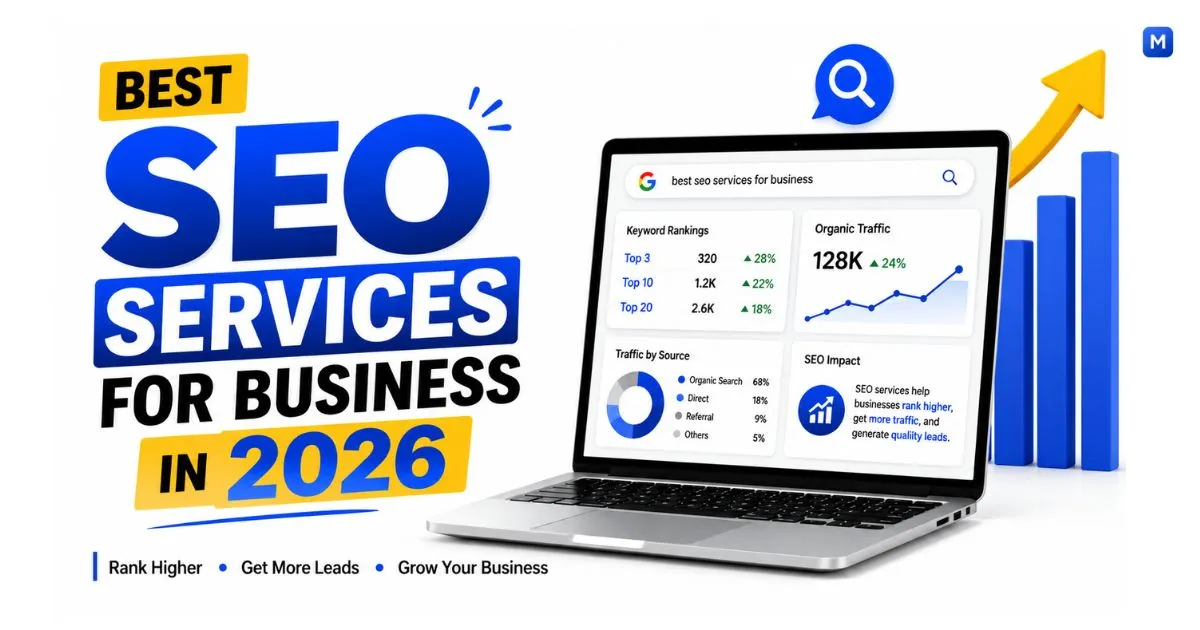
I have seen businesses invest in SEO Services for Business growth and still struggle to generate leads. At the same time, I have also worked with smaller websites that generate consistent inquiries because they focused on the right SEO strategy and professional SEO services from the beginning
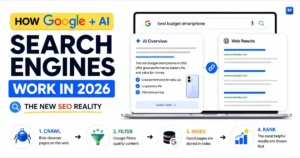
In 2026, SEO success is no longer only about rankings. It is about visibility, experience, and business growth. With AI Overviews and changing search behavior, businesses now need SEO strategies that match search intent, improve user experience, and generate real business growth.
In my experience, many businesses invest in generic SEO packages without understanding what problem they actually need to solve. Some need Local SEO to improve visibility, while others struggle more with technical SEO, weak conversion pages, or poor content strategy.
In this guide, I will explain which SEO services actually matter in 2026, who needs them, and how to choose the right strategy for long-term growth.
Why Choosing the Wrong SEO Strategy Wastes Time and Money
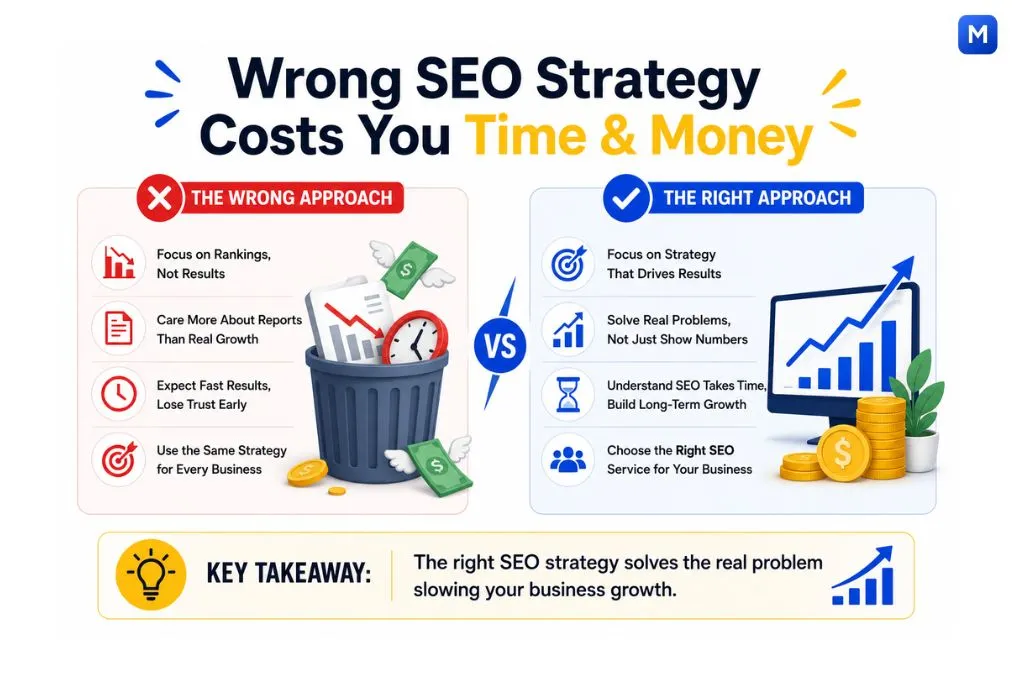
In my experience, most businesses do not fail because of SEO itself. The real problem usually starts when they invest in the wrong SEO strategy or follow unrealistic expectations.
I have seen business owners choose the right SEO experts only because of branding, presentations, or impressive reports. At the same time, many experienced SEO freelancers get ignored even when they understand the business problems more deeply.
The reality is simple. Every SEO agency also has humans doing the work. In the age of AI-generated everything, the real difference comes from the strategy, experience, and decision-making behind the tools.
That is why businesses should evaluate:
- SEO Strategy Understanding
- Search Intent Knowledge
- Communication Quality
- Problem-Solving Ability
- Real Experience
Not only agency reputation. Another common issue is reporting-focused SEO.
Many businesses become satisfied after seeing:
- Keyword Ranking Reports
- Traffic Screenshots
- SEO Dashboards
- Large Excel Sheets
Because of this, some SEO providers focus more on reporting numbers than solving actual business growth problems.
Meanwhile, the website still struggles with:
- Traffic Without Leads
- Poor Local Visibility
- Content Without Conversions
- Rankings for Irrelevant Keywords
I also believe unrealistic timelines create bigger SEO problems. Many businesses expect strong rankings within the first few months without understanding how long SEO actually takes and stop trusting the process too early.
In reality, good SEO needs:
- Helpful Content
- Consistent Optimization
- Technical Improvements
- Search Intent Alignment
- Patience
This has become even more important in 2026 because AI Overviews and changing search behavior now reward helpful, experience-driven content more than generic SEO tactics.
Different businesses also need different SEO services. A local business, SaaS startup, and ecommerce brand cannot follow the same SEO strategy because their audience, goals, and growth challenges are completely different.
The right SEO service should solve the actual problem slowing your business growth. That is exactly what I will help you identify in the next section.
How to Identify Which SEO Service Your Business Actually Needs
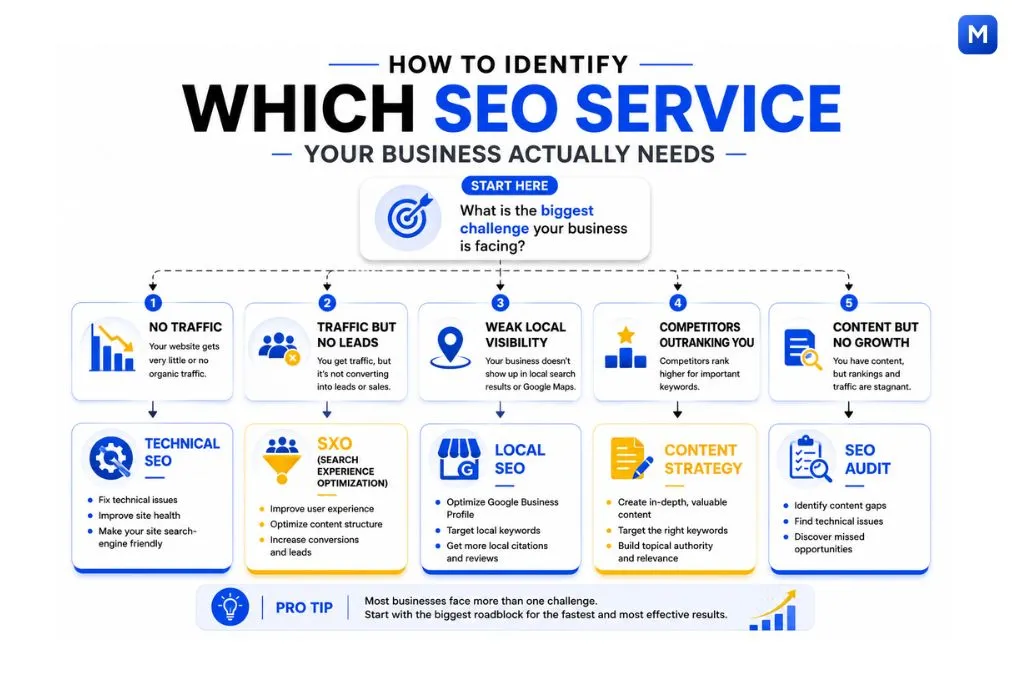
Most businesses waste money on SEO because they try to fix everything at once. In my experience, real SEO growth starts when you identify the exact problem blocking your business performance.
A local business, SaaS startup, and ecommerce brand cannot follow the same SEO strategy because their audience, goals, and search behavior are completely different.
Here is a simple way to identify what your business actually needs.
If Your Website Gets Little or No Traffic
I often see businesses publish blogs regularly while completely ignoring technical issues, page speed, and keyword direction.
Common problems include:
- Weak Technical SEO
- Poor Keyword Strategy
- Slow Page Speed
- Poor Mobile Usability
- Thin or Unoptimized Content
Recommended services:
- Technical SEO
- Content SEO
- Keyword Strategy
I often see businesses publish blogs regularly while completely ignoring technical issues and search intent.
If Traffic Comes but Leads Do Not
I have audited websites getting decent traffic but very few inquiries because the landing pages lacked clarity and conversion focus.
Common issues include:
- Weak Landing Pages
- Poor User Experience
- Unclear Messaging
- No Conversion Flow
- Low Trust Signals
Recommended services:
- SXO (Search Experience Optimization)
- On-Page SEO
- Conversion-Focused Landing Pages
In the AI Overview era, rankings alone are not enough. Your website must also build trust quickly and guide users toward action.
If Local Customers Cannot Find Your Business
I have worked with businesses that offered excellent local services but still struggled to appear in:
- Google Maps
- Local Search Results
- “Near Me” Searches
- Local SEO is weak
- Google Business Profile is poorly optimized
- Local intent keywords are ignored
- Location pages are missing
Recommended services:
- Local SEO
- Google Business Profile Optimization
- Local Landing Pages
For local businesses, nearby visibility often matters more than national rankings.
If Competitors Consistently Outrank You
Competitors often outperform because they build stronger topical depth and content structure over time.
Competitors usually perform better because they have:
- Better Content Structure
- Stronger Topical Authority
- Better Internal Linking
- Higher Trust Signals
- Stronger Backlink Profiles
Recommended services:
- Content Strategy
- Topical Authority Building
- Link Building
Google now rewards websites that cover topics deeply instead of publishing random content without structure.
If Your Website Has Content but No Growth
I often see businesses publish content for months without meaningful SEO growth.
Usually, the real problems are:
- Wrong Search Intent
- Weak Content Structure
- Keyword Cannibalization
- Poor Optimization
- AI-Generated Content Without Human Insight
Recommended services:
- SEO Audit
- Search Intent Optimization
- Content Restructuring
In 2026, publishing AI-generated content alone is not enough. Search engines now reward experience-driven and genuinely helpful content much more aggressively.
Quick Insight
Focus on the bottleneck, not the budget.
A business does not always need every SEO service. Sometimes, fixing one major issue creates more growth than spending heavily on unnecessary SEO activities.
The best SEO strategy solves the exact problem slowing your business growth.
What Are the Main SEO Services Businesses Use in 2026?
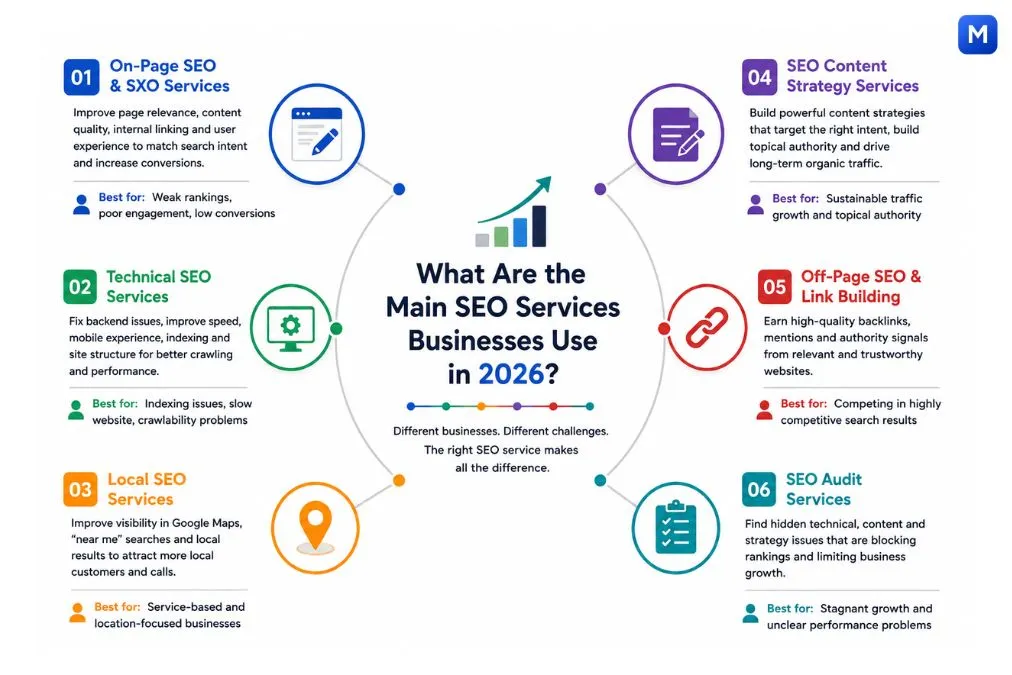
Not every business needs the same type of SEO service. In my experience, businesses grow faster when they focus on the SEO area that is actually blocking their performance instead of trying to do everything together.
Some businesses struggle with technical issues. Others fail because their content does not match search intent. Meanwhile, many websites get traffic but still fail to generate leads because the user experience is weak.
Here are the main SEO services businesses commonly use in 2026.
On-Page SEO and SXO Services
On-page SEO helps improve page relevance, content clarity, internal linking, and search intent alignment. In 2026, this also includes SXO (Search Experience Optimization), which focuses on improving user experience and conversion flow after the click.
Google now pays much more attention to:
- User Signals
- Engagement
- Readability
- Content Experience
I still see businesses overusing keywords while completely ignoring clarity and user intent.
Best For: Businesses struggling with weak rankings, poor engagement, or low conversions.
Technical SEO Services
Technical SEO focuses on improving the backend health of a website so search engines can properly crawl, index, and understand pages.
This becomes important when websites struggle with:
- Slow Loading Speed
- Poor Mobile Experience
- Indexing Problems
- Weak Site Structure
Modern Technical SEO now also includes:
- Core Web Vitals
- INP (Interaction to Next Paint)
- Mobile-First Performance
Many businesses continue publishing content for months while ignoring technical problems that quietly slow SEO growth.
Best For: Websites struggling with indexing, speed, and crawlability issues.
Local SEO Services
Local SEO helps businesses appear in Google Maps, “near me” searches, and local search results.
I have seen many good local businesses lose customers simply because their Google Business Profile and local pages were poorly optimized.
Local SEO usually focuses on:
- Google Business Profile Optimization
- Local Intent Keywords
- Local Landing Pages
- Location-Based Visibility
Best For: Service-based and location-focused businesses.
SEO Content Strategy Services
Content strategy helps businesses build topical authority and long-term organic growth instead of depending on random blog publishing.
A strong content strategy usually focuses on:
- Search Intent
- Funnel Stages
- Topic Clusters
- User Problems
- Service Relevance
In 2026, content services will also include reviewing AI-generated drafts for accuracy, originality, and EEAT quality. Generic AI-written content without human insight struggles much more after recent Google updates.
Best For: Businesses wanting sustainable traffic growth and stronger topical authority.
Off-Page SEO and Link Building
Off-page SEO helps improve website authority and trust signals through relevant mentions and backlinks.
However, many businesses still damage their SEO by buying low-quality backlinks or using aggressive link-building tactics.
Today, Google values:
- Relevance
- Trust
- Authority
- Natural Mentions
much more than backlink quantity alone.
Best For: Businesses competing in highly competitive search results.
SEO Audit Services
An SEO audit helps identify hidden problems slowing website growth.
Sometimes the issue is technical. Sometimes it is poor search intent targeting, weak content structure, or conversion gaps. Without an audit, businesses often keep investing in SEO without understanding what is actually blocking results.
A proper SEO audit helps businesses stop guessing and start making data-backed SEO decisions.
Best For: Businesses struggling with stagnant SEO growth or unclear performance problems.
Which SEO Services Are Best for Different Business Types?
One of the biggest SEO mistakes I still see in 2026 is businesses copying strategies from completely different industries. A local business, an e-commerce store, a SaaS startup, and a B2B company cannot grow with the same SEO approach because their audience behavior and search intent are completely different.
Best SEO Services for Small Businesses
Most small businesses do not struggle because of low traffic alone. In many cases, nearby customers simply cannot find them at the right time. I have worked with local businesses targeting broad keywords while ignoring local intent completely.
For small businesses, Local SEO, On-Page SEO, and lead-focused content usually create the biggest impact.
Key Goal: Improve local visibility and qualified inquiries.
Best SEO Services for Startups
Many startups publish content aggressively before fixing technical SEO and content structure. I have seen AI-generated blogs increase pages but fail to build long-term authority because the strategy lacked depth and originality.
In 2026, startups grow faster when they focus on Technical SEO, Content Strategy, and Topical Authority instead of chasing random traffic quickly.
Key Goal: Build search trust and sustainable organic growth.
Best SEO Services for Ecommerce Businesses
Ecommerce SEO is usually more technical than businesses expect. Product pages, category pages, internal linking, and transactional keywords directly affect product visibility and sales performance.
As ecommerce stores grow, technical SEO issues like faceted navigation, duplicate URLs, and weak canonical management also become serious ranking problems. For most ecommerce brands, Product Page SEO, Category Optimization, Transactional SEO, and Technical SEO create the strongest ROI.
Key Goal: Increase product visibility and purchase-intent traffic.
Best SEO Services for Service-Based Businesses
Service businesses usually do not need massive traffic numbers. They need trust and qualified leads. I have worked with websites getting decent traffic, but very few inquiries because visitors could not quickly understand the business value.
That is why Local SEO, Landing Page SEO, and Conversion Optimization usually matter most for service-based businesses.
In 2026, rankings alone rarely generate leads without a strong user experience and clear credibility factors.
Key Goal: Turn visitors into qualified inquiries.
Best SEO Services for B2B Companies
B2B SEO usually involves longer decision-making cycles and higher trust requirements. However, many B2B companies still focus heavily on broad informational traffic instead of high-intent searches.
In my experience, High-Intent SEO, Thought Leadership Content, and Funnel-Based SEO Strategy create much better lead quality for B2B businesses.
Key Goal: Build authority and attract decision-stage leads.
A Simple Way to Choose the Right SEO Services
Many businesses waste time and budget because they try to improve everything at once. In my experience, SEO works much better when you first identify the single biggest issue slowing your growth.
| Your Main Business Problem | Recommended SEO Service | Primary Focus Area |
| Website not appearing on Page 1 | Technical SEO | Crawlability & Indexing |
| High traffic but low inquiries | SXO + Conversion Optimization | User Experience & Search Intent |
| Weak local visibility | Local SEO | Google Business Profile & Local Maps |
| Competitors consistently outrank you | Topical Authority + High-Quality Link Building | Content Depth & Trust Signals |
| Content exists but performance is weak | Content Optimization | Search Intent Realignment |
| Rankings suddenly decline | SEO Audit | Root Cause Analysis |
Instead of fixing everything together, focus on the biggest growth bottleneck first. I have seen businesses publish more content when the real issue was technical crawlability, weak conversion flow, or poor search intent alignment.
In 2026, SEO efficiency matters more than SEO volume.
What Actually Works in SEO in 2026
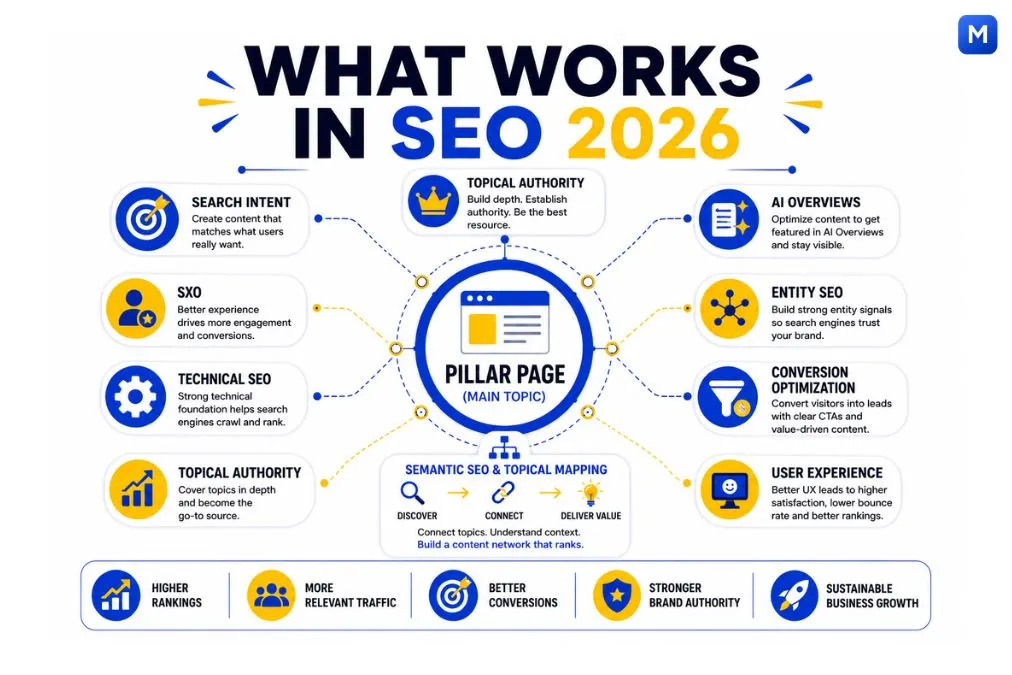
I have audited websites with hundreds of blog posts, thousands of indexed pages, and impressive traffic graphs that still failed to generate meaningful business growth. At the same time, I have also worked with smaller websites generating qualified leads consistently because their SEO strategy was focused, experience-driven, and aligned with real user intent.
That is the biggest SEO difference I notice in 2026.
Modern SEO is no longer about publishing more content or chasing more keywords. Search engines now evaluate usefulness, search intent, topical depth, user experience, trust signals, and original insights much more deeply than before.
Search Intent-Focused SEO
Modern SEO starts with understanding why users search, not only what they search.
I still see businesses targeting high-volume keywords without understanding whether the user actually wants:
- information
- comparisons
- solutions
- or immediate action
As a result, visibility may improve, but meaningful business inquiries often remain low.
Someone searching:
- “What is Technical SEO?” needs education
- “Best SEO Agency for SaaS” needs comparisons and trust
- “Hire Local SEO Expert” needs fast decision clarity
Different search intents need different page experiences.
In my experience, matching content with real user expectations improves lead quality much more consistently than aggressive keyword targeting alone.
Why SEO Alone No Longer Drives Business Growth
Rankings create visibility. Search experience decides whether that visibility becomes business growth.
This is where traditional SEO starts failing in 2026.
Today, Google pays much closer attention to:
- User Experience
- Engagement Signals
- Readability
- Conversion Flow
- Interaction Quality
Slow pages, weak layouts, and poor INP responsiveness quietly reduce both engagement and conversions even when rankings look strong.
That is why SEO and SXO now need to work together instead of operating separately.
Topic Authority Instead of Random Content
Publishing random blogs no longer creates reliable SEO growth.
I have audited websites with 300+ articles generating almost no qualified leads because the content lacked topical direction and funnel structure. Meanwhile, competitors with fewer but more connected pages continued building stronger authority.
Google now rewards websites that cover topics deeply around:
- Core Services
- User Problems
- Search Intent
- Industry Relevance
In 2026, businesses also need content that adds something genuinely useful to the conversation. Google now rewards original insights and information gain much more aggressively than repetitive AI-generated summaries.
This is why content clusters and funnel-based strategies perform much better than isolated blog publishing.
Entity-Based SEO and Topical Authority
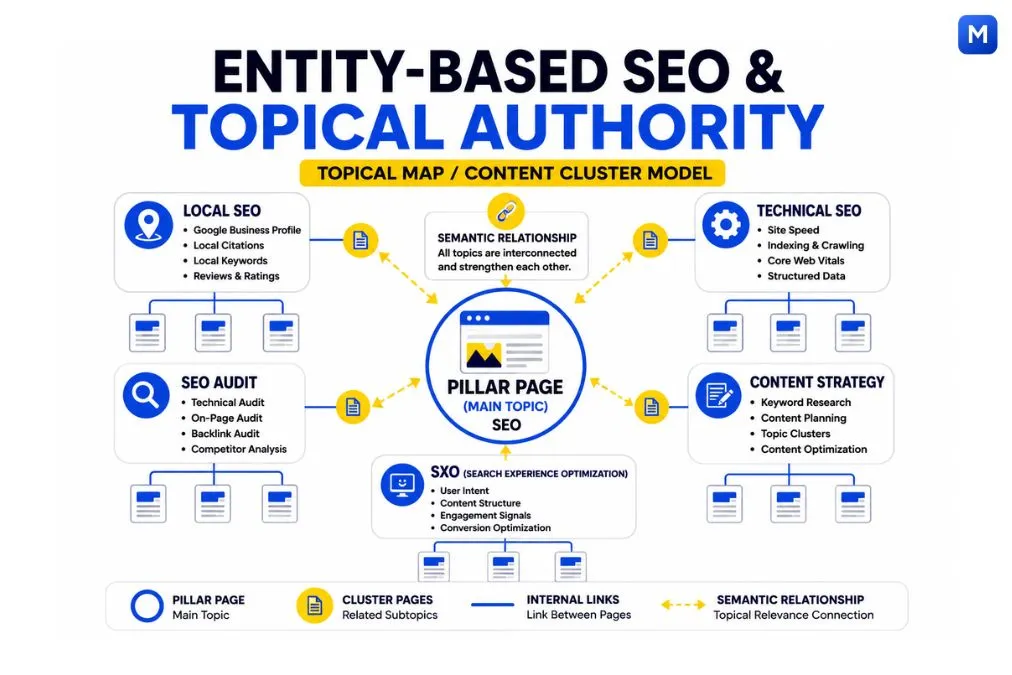
Search engines now try to understand how your services, expertise, audience problems, and related topics connect.
That is why modern SEO depends more on semantic relationships and contextual relevance instead of repeating keywords unnaturally.
For example, a proper topical map connects:
- Pillar Pages
- Service Pages
- Supporting Blogs
- Industry Topics
- User Questions
around one clear subject area.
I have noticed businesses with structured topical ecosystems perform much better in AI Overviews and semantic search results because Google understands their expertise more clearly.
In simple words, random content creates scattered relevance. Connected content builds authority.
Conversion-Focused Page Optimization
SEO should improve business outcomes, not only rankings.
I often see businesses investing heavily in traffic generation while ignoring the pages where actual conversions happen. In many cases, visitors leave because the messaging feels unclear, the page fails to build confidence quickly, or the structure feels overwhelming.
Small improvements in:
- clarity
- trust
- CTAs
- conversion flow
often creates a stronger ROI than increasing traffic volume alone.
That is why conversion-focused SEO has become much more important in 2026, especially for lead-generation and service-based businesses.
Continuous Optimization Based on Data
SEO is no longer a one-time setup process.
Search behavior changes constantly. Competitors improve. AI-driven search results evolve. User expectations also shift much faster now.
I have seen websites lose rankings simply because they stopped updating content, improving user experience, or refining search intent alignment over time.
The businesses growing consistently through SEO usually treat optimization as an ongoing process guided by:
- Real User Behavior
- Changing User Behavior
- Engagement Data
- Conversion Performance
In 2026, long-term SEO growth comes from continuous improvement, not one-time optimization.
Common SEO Mistakes Businesses Should Avoid in 2026
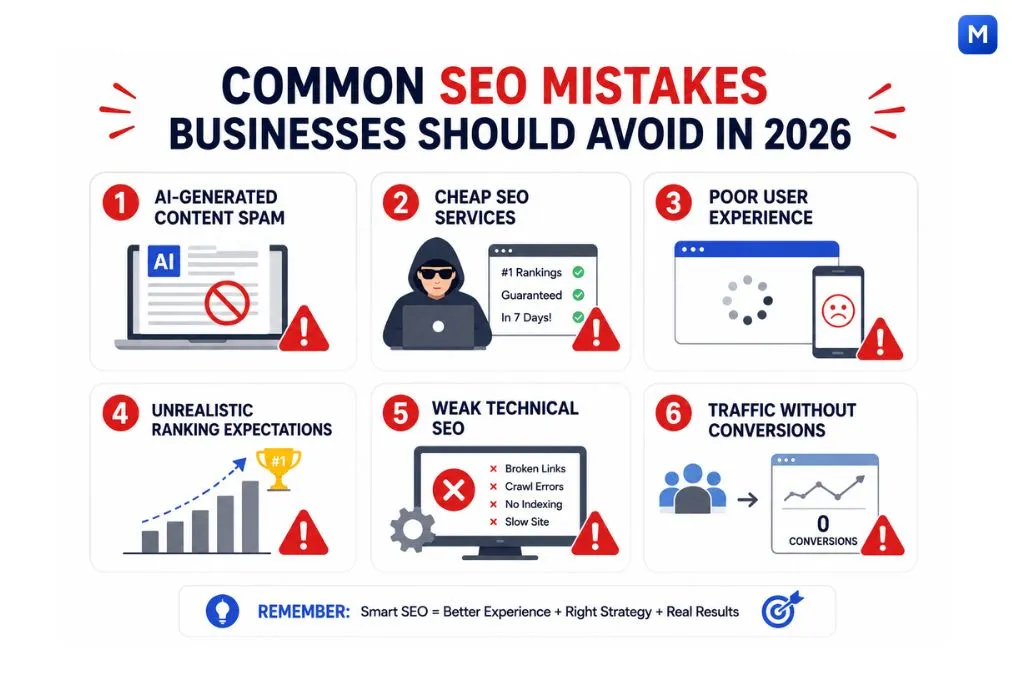
I have audited websites with decent traffic, regular content publishing, and ongoing SEO work that still struggled to generate meaningful business growth. In most cases, the problem was not effort. The real issue was poor SEO direction from the beginning.
- Treating SEO as a low-cost commodity
Cheap SEO services usually ignore search intent, conversion quality, and long-term strategy. In many cases, fixing poor SEO later costs far more than doing it correctly from the beginning. - Falling into the AI-content trap
Many businesses now publish large amounts of AI-generated content without adding original insights or human review. In 2026, Google rewards information gain and real expertise much more aggressively than repetitive content. - Expecting rankings within a few weeks
I still see businesses expecting Page 1 rankings within 60–90 days, even when the website has weak authority and technical problems. Sustainable SEO growth needs consistency, optimization, and patience. - Targeting traffic instead of business intent
High-volume keywords do not always generate qualified leads. In many cases, smaller decision-focused keywords create much stronger business results than broad visibility-focused targeting. - Treating SEO and user experience separately
Some websites rank well but still lose customers because pages load slowly, the mobile experience feels poor, or the conversion flow becomes confusing. In 2026, SEO and SXO now work together much more closely. - Ignoring brand trust and authority
Businesses focusing only on rankings often ignore credibility, consistency, and trust signals. Search engines now reward brands that demonstrate expertise, topical depth, and genuine user value.
Most SEO problems happen because businesses focus on visibility before strategy. The websites growing consistently in 2026 are usually the ones combining helpful experiences, credibility, and long-term optimization together.
Conclusion
Choosing the right SEO services in 2026 is not about buying the biggest package or chasing quick rankings. Different businesses need different SEO strategies based on their goals, competition, website condition, and growth stage.
In my experience, the best SEO services are the ones that solve the actual growth problem behind your traffic, visibility, or conversion issues. Instead of focusing on shortcuts, businesses should first identify their SEO gaps and build a strategy focused on long-term growth, customer experience, content relevance, and credibility.
The businesses winning through SEO in 2026 are not the ones publishing the most content. They are the ones building the clearest strategy.
FAQs About SEO Services for Businesses in 2026
Local SEO and Technical SEO usually show the fastest improvements. Fixing indexing issues, Google Business Profile optimization, and local visibility problems can improve search performance relatively quickly.
Yes, especially for businesses that depend on local leads and organic visibility. In many cases, Local SEO and conversion-focused optimization generate long-term inquiries at a lower cost than paid ads.
SEO service costs depend on competition, website condition, business goals, and service scope. In 2026, quality SEO usually costs more because strategy, technical optimization, content quality, and SXO now matter much more.
Almost every business website needs Technical SEO. Slow speed, indexing issues, weak mobile usability, and crawlability problems can reduce rankings even when the content quality is good.
SEO improves search visibility and rankings. SXO (Search Experience Optimization) improves user experience, engagement, and conversions after visitors land on the website.
In simple words:
SEO brings traffic
SXO improves business outcomes
Yes, SEO can generate qualified leads for service businesses when the strategy focuses on local intent, landing page optimization, trust signals, and conversion-focused content.
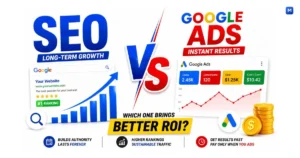
Paid ads help businesses generate faster short-term visibility. SEO helps build long-term organic growth and trust. In most cases, businesses grow more sustainably when both work together strategically.
For most local businesses, the highest-impact SEO services include:
Local SEO
Google Business Profile Optimization
Local Landing Pages
Reputation Optimization
These services help businesses appear in local searches and Google Maps results.
Businesses can manage basic SEO tasks themselves, but modern SEO now involves technical optimization, audience understanding, SXO, semantic SEO, and AI Overview optimization. That is why many businesses eventually need expert guidance for consistent growth.