How Search Engines Work in 2026 (Google + AI Explained)

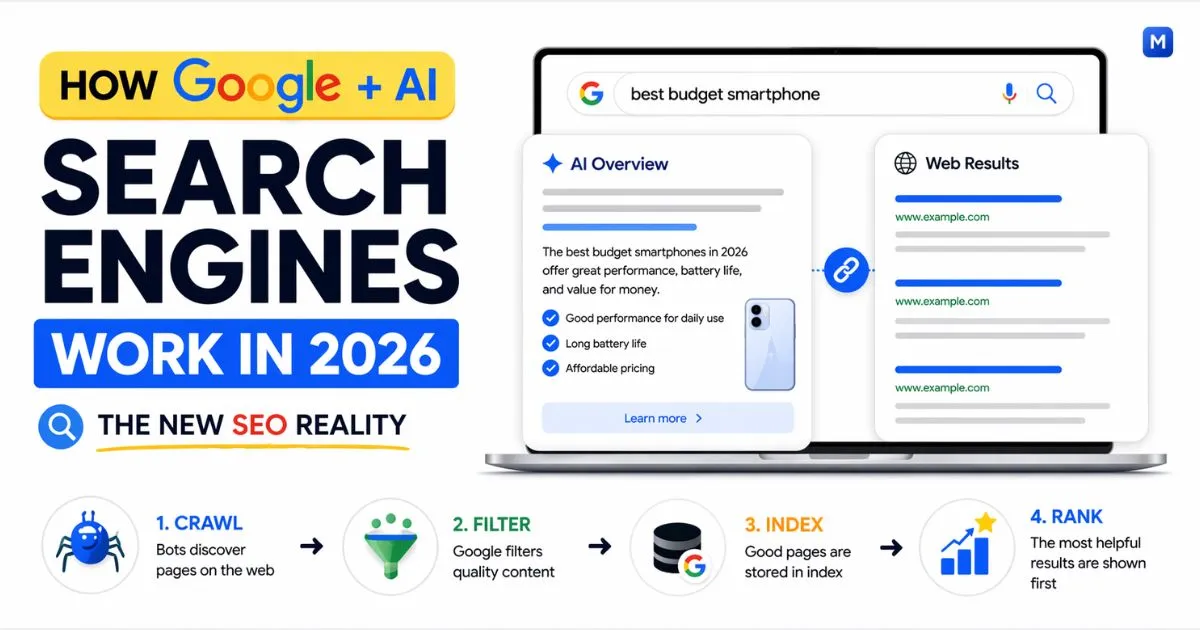
Most people think Google simply shows websites when you search, but that is no longer true. To understand how search engines work in 2026, you need to see how AI Overviews now synthesize information at the top, followed by traditional web results that support those answers.
This shift creates a real concern for businesses. If Google answers queries directly, will website traffic drop? The reality is different. Visibility today is not just about ranking in blue links, but also about becoming a trusted source in AI Overviews. At the same time, search is no longer one size fits all. Google now changes results based on user location, behavior, and context, which creates new opportunities for those who understand it.
In 2026, Google is looking for Information Gain, something that only real human experience can provide and AI cannot fully replicate. But how does this system actually find, filter, and rank your content? Let’s break down the step-by-step process of how search engines work in this AI-driven era.
What Is a Search Engine and How It Works
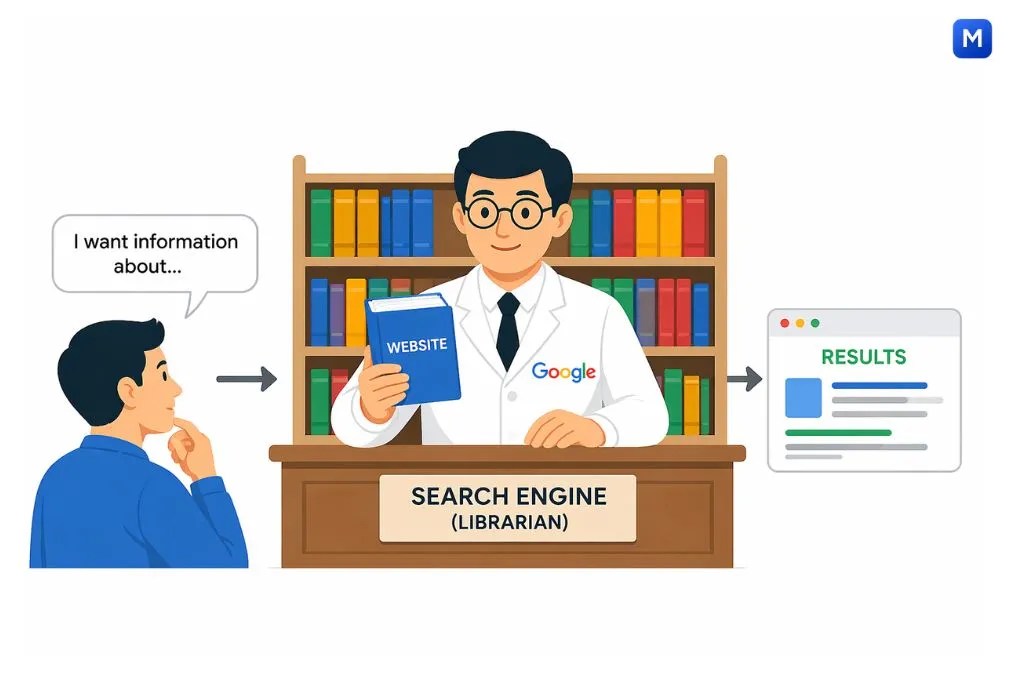
When you search for something on Google, it feels like the internet is being scanned instantly. In reality, that is not how it works. A search engine is a system that stores information from billions of web pages and shows the most relevant results based on what you actually need. If you understand how SEO helps businesses grow.
Think of Google like a librarian in a massive digital library. It does not just point you to a book. It knows exactly which page inside that book has your answer and shows it instantly.
Let me explain this with a simple example. If you search for “best budget smartphone,” Google does not check every website at that moment. From my experience working with websites, I have seen that Google already understands what different pages contain. It also tries to figure out your intent, whether you want to buy a phone or just compare options.
Behind the scenes, every search engine follows a simple 3-step process:
- Crawling: Bots discover new and updated pages across the web
- Indexing: Google filters and stores only quality content in its database (not every page makes it to the database)
- Ranking: The most useful and relevant pages are shown first
This is the core of how search engines work. Once you understand this flow, it becomes much easier to see why some content gets visibility, and some gets ignored.
How Search Engines Work Step by Step (Crawling, Indexing, Ranking)
Search engines work in a simple 3-step process: crawling, quality filtering and indexing, and ranking. Every time you search, Google uses this system to decide which content deserves visibility and which gets ignored.
Step 1 – Crawling (How bots discover the web)
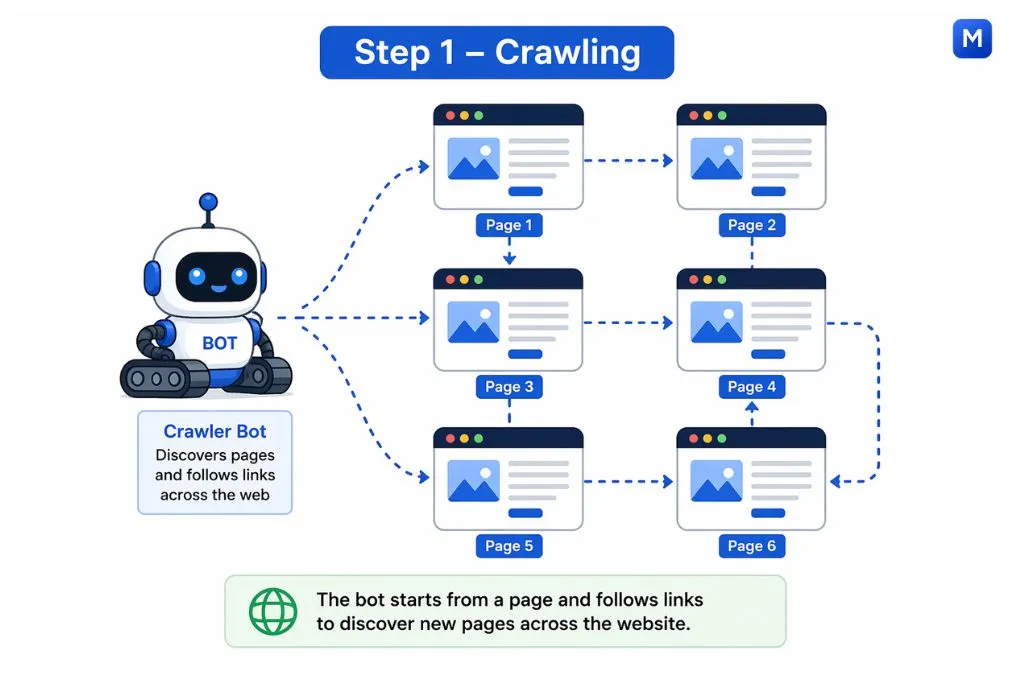
Google uses automated bots to scan the internet and find new or updated pages. These bots move through links and continuously discover content across websites.
A sitemap acts like a guide for these bots. It tells Google where your important pages are, making it easier for them to find and crawl your content properly.
From my experience, many websites struggle at this stage. If your pages are not linked well or structured clearly, Google may never discover them.
Step 2 – Indexing (Quality Gatekeeper + Storage)
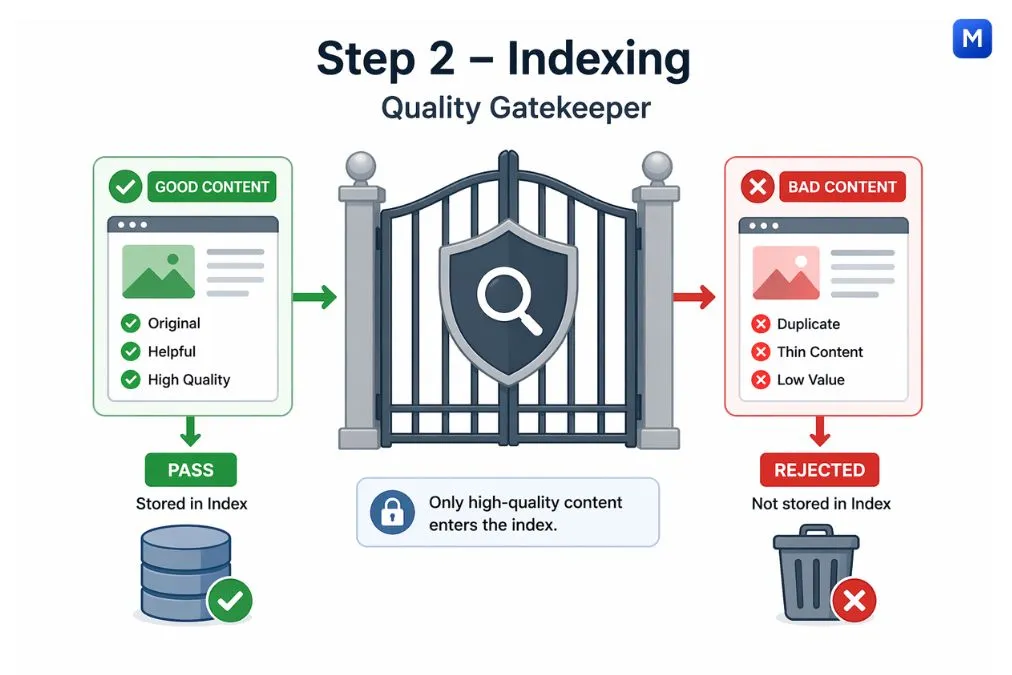
Once a page is discovered, Google does not store it immediately. It acts like a quality gatekeeper and checks whether your content is useful, original, and worth showing to users.
This is where most content fails. Not every page gets indexed. If your content does not offer Information Gain or real value beyond what already exists, it will not pass this filter.
Only the pages that clear this quality check are stored in Google’s index and become eligible to appear in search results.
Step 3 – Ranking (Selecting the most helpful result)
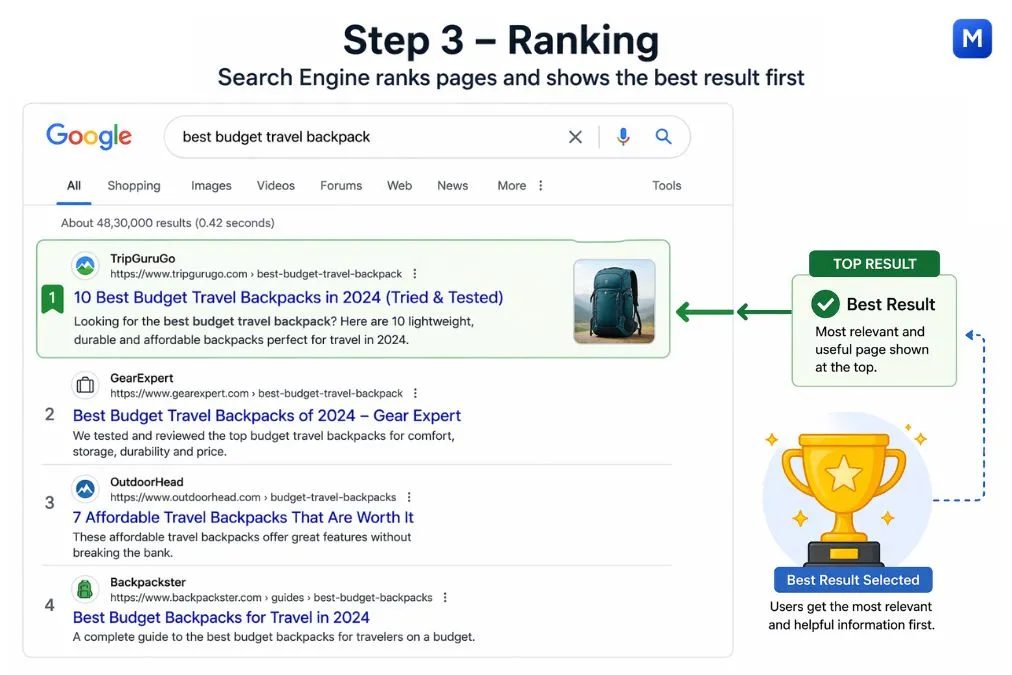
After indexing, Google decides which pages should appear for a query. This decision is no longer based on keywords alone.
In 2026, Google focuses on helpfulness. It evaluates whether your content actually solves the user’s problem, not just whether it matches the query.
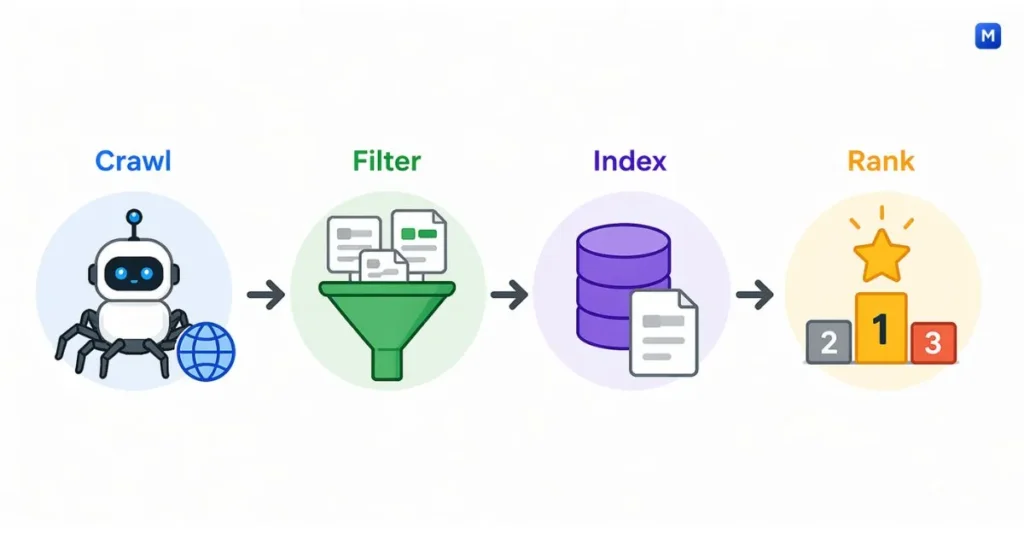
Simple Flow (Diagram)
Crawl → Quality Filter (Gatekeeper) → Index → Rank
Example to Understand the Full Process
Let’s say you search for “best budget smartphone.”
- Google has already crawled multiple websites
- It filters out low-value content and keeps only useful pages
- Then it ranks the pages based on how well they solve your problem
⚠️ Common Mistake Most People Make
Most people focus only on ranking. They try to optimize keywords without realizing that if their page is not crawled or does not pass the quality filter, it will never rank.
This is a common mistake most businesses make, especially when they keep changing their SEO agency without understanding how it impacts long-term growth. In my experience, fixing crawling and indexing issues often yields faster, more stable results than chasing rankings directly.
How Google Search Works in 2026 (AI + Hybrid Search System)
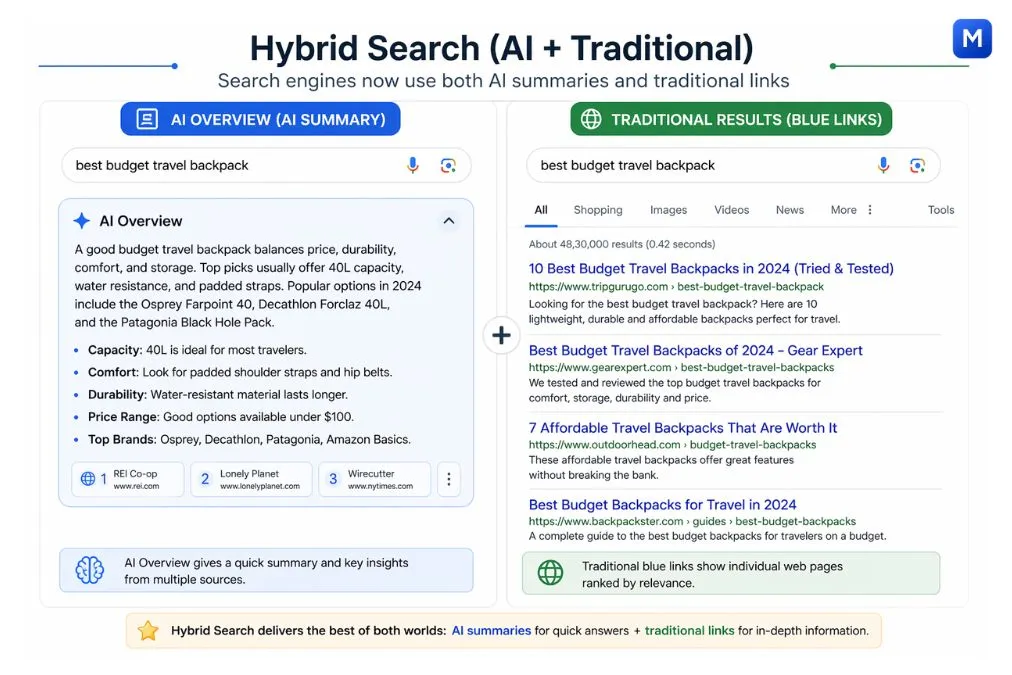
Google search in 2026 works as a hybrid system where AI Overviews generate direct answers and traditional results provide supporting sources. It is no longer just a list of links, but a system that combines speed with verification.
| Feature | Traditional Search (Old) | Hybrid Search (2026) |
| Primary Goal | Finding Links | Finding Answers + Sources |
| Result Type | List of Blue Links | AI Overviews + Supporting Links |
| Focus | Keyword Matching | Intent + User Journey |
| Ranking Basis | Backlinks & Keywords | Information Gain + Trust |
| Experience | Same for All Users | Personalized (Context-based) |
Google follows a simple two-layer structure:
- AI Overviews: Direct, summarized answers at the top
- Traditional Results: Websites that validate and expand those answers
In 2026, getting cited inside AI Overviews is the new “Rank #1.”
Users often check these sources to verify information. From my experience, appearing here builds both authority and visibility faster than traditional rankings alone.
Google also focuses on search intent:
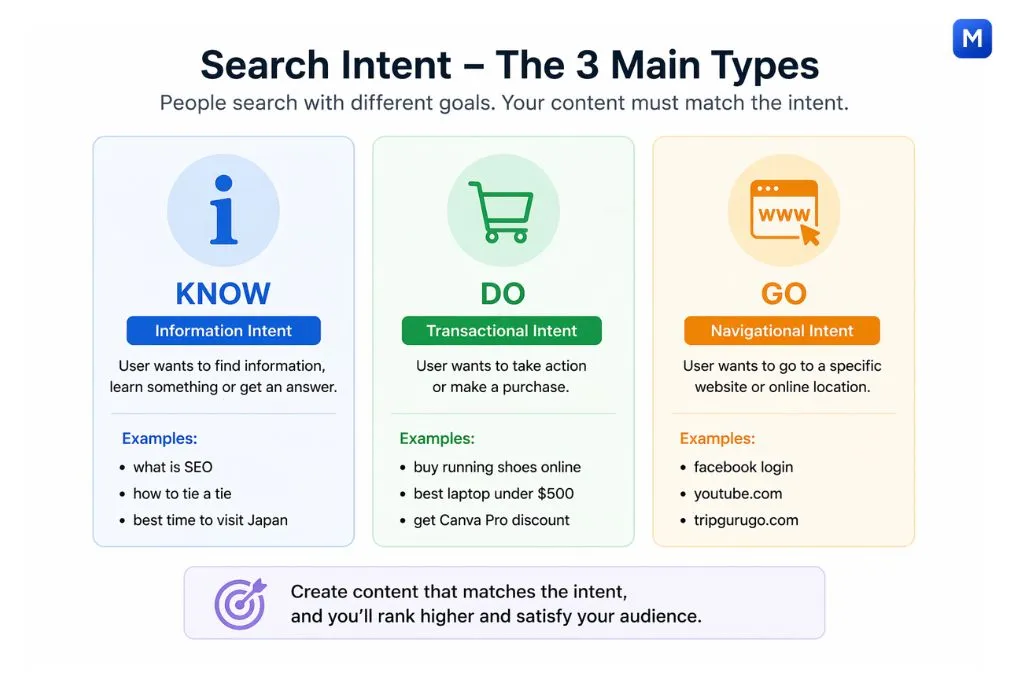
- Know: Information
- Do: Action or purchase
- Go: Specific website
But intent alone is not enough anymore. Google also understands your search journey. For example, if you first search for “best cameras” and later search for “photography tips,” Google assumes your level and adjusts results accordingly.
Search is highly personalized. Results change based on location and behavior. For example, if you search for “SEO services” in Faridabad, Google prioritizes nearby and relevant experts instead of random global websites.
Google is no longer just a search engine. It is now an answer engine. To succeed in 2026, your goal is simple: become the answer for AI and the trusted source for users.
How Websites Rank on Google (What Actually Matters in 2026)
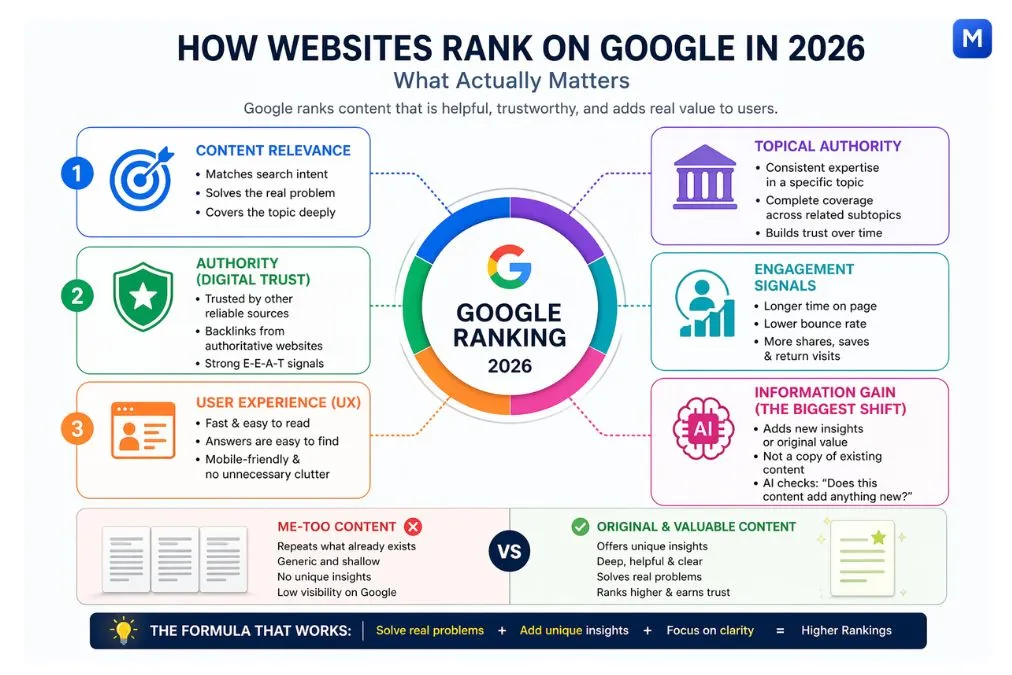
Google ranks websites in 2026 based on content relevance, authority, user experience, topical depth, and information gain. It no longer rewards pages just for keyword optimization. It prioritizes content that is genuinely helpful and different from what already exists.
Google evaluates content using these key factors:
- Content Relevance: Content must match user intent and solve the real problem
- Authority (Digital Trust): Google checks whether trusted sources in your niche consider your content reliable
- User Experience (UX): It is about efficiency, how quickly users find their answer without unnecessary scrolling
- Topical Authority: You cannot rank for random topics anymore. Google checks whether your entire site shows consistent expertise in that subject
- Engagement Signals: User behavior shows whether your content is actually helpful
The biggest shift in 2026 is Information Gain, which acts like an AI filter. Google now checks whether your content adds new value or simply repeats what already exists. If your article looks like ten other pages, Google treats it as “me-too” content and may reduce its visibility.
From my experience, pages with real insights, clear explanations, and original thinking perform far better than generic or AI-heavy content.
Most businesses fail because they chase keywords and copy competitors without adding value. The approach that works is simple: solve real problems, add unique insights, and focus on clarity.
Final Thoughts: What This Means for You
Understanding how search engines work in 2026 changes how you use Google. You can search smarter, find better answers faster, and avoid low-quality results because you now understand how the system actually works.
For businesses, this shift makes SEO more important than ever. From my experience, Google no longer rewards just optimized content. It rewards content that is helpful, deep, and builds real trust. You should not write for bots anymore, you should write for users. The more clearly you solve user problems, the more Google will reward your content. AI can generate answers, but trust is built by your brand. In 2026, your website is not just a page, it is proof of your expertise and authority.
Start by reviewing one key page on your website with a proper SEO approach and ask yourself, does it truly add value or just repeat what already exists?
FAQs – How Search Engines Work
Google search works through a hybrid system. It uses AI Overviews to generate quick answers and then shows relevant web pages as supporting sources. This process runs on crawling, filtering, indexing, and ranking.
Crawling is when Google bots discover pages. Indexing is when Google filters and stores only useful content. Ranking is when Google selects the most helpful pages based on user intent and usefulness.
Google can index a page within hours, but it may also take days or weeks. From my experience, pages with strong structure and original content get indexed faster. Google does not index every page. If your content is generic or AI-generated fluff, it may fail the indexing filter.
Websites rank higher when they provide better value. Google looks at relevance, authority, user experience, topical depth, and information gain. Content that adds something new and solves problems clearly performs better.
AI search refers to features like AI Overviews, where Google generates direct answers using artificial intelligence. It summarizes information and then shows trusted sources below for verification.
Not necessarily. If your content is deep, helpful, and original, Google can feature it as a source in AI Overviews. From my experience, this can increase visibility and trust. Casual traffic may reduce, but the visitors you get will be more targeted and high-intent.
Yes, but it is more difficult. In 2026, backlinks alone are not enough. Topical authority also plays a major role. If your website consistently shows expertise in a niche, Google can rank it even without a large number of backlinks.
No. Google search is highly personalized in 2026. Results change based on location, past behavior, and your search journey. Two users searching the same query may see different results.