Google’s New Back Button Hijacking SEO Rule: Are You at Risk?

A single technical mistake on your website can now silently damage your rankings under the Google Back Button Hijacking SEO Rule, introduced in the Google spam update 2026. With enforcement starting on June 15, 2026, websites that use deceptive navigation practices may face manual actions or ranking drops. By placing this rule under its malicious practices policy, the same category is used for malware. Google is signaling that trapping users is now a major violation, not just a minor UX flaw.
This update was officially announced by Google’s Search Quality team in their detailed post on back button hijacking, which highlights it as a violation of spam policies.
In my experience, many websites unknowingly trigger this problem through third-party scripts, ad networks, or plugins. However, as Google has clarified in its official announcement on back button hijacking, even if these issues come from external tools, the responsibility still lies with the website owner.
In this article, I will explain what this update means, who is actually at risk, and how you can identify and fix this issue before it affects your search visibility.
What Is Back Button Hijacking in SEO?
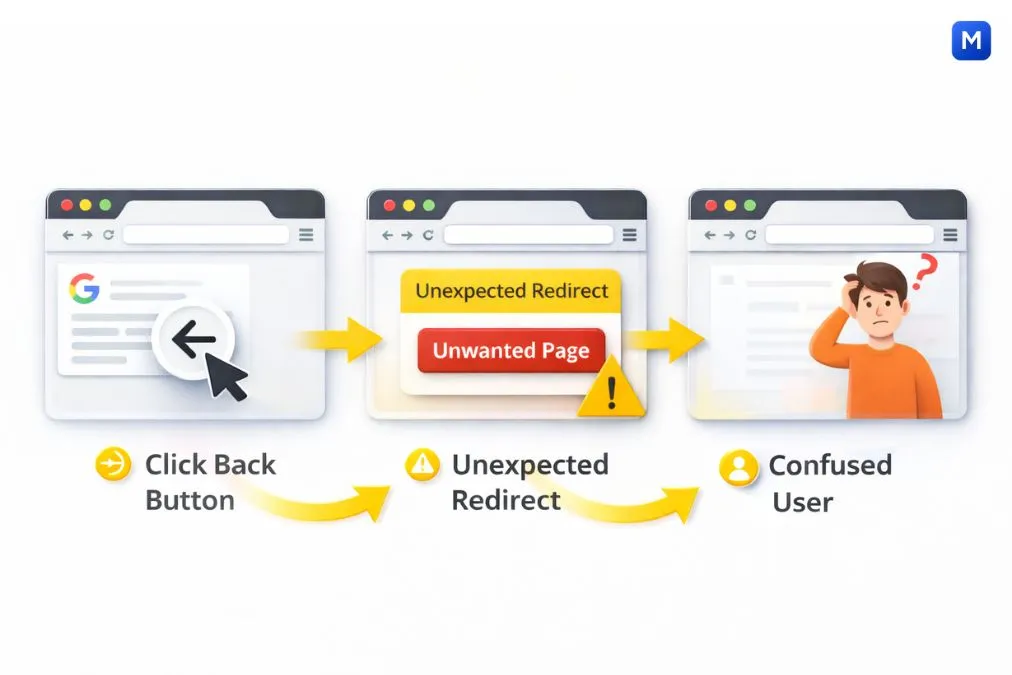
Back button hijacking is a deceptive SEO practice where a website interferes with browser navigation and prevents users from returning to the previous page. Instead, users are redirected to unwanted pages, ads, or URLs they never intended to visit.
In simple terms, it manipulates browser history and traps users inside the website through scripts or aggressive implementations. In many cases, this is done using the browser’s History API, which allows sites to modify navigation behavior without the user realizing it.
Common ways this happens include:
- History stuffing: Injecting extra pages into the browser history so users must click back multiple times to exit
- Redirecting users when they click the back button
- Showing forced ads or popups instead of the previous page
- Opening new pages instead of allowing normal navigation
- Blocking or delaying the back button action
For example, a user clicks your site from Google and tries to go back. Instead of returning to search results, they are pushed to another page or shown an ad. This creates frustration and breaks the expected browsing flow.
In my experience, this often comes from third-party scripts or ad networks that site owners do not actively monitor.
This behavior violates Google Search Essentials because it breaks user expectations and creates a misleading browsing experience. That is why Google now treats it as a serious issue.
What Is Google’s New Back Button Hijacking SEO Rule?
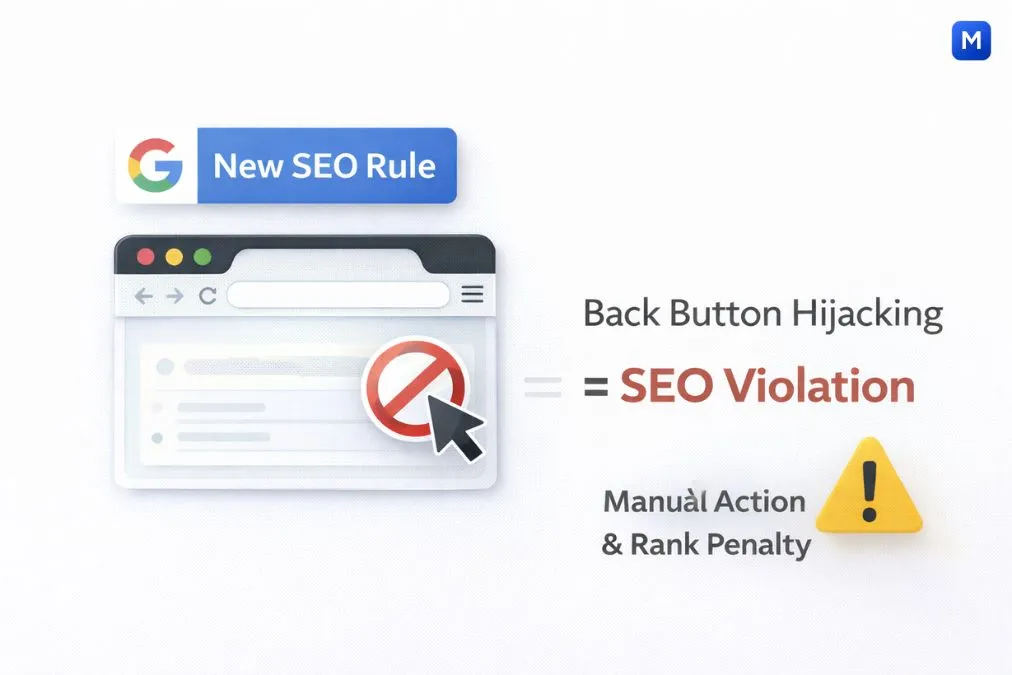
Google’s new back button hijacking SEO rule is part of the April 2026 spam update, where this behavior is now officially classified under the “Malicious and Deceptive Practices” section of Google’s Spam Policies. From June 15, 2026, websites that manipulate browser navigation can face penalties, including manual actions and ranking drops.
This is a major shift. Earlier, this category was mostly associated with malware or security threats. Now, Google is treating navigation manipulation as a direct violation of user trust, not just a UX issue.
In my experience, most websites do not create this problem intentionally. It often comes from third-party scripts, ad networks, or plugins. However, Google clearly states that responsibility still lies with the site owner.
Here is what this means for your website:
- You can receive a manual spam action in Search Console
- Your pages may face algorithmic ranking demotion
- Your traffic and overall search visibility can drop
The biggest risk is not what you build, but what you install. If any third-party tool on your site interferes with the back button, your site can still be penalized.
Why This Update Matters and Who Is at Risk
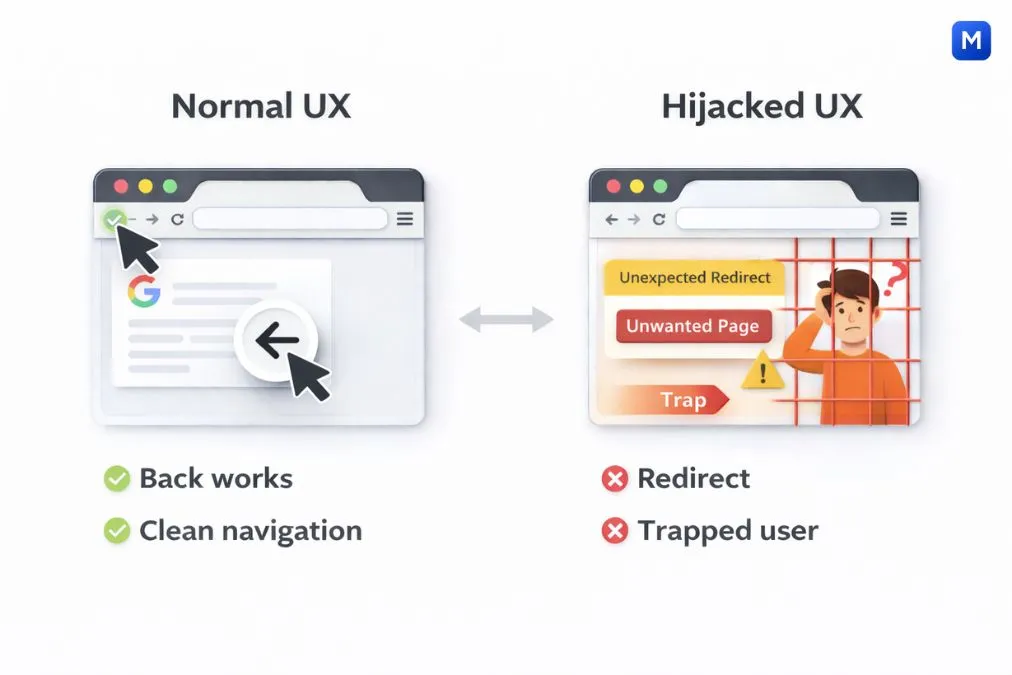
This update matters because it directly connects SEO with user experience and trust. Google now treats navigation manipulation as a violation of its search guidelines, which means even small technical issues can impact your rankings and visibility.
When users lose control over their browsing experience, trust breaks immediately. Google has clearly indicated that such practices damage the search journey itself, which is why this update aligns closely with Google Search Essentials and its focus on predictable, user-first navigation.
In my experience, I have seen websites affected by issues they did not even realize existed. Most of these problems come from scripts or tools added months earlier and never reviewed again.
Websites most at risk include:
- Ad-heavy websites using aggressive pop-under or interstitial scripts to increase ad impressions
- Affiliate and lead generation pages using back-button redirects to push users toward offers
- Sites using engagement hacks that inject fake history entries to manipulate analytics data
- Websites relying on third-party scripts such as widgets or trackers that monetize through hidden behavior
The biggest risk is not just what you build, but what you install. Google has made it clear that responsibility always lies with the site owner, even if the issue comes from external tools.
The real impact goes beyond rankings. It leads to loss of user trust, reduced engagement, and long-term damage to search visibility, which becomes harder to recover once affected.
How to Check and Fix Back Button Hijacking Issues
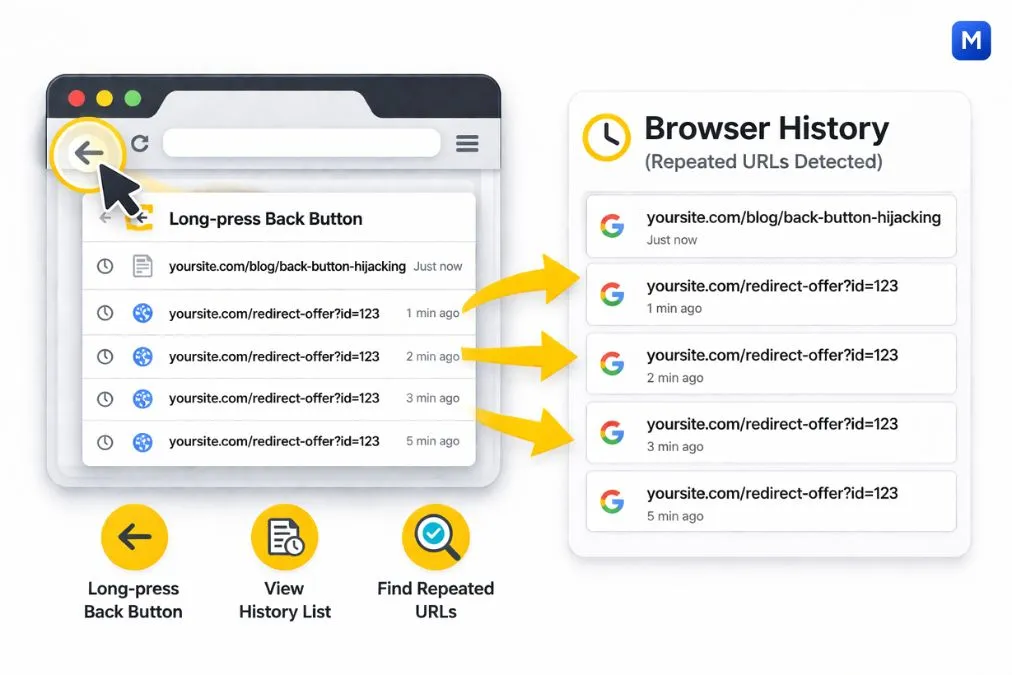
You can identify and fix back button hijacking by testing your site’s navigation and reviewing any scripts that interfere with normal browser behavior. The goal is simple: a user should always be able to go back with a single click.
Start with a basic manual test. Visit your site from Google, navigate through a few pages, and then try going back. If the back button does not return you directly to the previous page, there is an issue.
Here is how to check and fix it:
- Use the “long-press” back button test
In Chrome, long-press the back button to view history. If you see your own site repeated multiple times, it indicates history stuffing. - Check exit-intent popups and scripts
Ensure popups do not block or delay the back button action. Users should not be forced to interact before leaving. - Audit third-party scripts and ad networks
In my experience, most issues come from external tools. Temporarily disable them and re-test navigation behavior. - Review History API usage (for developers)
Check for history.pushState() or replaceState() in your code. These should improve navigation, not trap users. - Monitor Search Console for manual actions
Check the Manual Actions report regularly. Do not wait for a penalty to appear before fixing issues.
The key is simple. If a user clicks back, they should go back. Any interference can now put your site at risk under Google’s new spam policy.
Final Thoughts
The Google Back Button Hijacking SEO Rule makes one thing clear. SEO is no longer just about rankings. It is about delivering a clean and trustworthy user experience. In my experience, small technical issues like hidden scripts or outdated plugins can silently damage performance. This can happen even when your content is strong. By classifying this under “Malicious Practice,” Google is sending a clear message. The era of trapping users is over.
With the June 15, 2026, deadline approaching, ignoring this update is risky. You need to review your website now. Check your scripts, plugins, and ad integrations carefully. Fix issues before they impact your rankings. If you want long-term growth, start with a thorough SEO audit and ensure your site complies with Google’s guidelines. The best time to fix this was earlier. The next best time is now.
Start your SEO audit today before hidden issues start affecting your rankings.
FAQs About Google Spam Update 2026
Google’s spam policy is a set of rules that prevent deceptive, manipulative, or harmful practices from appearing in search results. It ensures websites provide a safe, trustworthy, and user-friendly experience.
The Google update 2026 is a spam policy update that classifies back button hijacking under “Malicious and Deceptive Practices.” It strengthens Google’s focus on user experience and stricter enforcement of violations.
Back button hijacking is a deceptive technique where a website blocks normal browser navigation and prevents users from returning to the previous page, often redirecting them to unwanted pages or ads.
Yes, back button hijacking can directly affect rankings. Websites using such practices may face manual spam actions or automated ranking demotions, leading to loss of traffic and visibility.
To fix this issue, test your back button behavior, audit scripts and plugins, remove any manipulative code, and ensure your website allows normal browser navigation without interference.
Google Search Essentials are official guidelines that define best practices for websites to appear in search results. They focus on user experience, trust, and compliance with Google’s policies.