How Long Does SEO Take to Show Results for a New Website?

Most new website owners expect quick results and quit too early when they do not see immediate growth. One of the most common questions I hear is how long does SEO take to show results for a new website. I have seen websites that had been stuck for months start growing after fixing only technical and authority gaps.
👉 Here is the simple answer:
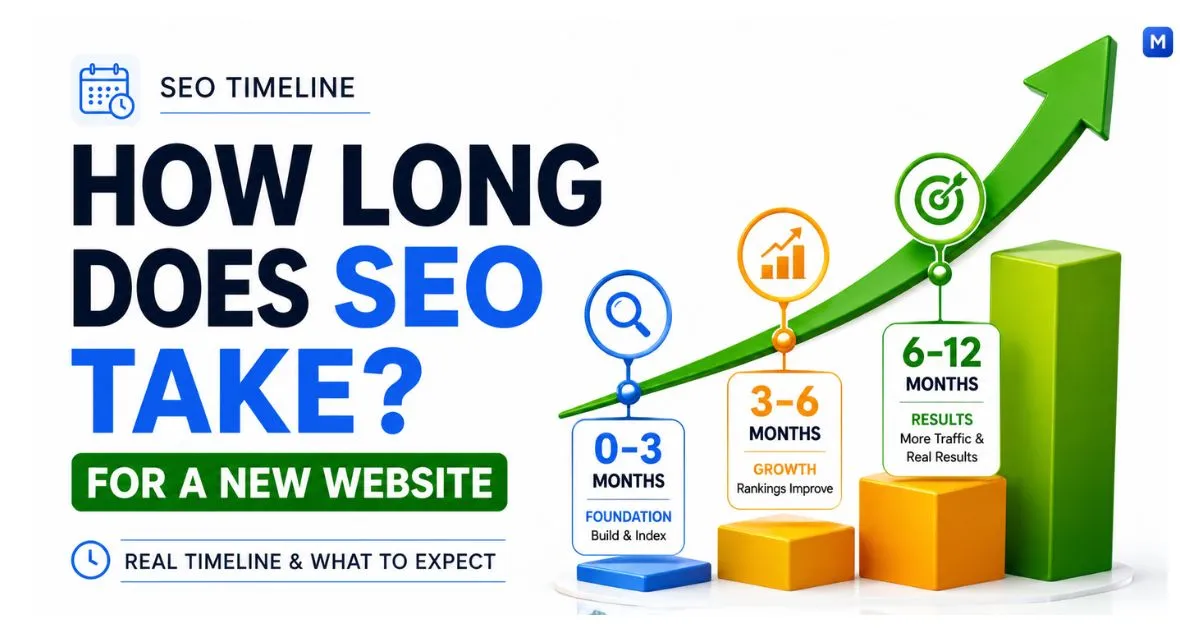
SEO takes 3 to 6 months to show initial ranking results
Strong growth in organic traffic usually happens in 6 to 12 months
👉 SEO is not slow, wrong expectations make it feel slow.
This is not a delay. This is how SEO actually works.
Google does not trust a new website instantly. It first evaluates your content, structure, and consistency. Then it gradually improves your rankings. If you understand this early, you will not quit before results start showing.
What Is the SEO Timeline for a New Website?
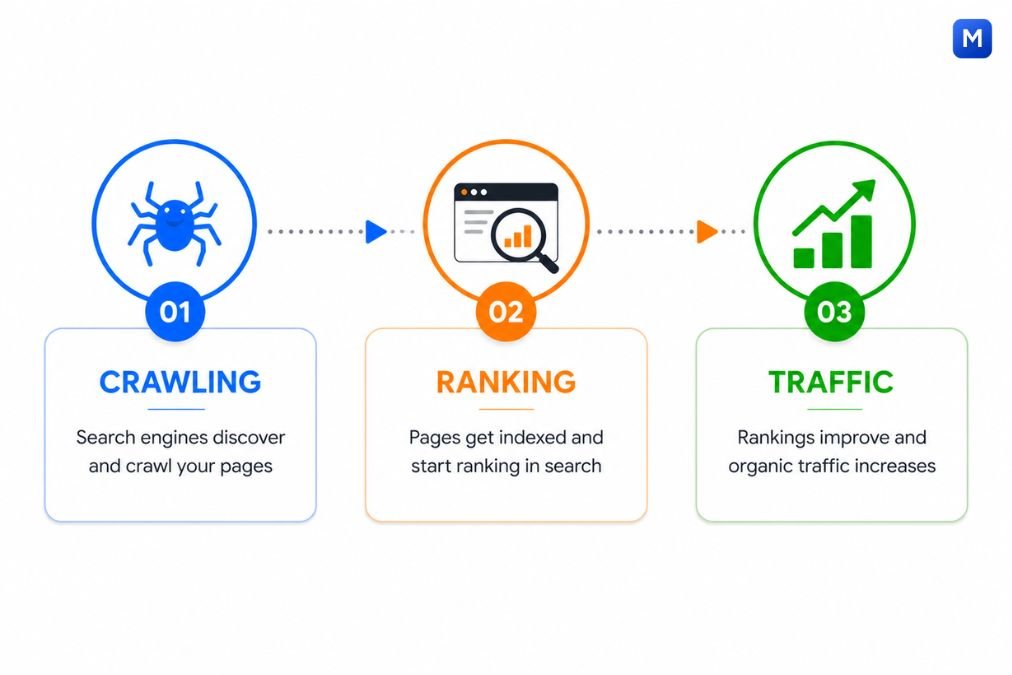
An SEO timeline for a new website usually falls between 3 to 12 months. It does not grow evenly. Growth moves in phases, and initial progress can feel slow. Then results start accelerating with consistent effort.
Here is a realistic SEO timeline breakdown:
- 0 to 3 months: Google crawls your site and understands your topic
- 3 to 6 months: Your keywords start ranking, and impressions increase
- 6 to 12 months: Organic traffic grows, and leads come consistently
👉 The timeline stays similar, but the growth speed depends on your strategy.
When I work on new websites, the first phase always feels silent. Clients often think nothing is happening. However, this is when I build the real foundation through content, structure, and technical fixes.
Then, small ranking improvements start to show. This becomes the turning point. If you stay consistent here, growth becomes predictable.
👉 Most businesses fail because they stop during the slow phase
👉 The ones who continue usually see the real results
Why Does SEO Take Time to Show Results?
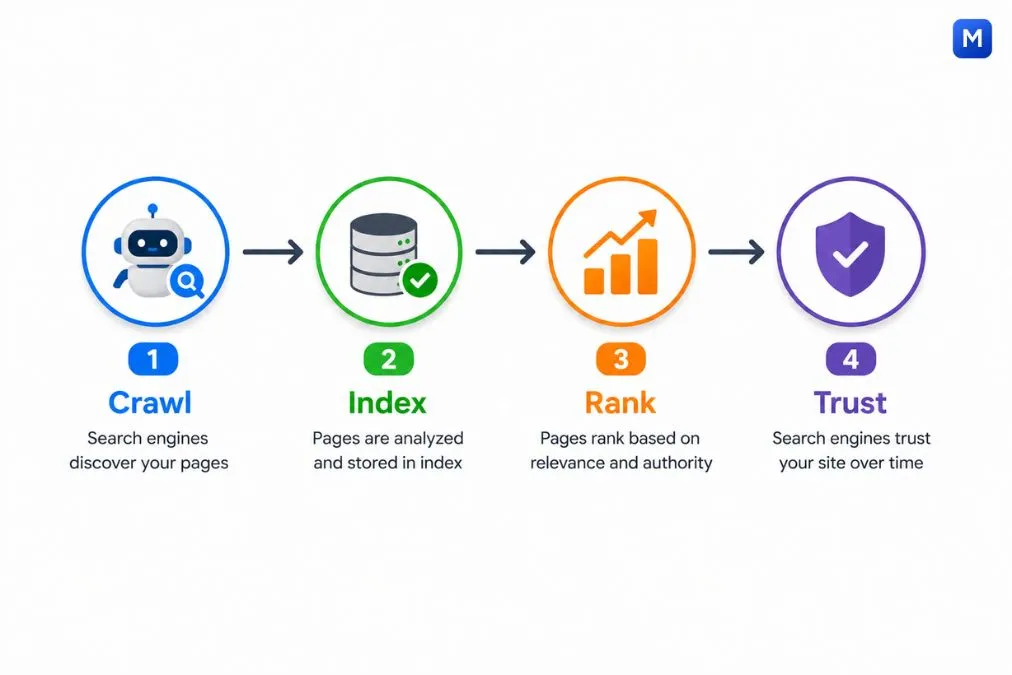
Google needs to crawl, understand, and trust your website before ranking it. If you want to understand this better, you should learn how search engines work. Results do not appear instantly. Rankings depend on content quality, authority, and technical signals that build gradually.
Here is what happens behind the scenes:
- Indexing: Google crawls and indexes your pages
- Evaluation: It checks your content relevance and topical coverage
- Technical Health: It verifies site speed, structure, and indexing
- Trust Building: It measures authority through backlinks and consistency
When I work on new websites, I see one common issue. Businesses focus only on content. They ignore authority and technical setup. As a result, even good content struggles to rank.
👉 In many projects, I see rankings improve only after technical fixes and backlinks start working together.
In the beginning, your website has no trust. Google does not know if your content is reliable. It tests your pages slowly before pushing them higher.
This is why topical authority matters. If you cover a topic deeply, Google sees you as a reliable source. Rankings then improve faster.
👉 SEO is a combination of trust, authority, and technical strength
👉 These signals take time to build
SEO vs Google Ads – Which Gives Faster Results?
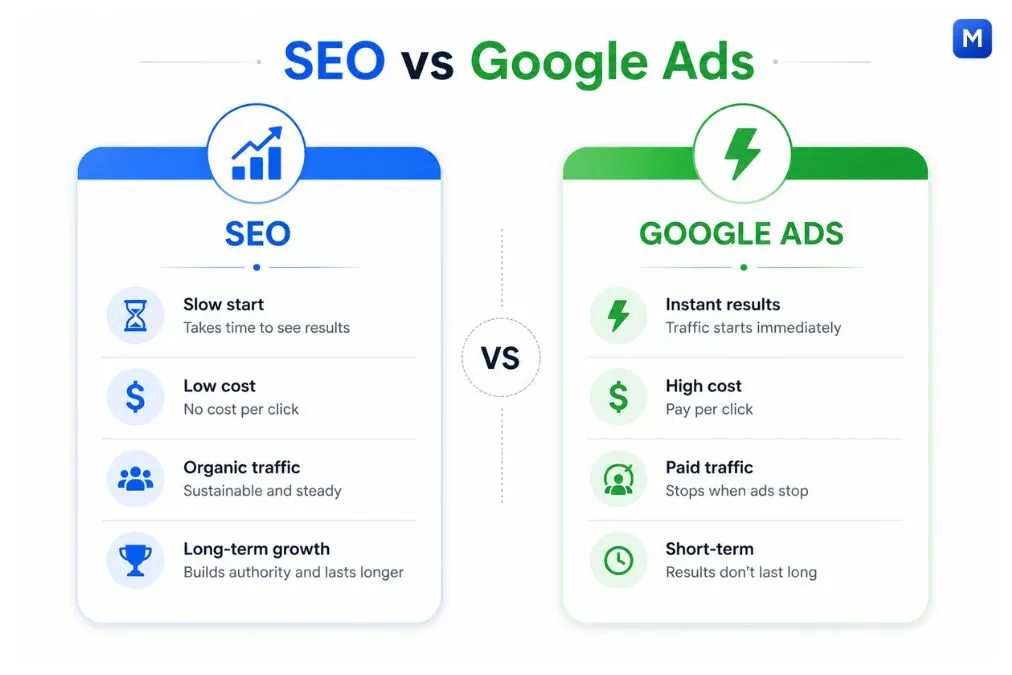
Google Ads delivers results instantly, while SEO takes time to build rankings. Ads can start driving traffic the same day. However, SEO creates long-term visibility and brings more qualified leads over time.
Here is a simple comparison:
| Factor | SEO | Google Ads |
| Speed of Results | Slow (3 to 6 months) | Instant (same day) |
| Traffic Type | Organic | Paid |
| Cost Over Time | Decreases | Continuous |
| Lead Quality | High intent | Mixed intent |
| Long-Term Value | High | Low |
From my experience, this is where most businesses misunderstand the difference.
SEO leads are usually more powerful. These visitors come after researching their problem. They trust Google results and choose your website intentionally. Because of this, SEO leads are more likely to convert into real customers.
On the other hand, Google Ads can sometimes bring random clicks. Not every visitor is ready to take action. That is why lead quality often varies.
I have seen this pattern across multiple projects. SEO may feel slow in the beginning. However, once it starts performing, it recovers your investment faster than expected.
👉 In one project, paid ads stopped bringing leads after the budget ended, but SEO traffic continued generating leads without extra spend.
👉 Ads give you speed
👉 SEO gives you quality and long-term returns
The smartest approach is not choosing one over the other. Use ads for quick results, but build SEO for sustainable growth.
What Is a Realistic SEO Timeline Breakdown?
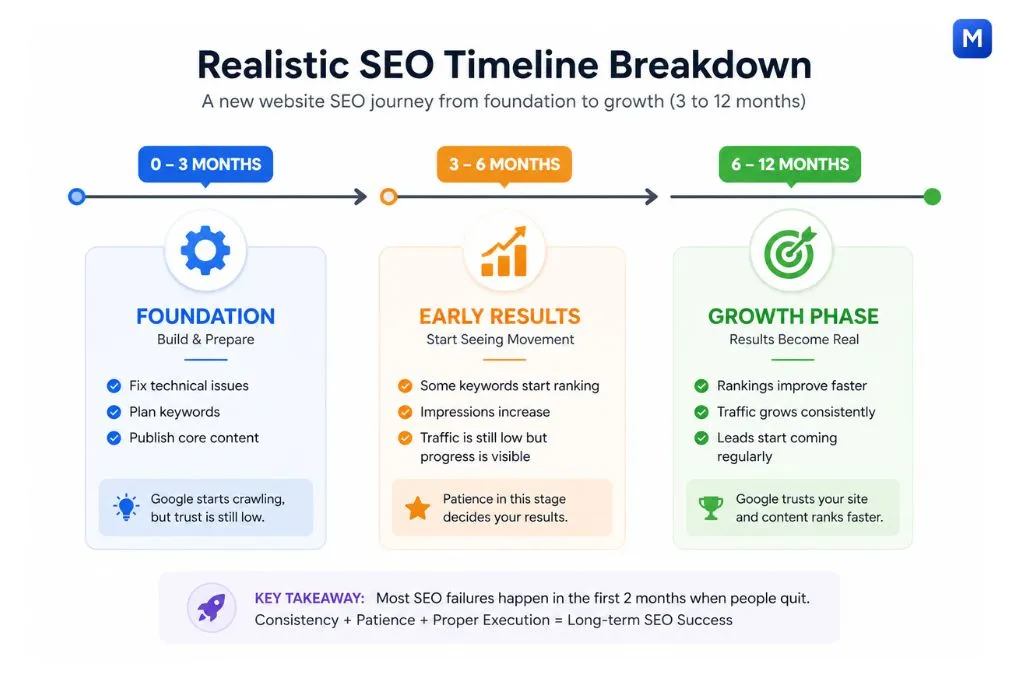
A realistic SEO timeline breakdown for a new website follows three stages over 3 to 12 months. However, in many real cases, it can take longer. The timeline depends on your niche, competition level, search demand, and how much you invest in SEO.
0 to 3 months (foundation phase)
This phase feels slow. You fix technical issues, plan keywords, and publish core content. Google starts crawling your site, but trust is still low.
👉 Most people quit here, but this is where SEO actually starts
3 to 6 months (early results phase)
Now you start seeing movement. Some keywords rank, and impressions increase. Traffic is still low, but progress becomes visible.
From my experience, this is the stage where patience decides results.
6 to 12 months (growth phase)
This is where results become real. Rankings improve faster. Traffic grows. Leads start coming regularly. Your earlier effort starts paying back. This is where you begin to see how SEO helps businesses grow in real scenarios:
In this stage, Google recognizes your topical authority. It starts by trusting your website as a reliable source in your niche. Because of this trust, your new content ranks much faster than before.
👉 This is where consistency gives compounding returns
👉 Most SEO failures do not happen in 12 months. They happen in the first 2 months when people quit.
Now, let me share something most people misunderstand.
In competitive niches, SEO can take more than 12 months. If competition is high, or strong websites already dominate rankings, results take longer. Also, if your audience searches less frequently, growth slows down.
Another important factor is execution.
Many people think hiring an SEO expert is enough. That is not true. SEO works only when you follow the strategy. If your expert suggests content, backlinks, or improvements, you need to act on them.
👉 Understanding SEO and executing SEO are completely different
👉 Results depend on implementation, not just advice
From my experience, businesses that trust the process and invest properly see faster and more stable growth. If you understand this, you will stop treating SEO as a quick task and start treating it as a long-term asset.
What Factors Affect How Long SEO Takes?
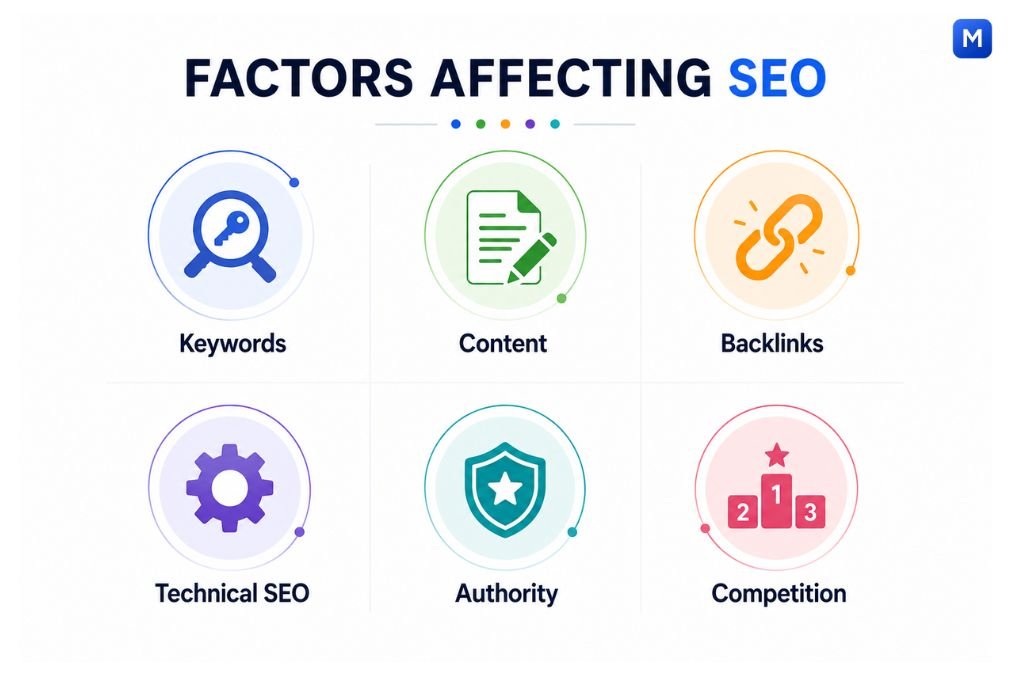
SEO results depend on more than time. The speed of your results depends on competition, authority, content depth, backlinks, technical setup, and the strategy behind execution. If these align properly, SEO moves faster. If they do not, even good efforts take longer.
Keyword competition
High-competition keywords take time because strong websites already dominate them. In most projects, I first target low-competition keywords to generate early traction. This builds momentum and helps in ranking harder keywords later.
👉 Starting with the wrong keywords is one of the biggest reasons SEO feels slow
Website authority and age
New websites start with zero trust. Google needs time to evaluate them. Older websites often rank faster because they already have authority and history.
From my experience, authority grows with consistent content and strong backlinks, not just time.
Content quality and consistency
Content works only when it solves real problems. Publishing random articles does not help.
I have seen websites publish dozens of posts with no results. Then we fix content depth and intent, and rankings start improving.
👉 Quality and relevance matter more than quantity
Backlinks
Backlinks act as trust signals. However, not all backlinks help.
In real projects, a few strong and relevant backlinks often outperform many weak ones. When high-quality links come in, rankings improve faster.
👉 Quality backlinks can significantly speed up SEO growth
Technical SEO
Technical issues slow everything down. If your pages are not indexed properly, your content will not rank.
When I fix indexing, structure, or speed issues early, results improve much faster. Technical SEO removes growth blockers.
Niche competition and industry standards
This is where timelines change completely. For example, SEO for business growth in India depends heavily on competition and local demand:
A local business can rank faster, but industries like finance, SaaS, or health take longer due to high competition. Also, if search demand is low, growth slows down.
👉 Your niche directly controls your SEO speed
SEO expertise and execution quality (Important)
This is a factor most people ignore.
Not every SEO agency is perfect, and not every freelancer is wrong. The real issue comes when businesses choose based only on low cost instead of experience and expertise.
I have seen many cases where clients hired cheap services and expected fast results. However, poor strategy, wrong execution, or outdated practices delayed their growth.
SEO is not just about hiring an expert. Choosing the right SEO services for small businesses can significantly improve your results. It also depends on how well you follow their strategy. If your SEO expert suggests content, backlinks, or improvements, you need to act on them properly.
👉 Understanding SEO and executing SEO are completely different
👉 Wrong decisions at this stage can delay results significantly
If you want faster SEO results, you need the right strategy, proper execution, and the willingness to invest where required. That is where most businesses either grow or get stuck.
👉 SEO speed is not random. It is controlled by these factors.
Why Your SEO Is Taking Too Long and How to Fix It
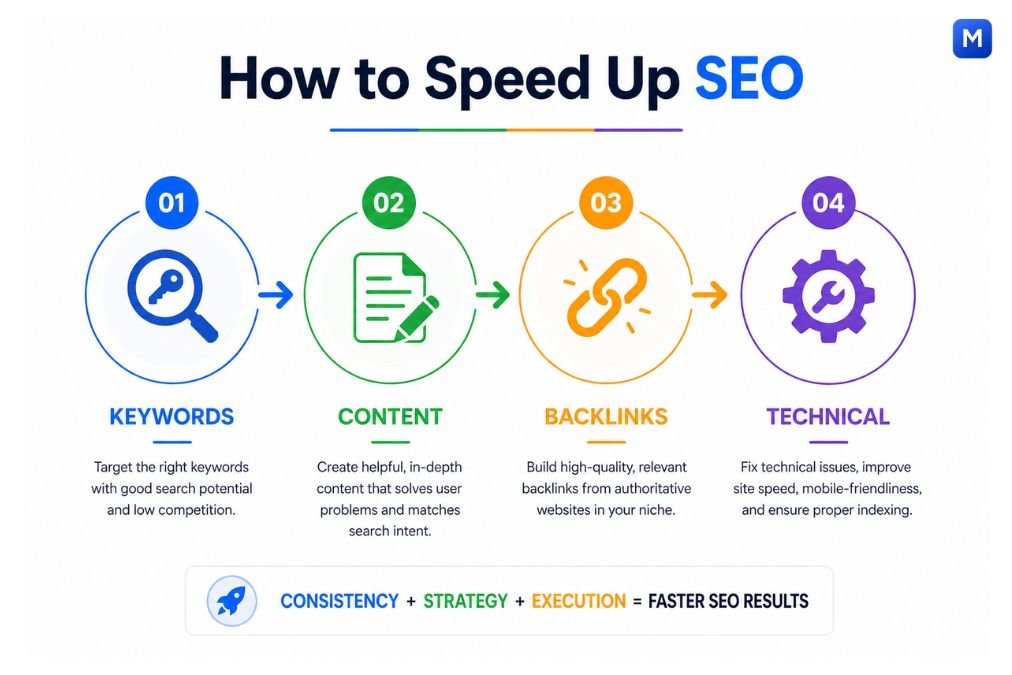
SEO usually feels slow when the real problem is not time, but wrong execution. In most cases, delays happen because of avoidable mistakes. If you fix these early, your SEO results can improve much faster than expected.
Here are the most common issues I see in real projects:
- Wrong keyword targeting
Many businesses chase competitive keywords too early and see no results.
👉 Fix: Start with low-competition, intent-based keywords - Weak or inconsistent content
Content gets published without depth or strategy, which confuses Google.
👉 Fix: Focus on solving topics deeply and stay consistent - No backlinks or authority
Without trust signals, even good content struggles to rank.
👉 Fix: Build relevant, high-quality backlinks over time - Technical SEO issues
Hidden problems like poor indexing or slow speed block growth silently.
👉 Fix: Fix technical issues before scaling content - Pausing SEO efforts midway
Stopping SEO midway is a major mistake. You lose the momentum you built earlier. When you stop, your competitors continue moving ahead.
When you restart, you do not continue from the same point. You often start from zero because Google’s trust weakens over time. This makes SEO slower and more expensive.
👉 Consistency is the most cost-effective way to grow
👉 Stopping early wastes your previous investment
From my experience, SEO does not fail because it takes time. It fails because execution breaks or expectations are unrealistic. When you fix these gaps and stay consistent, results start coming faster and more predictably.
👉 SEO delay is rarely about time. It is almost always about wrong decisions
Can SEO Show Results in 1 Month or Faster?
SEO does not show real results in 1 month for a new website. You may see indexing or impressions, but actual rankings, traffic, and leads take at least 3 to 6 months of consistent work.
In the first month, I focus on setup. This includes technical fixes, keyword planning, and initial content. Google starts crawling the site, but it does not trust it yet.
From my experience, many clients expect results in 30 days. When they do not see growth, they assume SEO is not working. However, after 3 to 4 months of consistent work, the same websites start gaining rankings and traffic.
- SEO is not a quick-result channel
- It is a patience-driven growth process
👉 If someone promises results in one month, they are either misleading you or using risky methods.
Let me be clear here.
If you expect results in one month, SEO may not be the right strategy for you right now. In that case, you may end up wasting time and money. SEO works best when you are ready to stay consistent and follow the process.
👉 SEO rewards patience and execution
👉 Without patience, SEO will not work for you
What Results Can You Expect in the First 3 Months of SEO?
In the first 3 months, you will not see major traffic or consistent leads. You will mostly see early signals like indexing and impressions. This phase builds the base for future growth.
From my experience, most clients feel confused at this stage. They check traffic daily and think nothing is happening. However, Google is still testing your website’s relevance and understanding your content.
👉 I have seen websites move from zero impressions to consistent visibility after this phase.
Early signs of SEO progress:
- Better Indexing: Google finds and lists your pages faster
- Rising Impressions: Your website starts appearing in more search results
- Keyword Movement: Your target keywords begin entering the top 100 results
After 3 months, you start seeing growth in visibility. Traffic and impressions increase. Leads may start coming, but in low quantity and not consistently.
👉 This is the build-up phase, not the result phase
👉 This is where most people quit, but you should stay consistent
Realistic SEO Expectations vs Common Myths
Most SEO failures happen because expectations are wrong, not the strategy. Many businesses believe in quick results and shortcuts, which leads to frustration and poor decisions. Understanding what is real helps you stay consistent and get results.
Here is a simplified comparison:
| Myth | Reality |
| SEO gives results in weeks | Takes 3 to 6 months |
| More content = better rankings | Quality + intent matters |
| SEO is one-time work | Needs continuous effort |
| Rankings guarantee leads | Only targeted traffic converts |
| Hiring an expert is enough | Execution + investment matter |
From my experience, SEO does not fail because it is slow. It fails because people expect it to behave like ads.
👉 SEO rewards patience, not urgency
👉 The sooner you accept this, the faster you grow
👉 This mindset shift alone can save you months of frustration.
H2: How to Build an SEO Strategy That Gets Faster Results
You cannot control time in SEO, but you can control how fast results come. A strong SEO strategy focuses on the right keywords, content depth, technical setup, and authority building. When these align, you start seeing results faster than average.
👉 This is the exact approach I follow in real client projects.
Let me show you what actually works in real projects.
Focus on low competition keywords
Starting with high-competition keywords slows everything down. Instead, I always begin with low-competition, high-intent keywords.
👉 Early wins create momentum
Build topical authority
Google trusts websites that cover a topic deeply. I focus on building content clusters instead of random posts. When you answer all the questions around a topic, Google starts seeing your site as an expert source.
👉 Depth builds trust faster than scattered content
Optimize on-page SEO
Even good content fails without proper optimization. Titles, headings, and internal linking all play a key role.
👉 Small fixes can improve rankings quickly
Improve technical SEO
Technical issues slow down growth. If your site is not properly indexed or is slow, results get delayed.
👉 Technical SEO supports every other effort
Start link building early
Backlinks build authority. When done early, they help content rank faster.
👉 Authority accelerates SEO growth
From my experience, SEO becomes faster when strategy, execution, and consistency work together. Most businesses delay results because they ignore one or more of these areas.
👉 SEO speed is not luck, it is a strategy
This is a high-level overview. A proper SEO strategy requires a detailed plan and consistent execution. Most businesses struggle because they miss technical gaps or authority building.
If you want better results, you should either follow a structured strategy or work with an experienced SEO expert who can guide you correctly.
How ManojSEOPro Helps You Achieve Faster SEO Growth
At ManojSEOPro, I focus on fixing what actually slows down your SEO, not just doing basic optimization. My approach combines technical SEO, user experience, and strategy so you get faster and more stable results.
The first thing I work on is your website foundation.
In many projects, I find technical issues, poor structure, or weak user experience. When I suggest improving UI or redesigning the website, many clients feel unsure. They think it is an extra cost. But this is where most SEO strategies fail.
👉 Today, SEO is not just SEO, it is also SXO (Search Experience Optimization)
If users do not stay on your website, Google does not trust it. Better design and experience improve engagement, and higher engagement improves rankings.
👉 In several projects, fixing UX and technical gaps alone improved engagement and helped rankings move faster.
From my experience, when we improve UX and fix technical gaps:
- Users stay longer
- Conversion rate improves
- Rankings grow more consistently
👉 Better experience builds trust, and Google rewards trust
After building this foundation, I focus on:
- Smart keyword strategy
- Content clusters for topical authority
- Technical optimization
- Strong backlink building
👉 SEO speed is not luck, it is a strategy
This is why some websites grow faster while others struggle. The difference is not effort, it is direction. If you want real SEO growth, you need the right system, not random tactics.
Conclusion
If you are wondering how long does SEO take to show results for a new website, the answer depends on your strategy, consistency, and execution. Most websites take a few months to show results, but real growth comes only when you stay committed.
From my experience, the biggest difference I see is not in tools or tactics. It is in the mindset. The businesses that treat SEO as a long-term investment grow consistently. The ones looking for quick results usually quit too early.
👉 SEO rewards patience, not shortcuts
👉 The right strategy with consistent execution always wins
👉 I have seen this pattern across multiple projects, and it remains consistent. SEO is not slow. It is predictable if done correctly
If you want faster and more predictable SEO growth, you need the right strategy from the beginning. If you are serious about results, working with an experienced SEO expert can save you months of trial and error.
FAQs – SEO Timeline Questions
SEO usually takes 3 to 6 months to show initial results. However, consistent traffic and leads typically come between 6 to 12 months with proper strategy and execution.
You may see early signals like impressions within a few weeks. But real results like rankings and traffic usually take a few months of consistent work.
SEO is a long-term process. Most websites start seeing measurable results in 3 to 6 months, depending on competition and effort.
SEO takes time because it builds trust gradually. For new websites, it usually takes several months before meaningful results appear.
The timeline depends on your niche, competition, and strategy. In most cases, results start appearing after a few months of consistent SEO work.
For a new website, SEO usually takes 3 to 6 months for initial rankings and 6 to 12 months for strong growth, especially in competitive niches.
No, SEO does not show real results in 1 month for most websites. You may see early signals, but actual rankings and traffic take more time.
SEO takes time because Google needs to crawl, understand, and trust your website. This process depends on content, authority, and consistency.
Factors like keyword competition, content quality, backlinks, technical SEO, and niche difficulty directly affect how fast results come.
You can speed up SEO by targeting low-competition keywords, fixing technical issues, building backlinks, and maintaining content consistency.
This usually happens due to wrong keywords, weak content, lack of backlinks, or technical issues. Fixing these can improve performance.
Google can index pages quickly, but ranking takes time. For new websites, it usually takes a few months before stable rankings appear.
Yes, low-competition keywords rank faster. They help generate early traffic and build authority for harder keywords later.
Local SEO can show results faster than general SEO. In many cases, improvements appear within 1 to 3 months, depending on the competition.
You can expect initial traffic after 3 to 6 months. However, consistent and scalable traffic usually comes after 6 months or more.