Beginner’s Guide to SEO Services for Small Businesses

In this beginner’s guide to SEO services for small businesses, I will explain how SEO helps your business get customers from Google, even if you have no prior knowledge about it. Many small business owners create a website, but it does not bring traffic or leads because it does not appear in search results.
At its core, SEO helps your business appear when people are searching. Instead of chasing customers, it helps customers find you. When done correctly, it brings the right visitors, builds trust, and supports steady business growth.
In this guide, I will explain everything simply and practically. You will understand what SEO services are, how they work, and how they can actually benefit your business.
What Are SEO Services for Small Businesses?
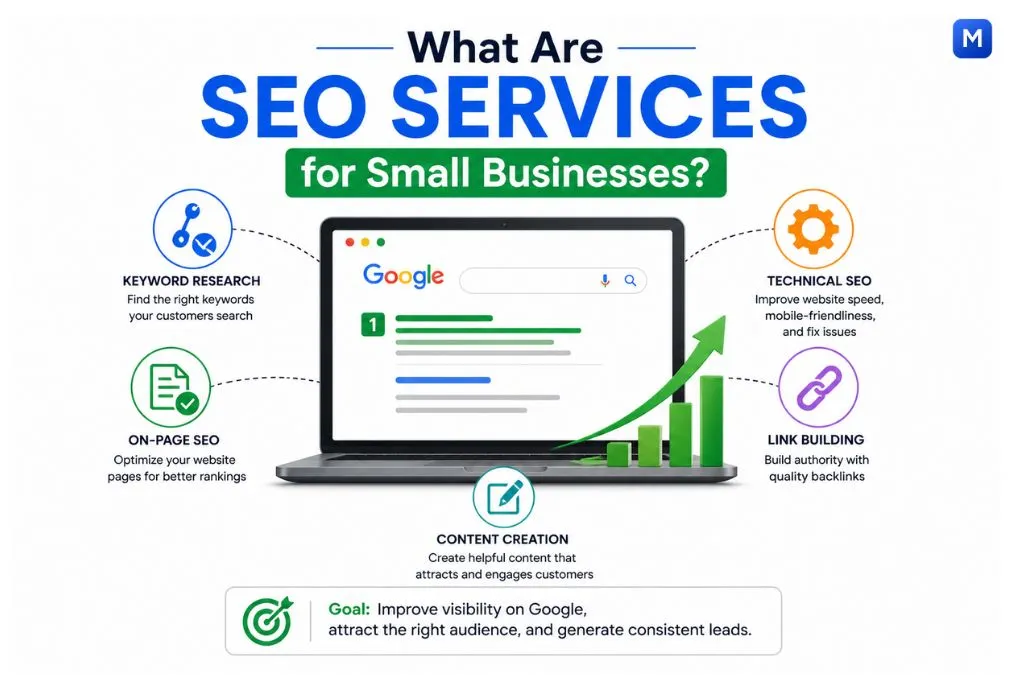
SEO services for small businesses help improve your website’s visibility on search engines like Google. For most small businesses, local SEO plays a key role because customers usually search for nearby services. The goal is to attract the right audience, increase organic traffic, and generate consistent leads without relying only on paid ads.
In simple terms, SEO services help your business show up when people search for what you offer. Many small businesses have websites, but they do not appear on Google. As a result, they miss potential customers.
SEO solves this problem through a clear process:
- Finding the right keywords (and local search terms) that your customers use
- Improving your website pages for better visibility
- Fixing technical issues that affect rankings
- Creating helpful content that answers user queries
As a result, your website starts attracting the right audience rather than random visitors.
Unlike ads that stop working the moment you stop paying, SEO builds an asset that keeps bringing traffic over time. If you want to understand the bigger impact, learn how SEO helps businesses grow in detail.
Why Do Small Businesses Need SEO?
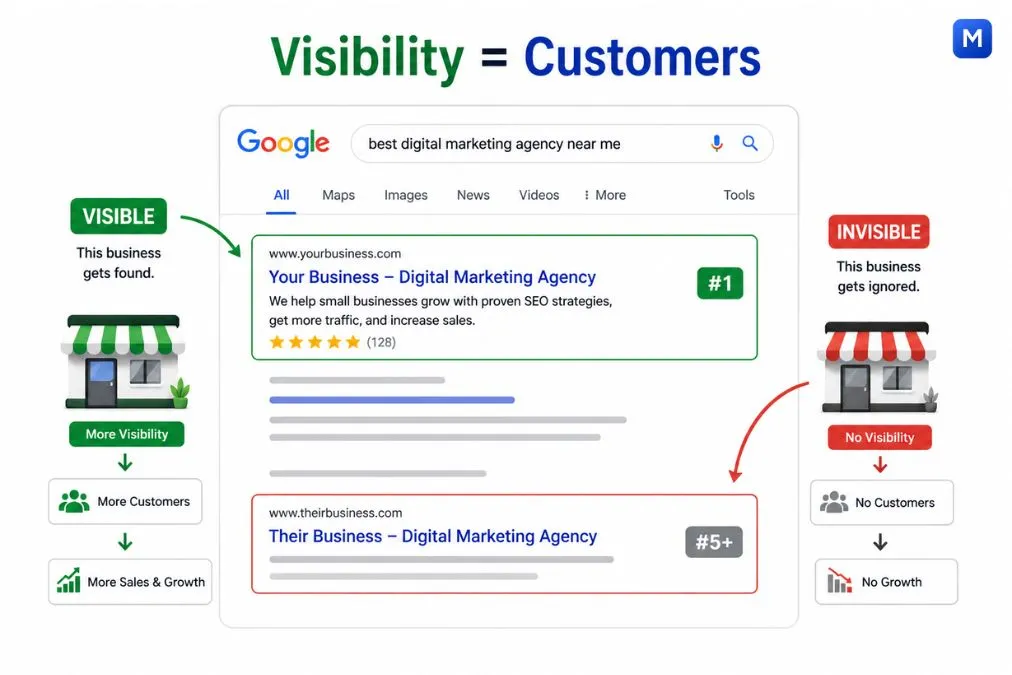
Small businesses need SEO to compete online, attract targeted customers, and reduce dependency on paid advertising. SEO helps your website appear in search results when people actively search for your services, building trust, improving visibility, and driving long-term growth.
If your business is not visible on Google, you are losing customers to competitors who are.
Today, most people search before they buy. If your website does not appear in those searches, your business stays invisible. SEO helps you fix this by placing your business in front of people who are already looking for what you offer.
Here is why SEO matters for small businesses:
- It brings customers who are actively searching, not random visitors
- It builds trust because people rely on search results
- It reduces your dependency on paid ads over time
- It creates consistent visibility instead of temporary traffic
Unlike ads that stop the moment you stop paying, SEO keeps working in the background and continues to bring traffic.
Because of this, SEO becomes one of the most reliable ways to grow a small business online. If you want to go deeper, you can also read why SEO is important for business growth in India.
How Does SEO Work Step by Step?
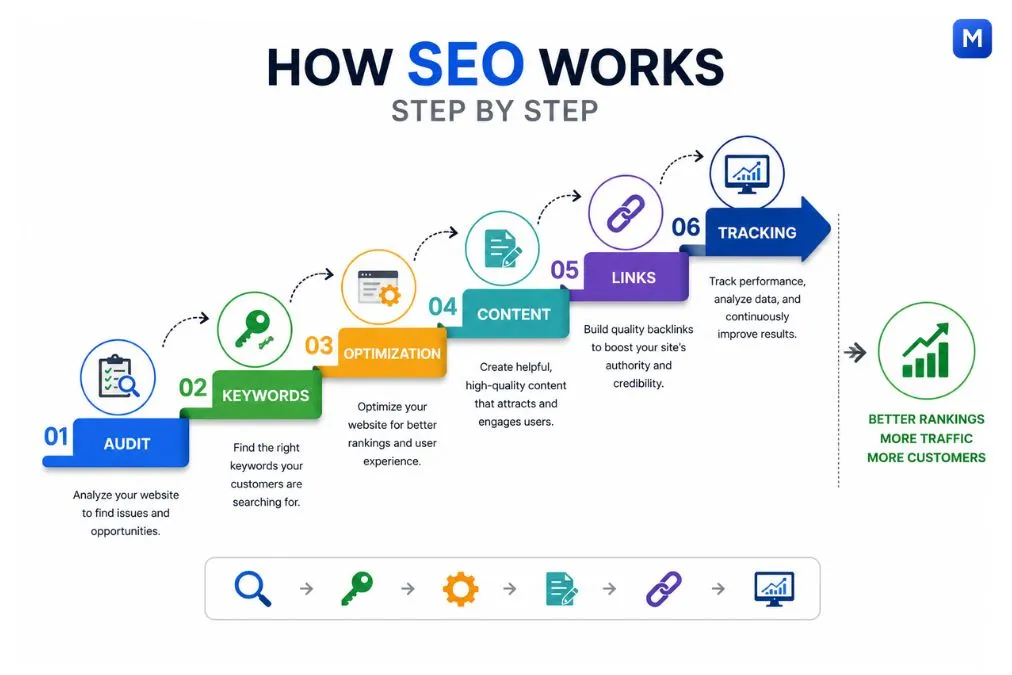
SEO works through a structured process that includes auditing your website, keyword research, on-page optimization, content creation, technical improvements, and link building. These steps help search engines understand your website and rank it higher, which increases visibility and brings relevant traffic.
SEO is not a one-time task. It works like a system where each step supports the next.
Most beginners try random tactics. Because of that, they do not see results. But when you follow a proper process, SEO starts compounding over time.
Step-by-Step SEO Process
- 1. Website Audit (First Step)
Before doing anything, you need to understand what is wrong. Most websites have hidden issues that block rankings from the start. - 2. Keyword Research
You find what your customers are actually searching for. Many businesses target the wrong keywords and attract useless traffic. - 3. On-Page SEO
You optimize pages so search engines clearly understand your content. This directly impacts how your pages rank. - 4. Technical SEO
You fix issues like speed, mobile-first usability, and indexing. If this is ignored, even good content struggles to rank. - 5. Content Creation
You create content that answers real user questions. This is what actually brings traffic and builds trust. - 6. Link Building
You build authority through links from other trusted websites. Without authority, rankings stay limited in competitive niches. - 7. Tracking and Improvement
You monitor results and improve continuously.
👉 Updating old content is part of the 80/20 rule, where small changes often bring the biggest traffic gains.
When these steps work together, SEO becomes predictable and scalable instead of random. If you want to understand the foundation behind this process, you can also explore how search engines work.
What Types of SEO Services Should a Beginner Choose?
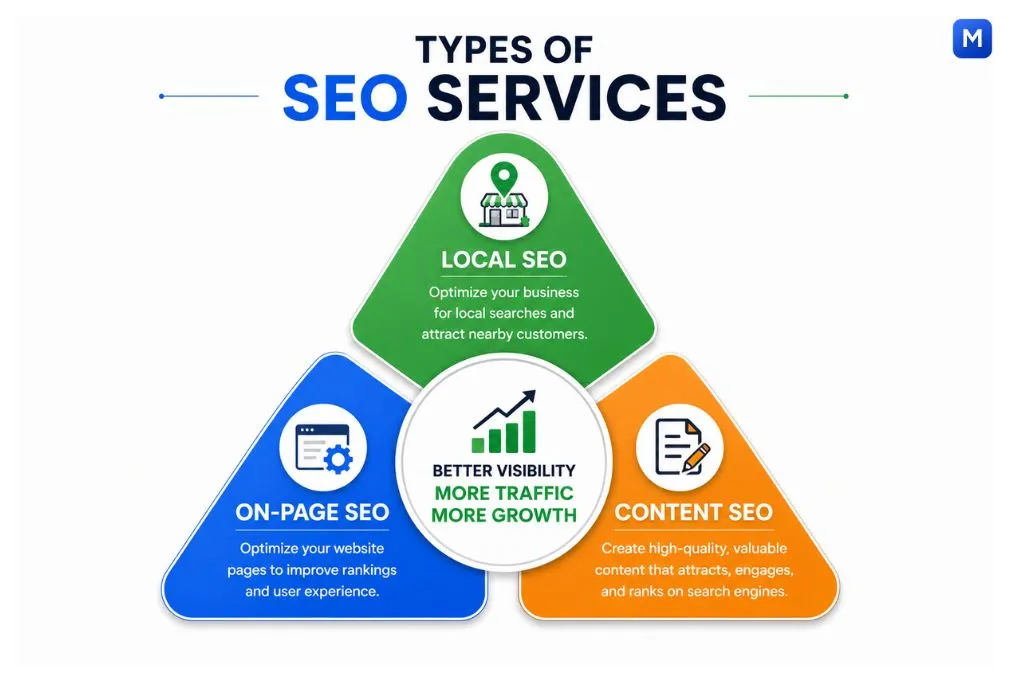
Beginners should focus on essential SEO services like local SEO, on-page optimization, and content creation. These services provide maximum impact for small businesses by improving visibility, targeting the right audience, and generating traffic and leads without unnecessary complexity.
When you start with SEO, the biggest mistake is trying to do everything at once.
Many small businesses end up wasting time on advanced tactics, tools, and backlinks without fixing the basics. Because of that, they do not see results even after months. You do not need expensive tools or complex strategies in the beginning. You need the right foundation.
Here are the only SEO services you should focus on first:
- Local SEO & Google Business Profile: This helps your business appear in Google Maps and local search results, where most buying decisions happen for small businesses. If your customers are nearby, this is where most of your leads will come from.
- On-Page SEO: This improves your website pages so search engines can clearly understand your content. Without this, even a well-designed website struggles to rank.
- Content Creation: This focuses on creating useful content based on what your customers are searching. This is what brings consistent traffic and builds long-term trust.
If you run a local business, this is often the fastest way to start getting real customers from SEO.
If you skip these basics, SEO usually does not work, no matter how many tools or tricks you try. These three areas are not optional. They are the foundation of SEO for any small business.
Simple Direction to Follow
- Start with local visibility
- Then optimize your website
- Then create content
👉 This is the correct order for most beginners.
If you are still confused about where to start, you can explore a detailed SEO strategy guide to plan your next steps clearly.
How to Do SEO for a Small Business?
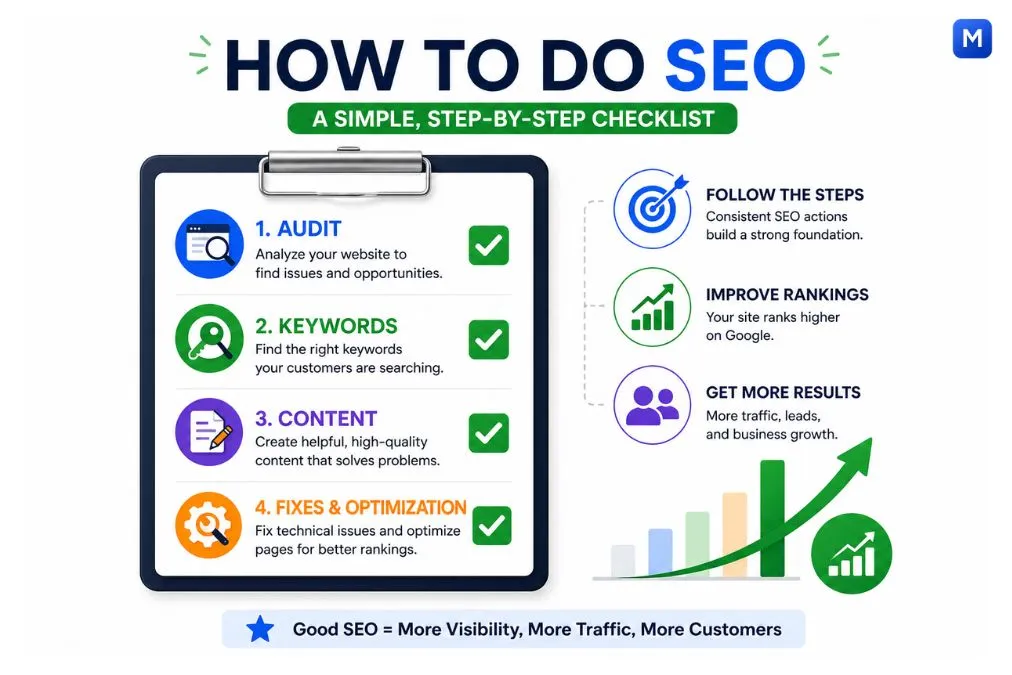
To do SEO for a small business, you need to identify the right keywords, optimize your website pages, create helpful content, fix technical issues, and build backlinks. Consistent effort and tracking performance help improve rankings and generate long-term results.
SEO becomes simple when you follow a clear process instead of random tactics.
A common mistake is skipping the basics. Because of that, they struggle to get results even after putting in effort.
Simple Beginner Process
Start with a basic website audit. First, understand what is not working. Without this step, SEO usually fails.
👉 Think of SEO like a ladder, where each step supports the next. If your keyword research is wrong, even great content will reach the wrong audience.
Then follow this simple process:
- Keyword Research
Find what your customers are actually searching for
→ Wrong keywords bring traffic, but not leads - On-Page Optimization
Make your pages clear and easy to understand
→ Search engines should clearly understand your offer - Content Creation
Create helpful content that answers real questions
→ This is the main source of long-term traffic - Technical Fixes
Improve speed, mobile-first usability, and indexing
→ Weak technical SEO slows down growth - Basic Backlinks
Get links from relevant and trusted websites
→ This builds authority and trust
Finally, track your performance and keep improving.
- Use Google Search Console → Acts like a health report
- Use Google Analytics → Shows how users behave
👉 Pro tip: Updating existing content often brings faster results than creating new pages.
If you follow this process step by step, SEO becomes manageable and starts delivering results over time.
What Results Can You Expect from SEO Services?
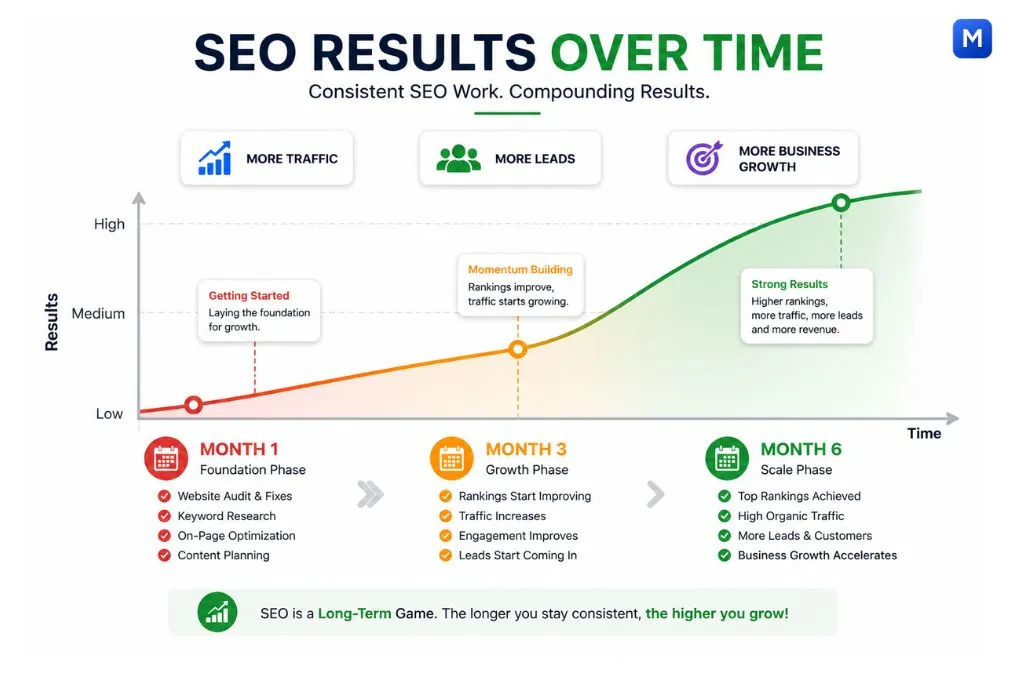
SEO services help small businesses improve visibility, increase organic traffic, and generate qualified leads over time. However, results do not come instantly. Most businesses start seeing improvements within a few months, depending on competition, strategy, and consistency.
SEO results do not appear overnight, and that is where most beginners get confused.
In most cases, I have seen small businesses expect quick wins. When that does not happen, they assume SEO is not working. However, SEO builds gradually and gains strength over time.
👉 Think of SEO like growing a tree. The early work happens below the surface, but that is what makes long-term growth possible.
Realistic Timeline Expectation
- 1–3 months
You build the foundation by fixing issues and optimizing your website.
Think of this as the root system of a tree. You do not see it, but without it, nothing grows. - 3–6 months
Your pages start ranking, and traffic begins to increase.
You may start seeing early leads during this stage. - 6+ months
Your website gains authority, and results become more stable.
Traffic and leads start coming more consistently.
One important factor is competition.
In highly competitive industries, results take more time. However, in less competitive local niches, like a small service business, you may start seeing results even earlier.
👉 If you stop early, you lose momentum
👉 If you stay consistent, results compound over time
SEO is slow in the beginning, but powerful in the long run. Once it starts working, it keeps bringing customers without ongoing ad spend.
A Quick SEO Success Example (Real Understanding)
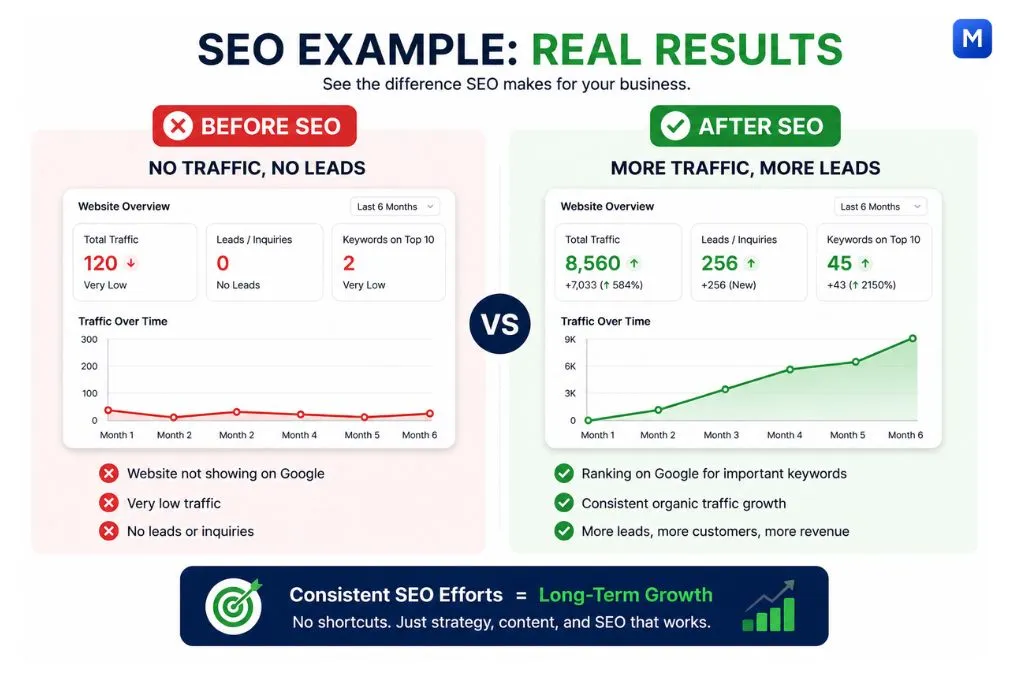
A typical small business can improve its traffic and leads within a few months by fixing technical issues, targeting the right keywords, and publishing helpful content. Consistent SEO efforts gradually improve rankings, which results in better visibility, more clicks, and higher conversions.
A typical small service-based business can grow by fixing the basics instead of chasing advanced tactics.
What Changed in This Example
- Fixed technical issues like slow speed and poor mobile experience
- Targeted the right local keywords instead of broad terms
- Improved existing service pages instead of creating random content
- Added a few helpful articles based on customer questions
- Updated old content to improve performance
👉 Before: Website was not getting visibility or leads
👉 After: Traffic improved, and inquiries started coming consistently
The biggest improvement came from focusing on the right keywords and improving what already existed. This was not instant, but within a few months, results started building steadily.
Common SEO Mistakes Small Businesses Make
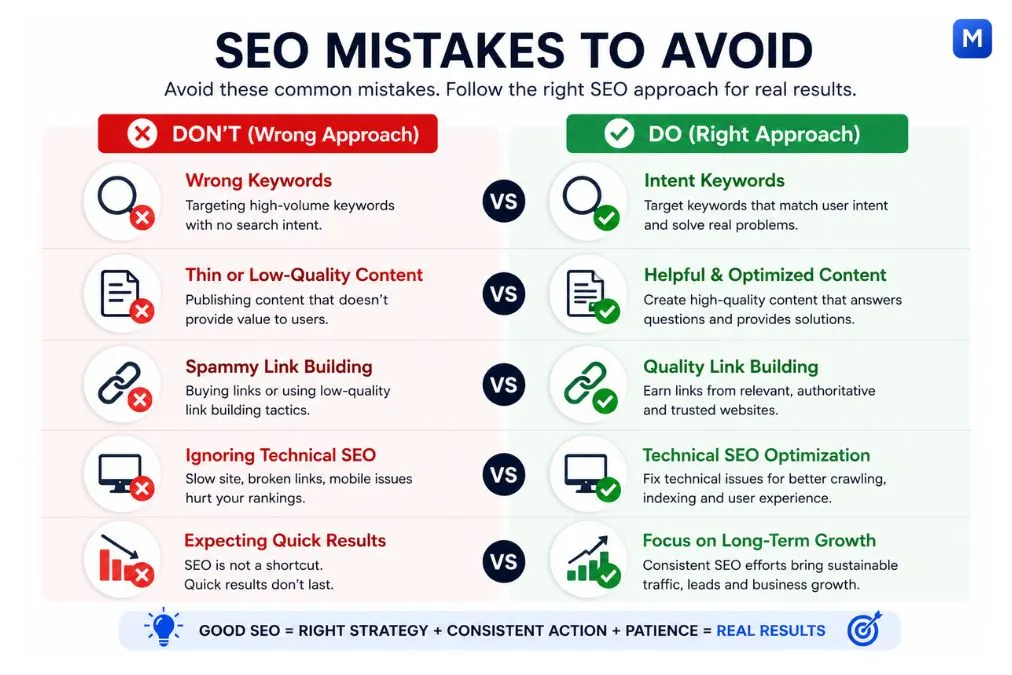
Most small businesses fail in SEO because they target the wrong keywords, follow random strategies, and expect quick results. Many also ignore user experience and content quality, which leads to poor rankings and low conversions.
In most cases, I have seen small businesses struggle with SEO because they focus on the wrong things, not because they lack effort.
Key Mistakes to Avoid
- Chasing high-traffic keywords instead of intent-based keywords
- Expecting quick results and quitting too early
- Following random tips without a clear strategy
- Ignoring content quality and real user intent
- Not optimizing website speed and mobile experience
- Ignoring website UI and UX, which reduces engagement and conversions
- Ignoring local SEO and Google Business Profile optimization
👉 One simple rule:
Do not write for search engines. Write for the human who is searching.
If you avoid these mistakes and focus on the basics, SEO becomes much easier and more predictable. Most SEO failures happen due to the wrong direction, not a lack of effort.
How Much Do SEO Services Cost for Small Businesses?
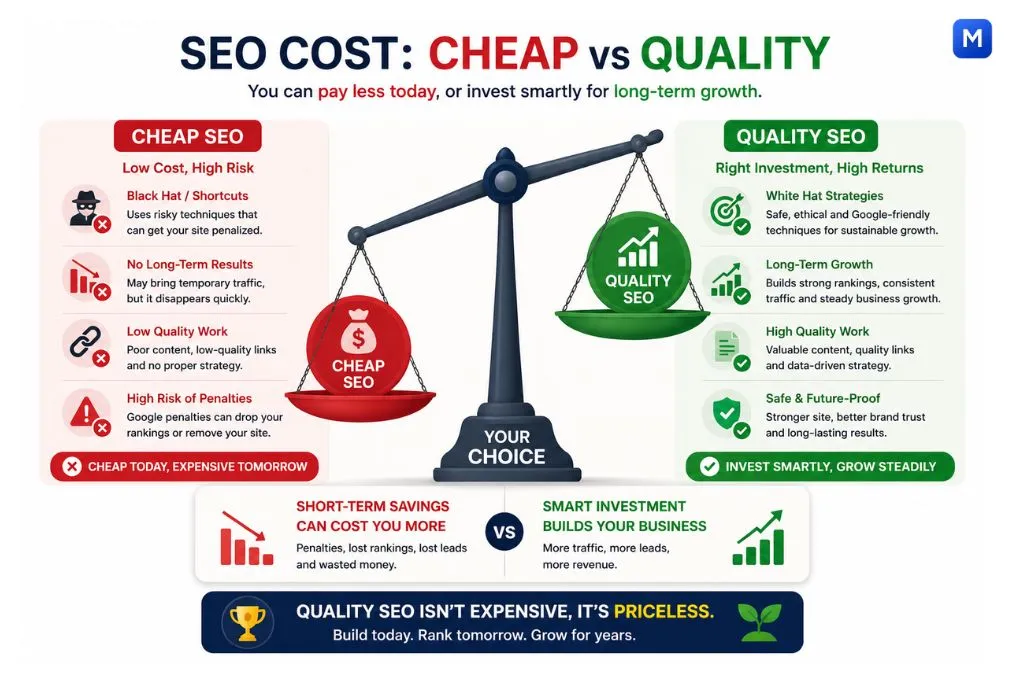
SEO service costs depend on your business goals, competition, and required work. Most small businesses invest in monthly SEO services that include optimization, content, and tracking. SEO should always be treated as a long-term investment.
This is one of the most common questions small business owners ask. However, SEO does not have a fixed price. It depends on your competition and how much work your website needs.
👉 Think of SEO cost like renting a shop.
In a quiet street, it costs less. In a busy market, it costs more because the opportunity is bigger.
Cheap SEO vs Quality SEO (IMPORTANT 🔥)
- Cheap SEO (The Trap)
Focuses on shortcuts like bulk backlinks and automated work
→ Often leads to Google penalties
→ In some cases, your website can disappear from search results - Quality SEO (The Right Approach)
Focuses on strategy, content, and long-term growth
→ Builds stable rankings and consistent leads - 👉 Usually includes:
- Competitor research
- High-quality content creation
- Technical monitoring and fixes
- Regular tracking and reporting
Many businesses choose cheap SEO in the beginning. Later, they spend more to recover from the damage.
SEO is not just about cost. It is about value over time. If done correctly, it becomes a long-term asset that keeps bringing traffic and leads. Frequent changes in SEO strategy or switching agencies can also slow your growth. You can understand how changing an SEO agency hurts your growth.
Should You Do SEO Yourself or Hire an Expert?
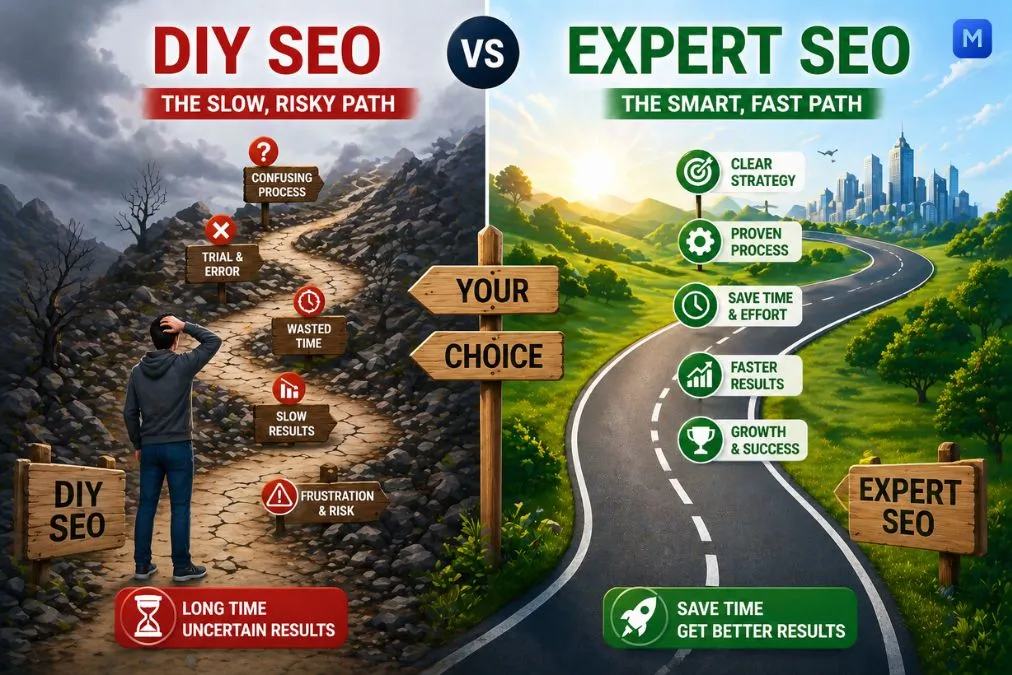
You can start SEO yourself, but hiring an expert becomes important when you want faster and more consistent results. Professionals bring strategy, tools, and experience that reduce mistakes and improve return on investment.
If you are just starting, you can handle basic SEO yourself and understand how it works. However, many businesses struggle because they trust the wrong agency. They put in effort, but results stay slow or inconsistent because the strategy is missing.
Doing SEO yourself works when you have time to learn and implement. But if your goal is faster growth and better results, working with an expert becomes the smarter choice.
👉 The practical approach is simple: start on your own, then bring in an expert when you want to scale.
How to Choose the Right SEO Service Provider?
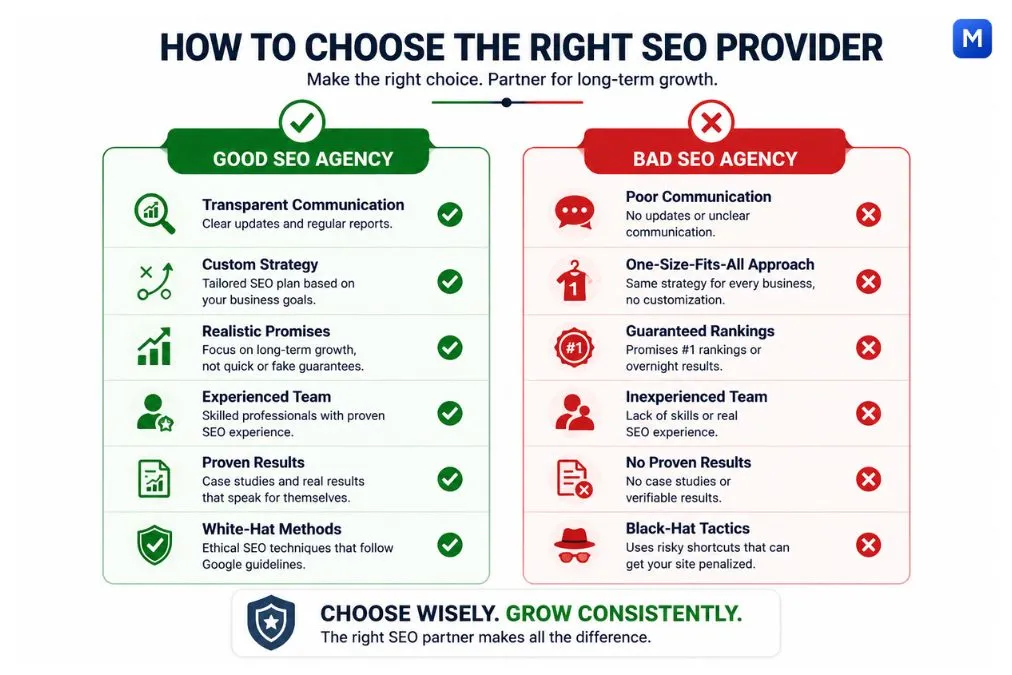
To choose the right SEO provider, focus on strategy, transparency, and realistic expectations. Avoid agencies that promise guaranteed rankings. A good SEO partner works on long-term growth and focuses on both traffic and conversions.
No SEO provider can guarantee rankings, because search engines control the results. In many cases, I have seen businesses fail not because SEO does not work, but because they chose the wrong agency.
What to Check vs What to Avoid
| What to Check (Good SEO Provider) | Red Flags (Avoid These) |
| Clear strategy based on your business goals | Promises #1 ranking quickly |
| Focus on traffic and conversions | Focus only on rankings or backlinks |
| Transparent reporting and communication | No clear reporting or updates |
| Realistic timelines | Unrealistic guarantees |
| Understands your industry and audience | Uses same strategy for every business |
| Shares case studies or past results | Cannot show real examples |
👉 Pro Tip:
Ask them: “How will you choose keywords for my business?”
- If they say “high-volume keywords” → 🚩 red flag
- If they talk about customer intent → ✅ right approach
An SEO who understands your specific market, whether local services or e-commerce, will always deliver better results than a generalist. A good SEO provider works like a growth partner. They focus on building your business step by step instead of chasing shortcuts.
Conclusion
SEO builds momentum over time rather than giving instant results. In this beginner’s guide to SEO services for small businesses, you learned that real results come from the right strategy, consistent effort, and focusing on what actually matters. In most cases, I have seen businesses grow only when they stop chasing shortcuts and start building a strong foundation.
If you take a long-term approach, SEO can become a reliable source of traffic and leads. Start with the basics, stay consistent, and improve step by step. If you want a clear direction, the next step is to apply what you have learned and build your SEO the right way. For many small businesses, starting with local SEO can bring the fastest results.
If you want a clear SEO plan for your business, you can start with a simple audit and strategy or work with professional SEO services to scale faster.
FAQs About SEO Services for Small Businesses
SEO is the process of improving your website so that it appears on Google when people search for your services. It works by helping search engines understand your content and match it with user intent, which increases your visibility and brings relevant traffic.
Start by auditing your website, then find the right keywords, optimize your pages, create useful content, fix technical issues, and build backlinks. After that, track performance and keep improving based on what is working.
Focus on local SEO, optimize your main service pages, target intent-based keywords, and create helpful content. Consistent effort helps your business attract nearby customers and generate steady leads.
Learn the basics like keywords, content, and on-page SEO, then practice on a real website. SEO becomes clear when you apply it, not just when you study it.
The 80/20 rule means a small number of actions bring most results. In SEO, focusing on the right keywords, improving content, and updating pages usually drives the majority of traffic and growth.
For example, optimizing a service page for a specific keyword, improving its content, and getting it ranked on Google so it attracts people who are ready to take action.
SEO position means the rank of your website on Google search results. Higher positions get more visibility and clicks, which increases your chances of getting leads.
Tools like Google Search Console and Google Analytics help you track performance, find issues, and understand user behavior. These tools guide your SEO decisions with real data.
You can find free SEO guides online, but reading alone is not enough. The real learning happens when you apply SEO to a website and see what works.
Yes, many free guides are available. However, consistent implementation and the right strategy are what actually bring results.