SEO vs Google Ads – Which One Brings Better ROI for Your Business?

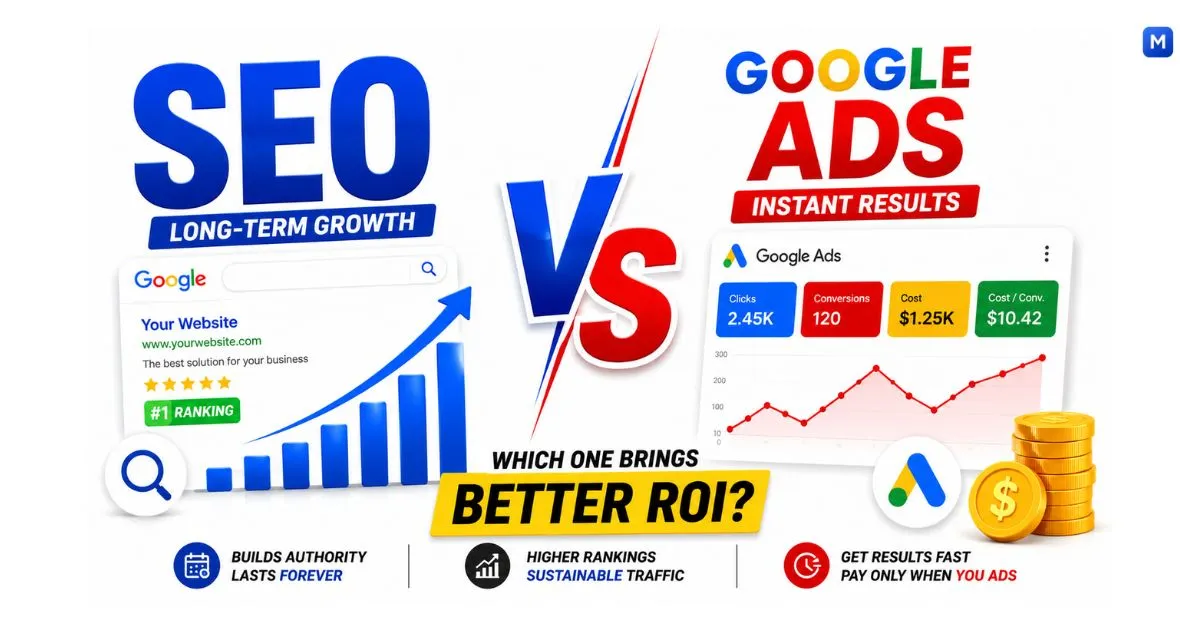
In 2026, getting traffic is no longer the biggest challenge. The real challenge is getting profitable leads consistently from search. That is why the debate around SEO vs Google Ads has become more important for businesses investing in digital growth. Some businesses choose Google Ads for quick visibility, while others invest in SEO for stronger search presence and consistent organic traffic. However, choosing the wrong strategy can waste both time and marketing budget.
Here is the hard truth most businesses realize too late:
Google Ads can burn money quickly without the right strategy, and SEO can take months before generating strong results. That is why the real question is:
Which channel brings the right traffic, better lead quality, and stronger ROI for your business goals?
In this guide, I will explain the real difference between SEO and PPC, which strategy performs better in different business situations, and whether businesses should choose one channel or combine both for stronger long-term growth. By the end of this article, you will clearly understand:
- Which strategy delivers faster results
- Which one gives better long-term ROI
- Whether you should combine both for sustainable business growth
SEO vs Google Ads: What Is the Real Difference?
The difference between SEO vs Google Ads is not just organic traffic vs paid traffic. The real difference is how both channels help a business grow over time.
SEO helps your business build long-term visibility, authority, and trust in Google search results. When your website ranks consistently for important keywords, people start discovering your business naturally without paying for every click. Google Ads works differently. It gives immediate visibility because you pay to appear at the top of search results instantly.
SEO helps you build stronger brand trust in search over time, while Google Ads helps you buy immediate attention.
Another important difference is search intent. Google Ads allows businesses to target high commercial intent keywords immediately, while SEO supports the complete customer journey from research to final decision-making.
| Feature | SEO (Organic) | Google Ads (Paid) |
| Traffic Type | Earned organic clicks | Purchased paid clicks |
| Visibility | Builds gradually | Instant appearance |
| Cost Model | Ongoing optimization investment | Pay-per-click |
| Sustainability | Strong long-term growth | Budget dependent |
| Authority Building | Builds trust and credibility | Limited long-term authority |
I have personally seen businesses generate leads for months from a single well-optimized SEO page. At the same time, I have also seen ad campaigns stop generating traffic the moment the budget ended. That is why SEO often works better for sustainable growth, while Google Ads works better for quick visibility and faster lead generation.
For example, a local service business ranking organically for service-related keywords can keep attracting leads consistently. However, with Google Ads, visibility usually depends on daily ad spend and keyword competition.
While you do not pay Google for organic clicks in SEO, strong rankings still require investment in quality content, technical optimization, and user experience improvements.
What is the difference between SEO and Google Ads?
SEO generates organic traffic by improving website visibility and authority over time, while Google Ads generates paid traffic through sponsored placements. SEO focuses on long-term growth and trust building, while Google Ads focuses on immediate visibility and faster traffic acquisition.
Which Gives Faster Results: SEO or Google Ads?
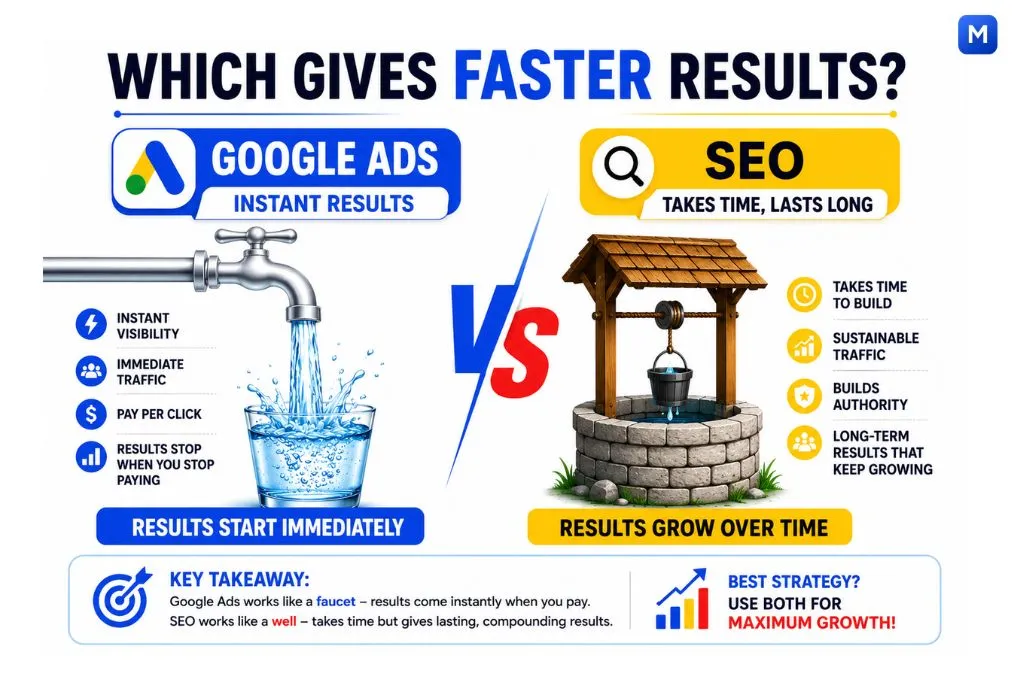
When a business needs leads urgently, waiting months for traffic does not feel practical. That is why many businesses choose Google Ads first. A properly optimized campaign can start generating clicks, calls, and inquiries within days. During product launches, slow sales periods, or competitive seasons, that speed can make a huge difference.
SEO works differently. It takes time to build rankings, authority, and trust in Google search results. In the beginning, SEO often feels slower because you are building a long-term asset instead of buying immediate visibility.
| Strategy | Typical Timeline |
| Google Ads | Days |
| SEO | Months |
The easiest way to understand this difference is:
Google Ads works like turning on a faucet. SEO works like building a well.
The faucet gives water immediately, but it stops when the payment stops. A well takes more effort initially, but once built properly, it can continue to provide value for years. That is exactly how SEO vs PPC, which is better, should be viewed from a business perspective.
I always tell clients not to judge SEO only by speed. The real question is:
How much does it cost to acquire customers consistently over time?
Google Ads can generate quick leads, but relying only on ads often increases customer acquisition costs month after month. SEO usually takes longer, but strong rankings continue generating traffic and leads even after the initial work is done. Over time, that creates stronger marketing equity and reduces dependency on paid advertising.
Pro Tip
If your business needs immediate leads, Google Ads is usually the faster option. However, if you want sustainable growth with lower long-term acquisition costs, SEO becomes essential. The strongest businesses often use Google Ads for short-term demand and SEO for long-term authority.
SEO vs Google Ads Cost and ROI Comparison
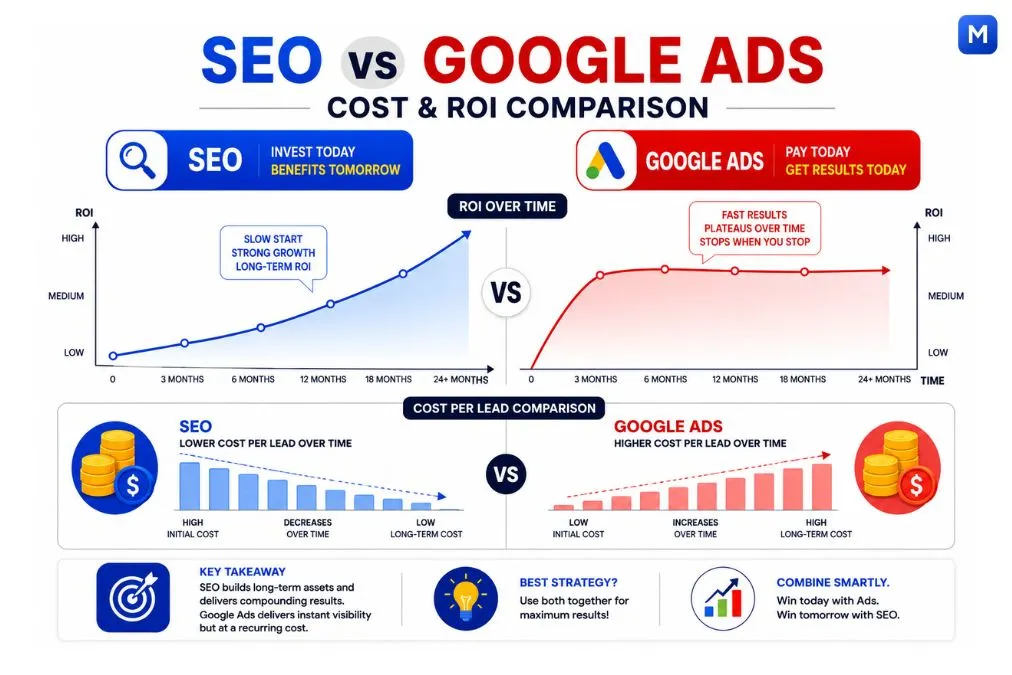
Many businesses focus solely on traffic numbers when comparing SEO vs. Google Ads ROI. However, the real goal is to generate profitable customers without continuously increasing acquisition costs.
Google Ads can generate leads quickly, but every click costs money. As competition grows, businesses usually need larger budgets to maintain results. SEO also requires investment, but strong rankings can continue generating traffic and leads without paying for every visitor. Businesses investing in long-term organic growth should first understand how modern SEO services for business growth actually improve ROI over time.
| Factor | SEO | Google Ads |
| Cost Model | Ongoing SEO investment | Pay-per-click |
| Lead Speed | Gradual | Immediate |
| Scalability | Builds authority over time | Requires larger budgets |
| Long-Term ROI | Stronger over time | Budget dependent |
Another major difference is search intent. SEO often attracts users researching solutions, while Google Ads usually targets users ready to take action immediately.
| SEO Traffic | Google Ads Traffic |
| Informational intent | Transactional intent |
| Longer decision cycle | Faster conversions |
Google Ads often becomes more expensive as businesses scale, while SEO builds long-term digital authority that compounds over time.
I have seen businesses reduce customer acquisition costs significantly after improving organic rankings. Earlier, they depended heavily on paid ads for every lead. However, once SEO started generating consistent traffic, their reliance on rising paid acquisition costs reduced noticeably.
Why Google Ads Leads Often Convert Faster
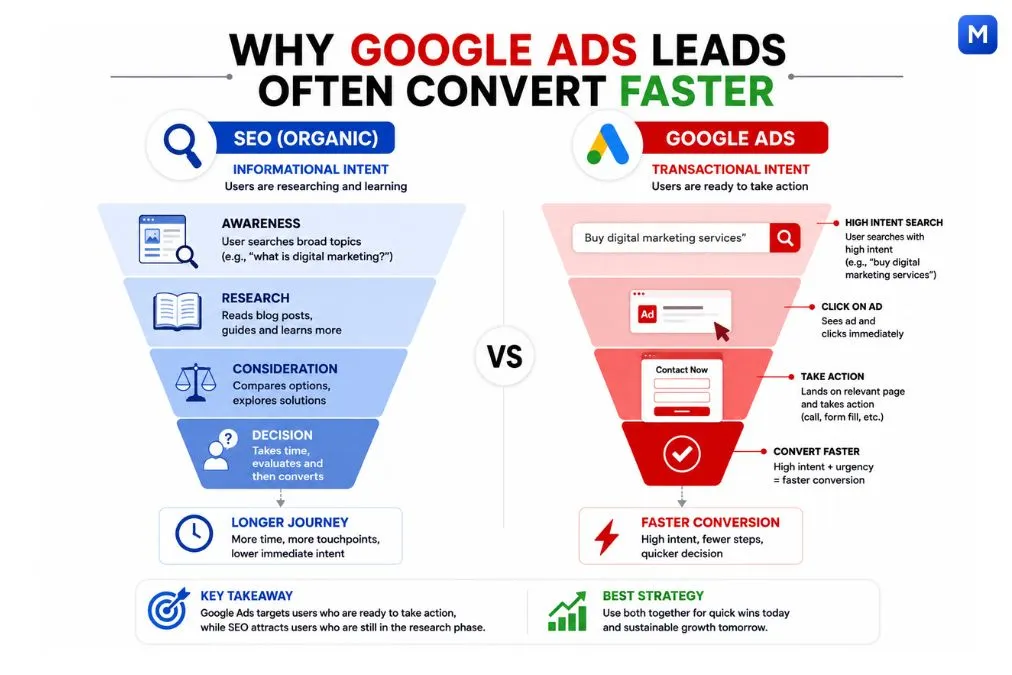
One major difference between SEO and Google Ads is user intent. SEO traffic is often informational because users are researching solutions before making a decision. Google Ads traffic usually has stronger transactional intent, which means users are often ready to take action immediately.
| SEO Traffic | Google Ads Traffic |
| Informational intent | Transactional intent |
| Research-focused | Action-focused |
| Longer buying cycle | Faster conversions |
Google Ads also places businesses at the top of search results instantly. Even if competitors have stronger SEO authority, ads can still capture high-intent clicks first.
A blog visitor may convert later, while an ad visitor may contact a business within minutes.
Which Strategy Becomes More Cost-Effective Over Time?
Google Ads can generate leads quickly, but traffic usually stops when the ad budget ends. SEO works differently because strong rankings can continue generating traffic and leads long after the initial optimization work is done.
| Factor | SEO | Google Ads |
| Long-term ROI | Higher | Short-term focused |
| Lead cost over time | Usually decreases | Often increases |
| Traffic sustainability | Strong | Budget dependent |
Google Ads also works like a bidding war. As competition increases, businesses usually need larger budgets to maintain the same visibility. SEO helps reduce that long-term dependency by building a stronger search reputation and consistent organic reach over time.
Google Ads helps businesses survive today, while SEO helps businesses grow sustainably tomorrow.
In 2026, SEO is no longer just about keywords. AI Overviews now reward trusted and experience-driven content more heavily, which makes long-term authority more valuable than ever.
When SEO Makes More Sense for a Business
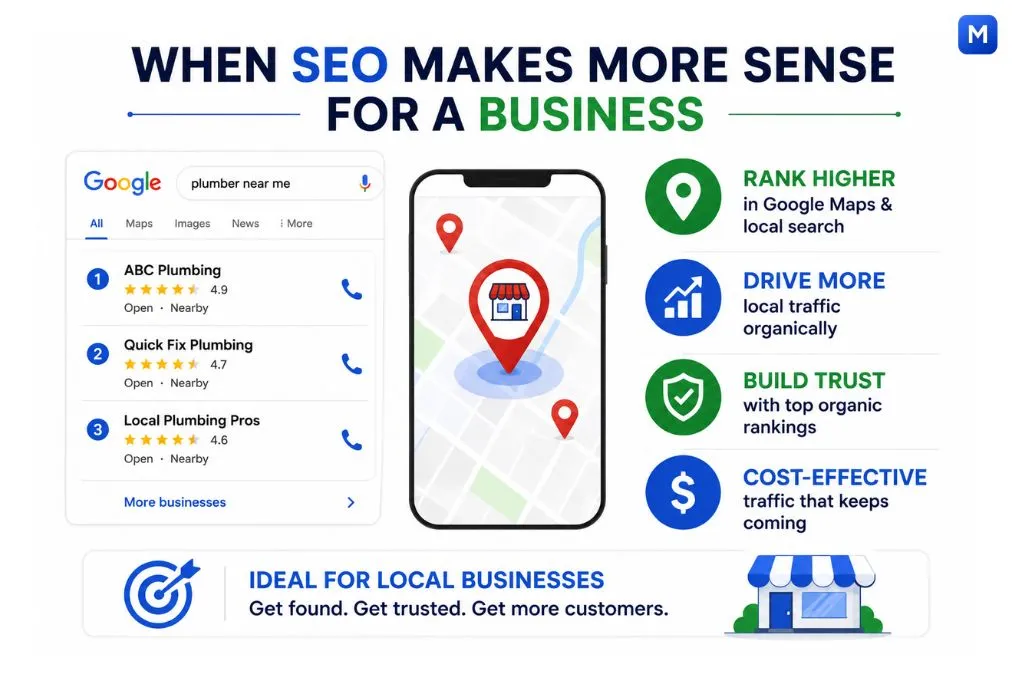
SEO becomes the smarter investment when businesses want consistent leads without depending completely on rising ad costs. No matter the niche, people still search on Google before buying a service or contacting a business. That is why SEO for lead generation works well for almost every industry today.
SEO is especially effective for:
- Service-based businesses
- Local businesses
- High-ticket services
- Businesses focused on a stronger organic market presence
- Brands wanting predictable long-term lead flow
For high-ticket services, SEO becomes even more important because customers usually research multiple times before making a decision. Strong organic visibility helps businesses build trust naturally during that process. Before investing in long-term SEO, many businesses first research how to choose an SEO expert in Delhi NCR to avoid poor strategies and wasted marketing budgets.
If you want to strengthen long-term search positioning and reduce pressure from rising paid acquisition costs, SEO becomes essential.
I have seen businesses reduce paid acquisition costs significantly after improving organic rankings. Earlier, they depended heavily on ads for every inquiry. However, once SEO visibility improved, leads started coming consistently without increasing ad budgets every month. Many growing brands now prefer working with the best SEO agency for businesses to build sustainable organic traffic and reduce long-term paid acquisition costs.
However, SEO requires patience and consistency. I always tell clients clearly:
SEO is not a 2–3 month shortcut strategy.
Most businesses fail with SEO because they stop before authority and trust start compounding.
When Google Ads Is the Better Choice
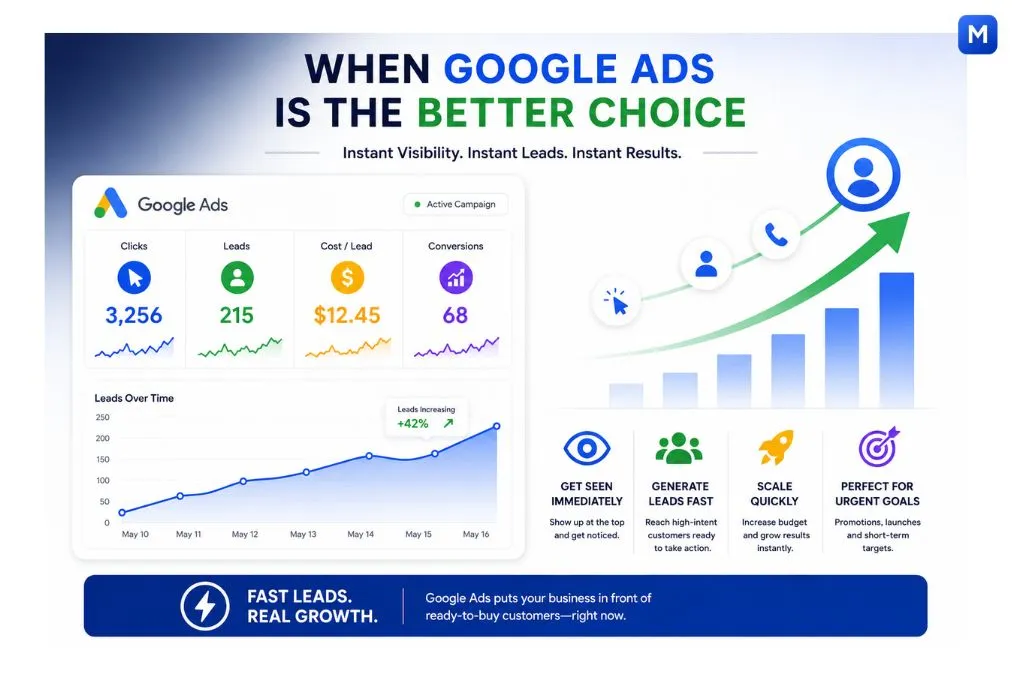
Google Ads becomes the better choice when businesses need immediate search exposure and faster lead generation. Unlike SEO, ads can start generating clicks, calls, and inquiries within days.
Google Ads works especially well for:
- launch campaigns
- seasonal promotions
- fast offer testing
- highly competitive industries
- businesses needing quick leads
For example, I have seen new businesses struggle to rank organically in competitive industries during the early stages. In those situations, a strong PPC advertising strategy helped them start generating inquiries quickly while their SEO authority was still growing.
Google Ads works best when speed and immediate demand matter more than long-term authority.
Another major advantage is control. If a business suddenly needs more leads, ad budgets can be increased quickly to drive more traffic. SEO does not provide that level of instant scalability because rankings take time to build.
However, I have also seen businesses waste large budgets on Google Ads because:
- The landing pages were weak
- Conversion tracking was missing
- Keyword targeting was poor
- Irrelevant clicks consumed ad spend
That is why successful Google Ads for lead generation is not just about running ads. It is about targeting the right audience and converting traffic profitably.
Common Mistakes Businesses Make
Most businesses fail with SEO or Google Ads because they focus on traffic instead of a conversion strategy. Wrong keyword targeting, poor tracking, and unrealistic expectations usually reduce ROI from both channels.
I have personally audited websites spending heavily on ads but generating very few qualified leads. In many cases, the problem was not traffic. The real issue was weak targeting, poor landing pages, and no clear conversion strategy.
Common mistakes businesses make:
- Choosing between SEO and Google Ads based only on short-term pricing
- Targeting keywords with traffic but no buying intent
- Focusing on clicks instead of qualified leads and conversions
- Expecting instant growth from SEO within a few weeks
- Running ads without proper conversion tracking
- Paying for irrelevant clicks because of poor keyword targeting
- Ignoring landing page optimization after generating traffic
- Depending completely on Google Ads without building organic authority
- Stopping SEO too early before rankings and trust start compounding
The biggest mistake is not choosing SEO or Ads. The biggest mistake is using either strategy without a clear conversion-focused plan.
SEO vs Google Ads – Which One Should You Choose?
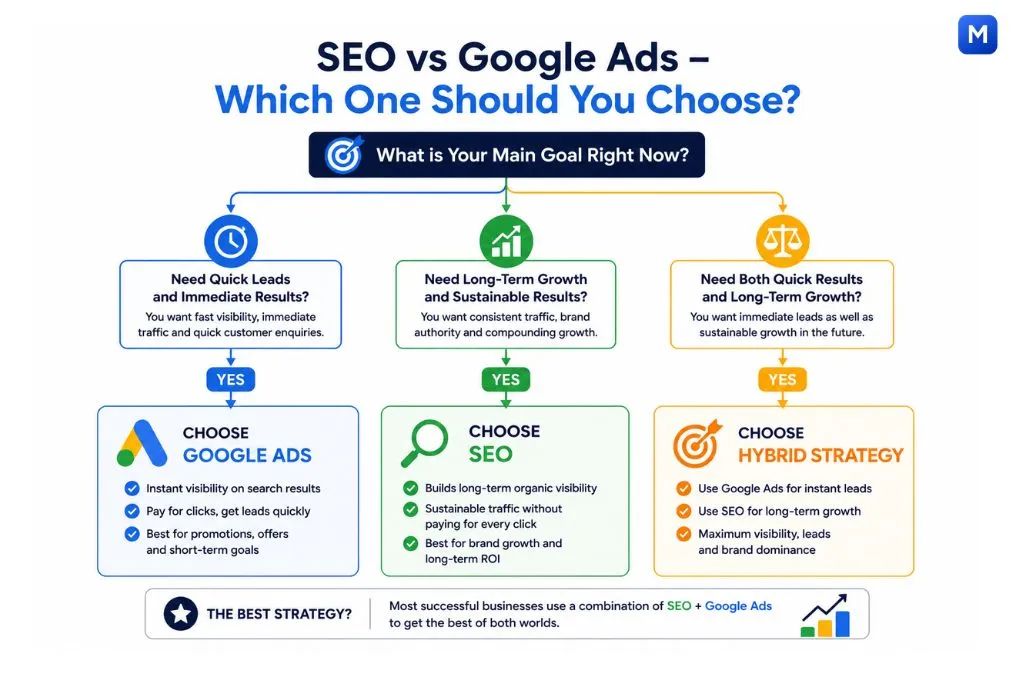
SEO is better for long-term authority and sustainable growth, while Google Ads is better for immediate visibility and faster lead generation. The right choice depends on your business goals, budget, competition, and growth timeline.
I always tell clients that the answer to “SEO vs Google Ads, which is better for your business” depends on one thing:
What results do you need right now, and what kind of growth do you want long term?
If a business needs immediate inquiries, fast testing, or quick sales, Google Ads usually works faster. However, if the goal is consistent search presence, stronger authority, and lower acquisition costs over time, SEO becomes the smarter investment.
| If Your Goal Is | Better Choice |
| Quick leads | Google Ads |
| Long-term growth | SEO |
| Brand authority | SEO |
| Fast testing | Google Ads |
| Sustainable ROI | SEO |
| Immediate sales | Google Ads |
| Local visibility | SEO + Local Ads |
I have personally seen businesses struggle after depending only on ads for too long. Rising CPCs slowly reduced profitability. On the other hand, businesses investing consistently in SEO started generating stable inquiries without increasing budgets every month.
Google Ads helps businesses grow faster today. SEO helps businesses stay visible and profitable tomorrow.
That is why the smartest businesses usually combine both:
- Google Ads for immediate demand
- SEO for long-term authority
- Both together for scalable business growth
Conclusion
There is no universal winner in the SEO vs Google Ads comparison. The right strategy depends on your business goals, budget, competition, and growth timeline.
SEO builds stronger search presence and long-term organic stability, while Google Ads generates faster reach and immediate leads. However, businesses often achieve the strongest ROI when both strategies work together.
Instead of focusing only on traffic, businesses should focus more on lead quality, acquisition costs, and building sustainable long-term growth.
FAQs About SEO vs Google Ads
Google Ads is better for businesses needing immediate leads and faster visibility, while SEO is better for long-term authority, sustainable traffic, and lower acquisition costs over time. The better option depends on your business goals, competition, and growth timeline.
SEO is evolving, not dying. In 2026, Google focuses more on helpful, trusted, and experience-driven content because of AI Overviews and changing user behavior in search.
The four main types of SEO are On-page SEO, Off-page SEO, Technical SEO, and Local SEO. Together, they help improve website visibility, authority, and organic search performance.
SEO focuses on improving organic visibility through content, optimization, and authority building. PPC focuses on generating paid traffic through advertising platforms like Google Ads.
Yes. SEO and Google Ads work best together when businesses want both immediate lead generation and long-term organic growth. Google Ads helps capture quick demand, while SEO builds sustainable visibility over time.