Is SEO Worth It for Small Businesses in India?

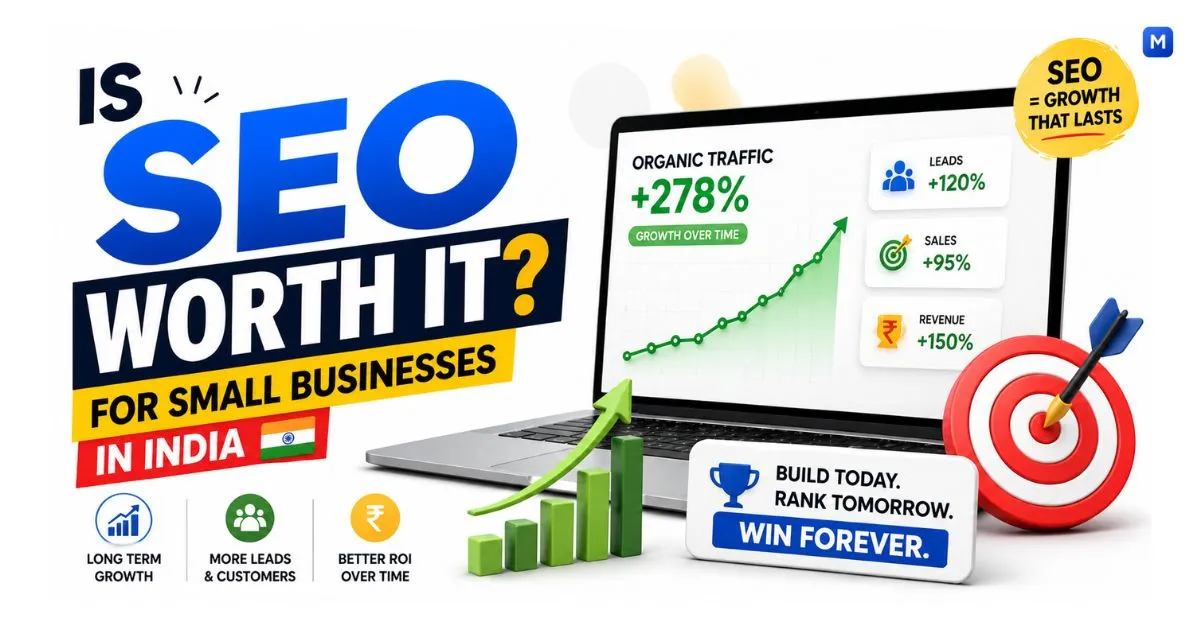
Is SEO worth it for small businesses in India, or is it just another expense that does not bring real results? Many business owners feel confused about SEO, especially after spending time or money without seeing clear outcomes. They do not fully understand how SEO helps businesses grow and what actually drives results. In most cases, the problem is not SEO itself. It is the way it is being done.
I have seen businesses focus on the wrong keywords, create content without a clear goal, and expect quick results. When that does not happen, SEO starts to feel like a waste. Even if rankings improve, it does not always translate into actual enquiries.
On the other hand, when SEO is aligned with what people are actually searching for, the results look very different. I have worked with small businesses that generated consistent leads with less traffic, simply because their strategy focused on intent instead of volume.
The Real Answer – When SEO Is Worth It (And When It Is Not)
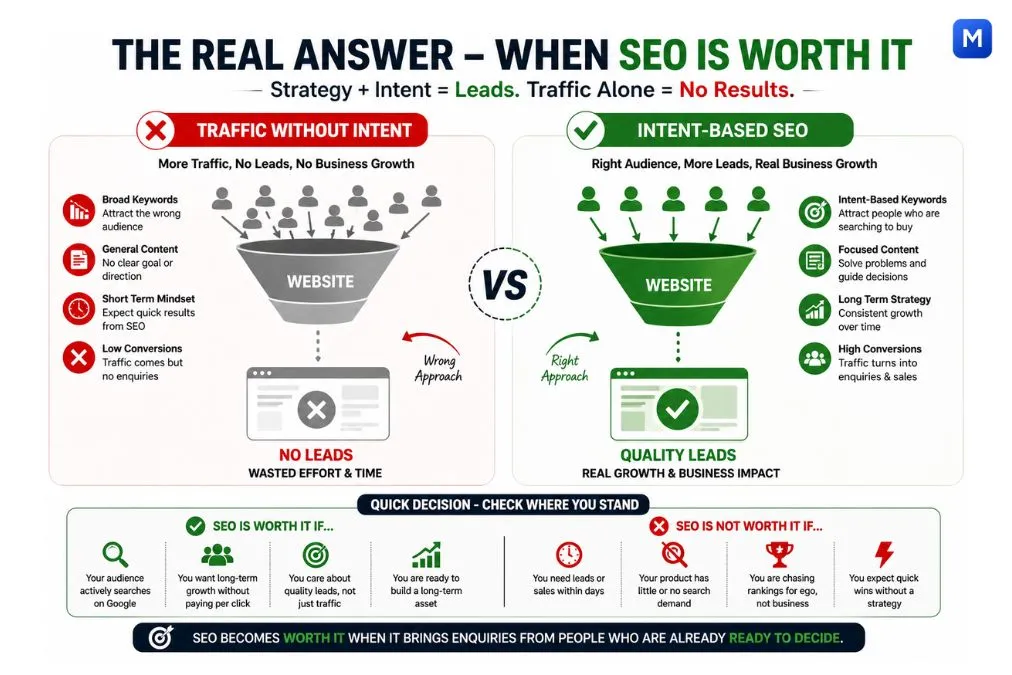
Most small businesses do not fail at SEO because it does not work. They fail because they start without a clear direction.
SEO is not for every business, but when it is done right, it becomes one of the most reliable ways to generate consistent leads. The problem is, many businesses jump into SEO without understanding what their customers are actually searching for. They target broad keywords, create content without a goal, and expect results within a short time.
That is where things break. Most businesses jump into SEO without understanding how search engines work in 2026, which leads to poor strategy and weak results.
On the other hand, when SEO is built around real search intent, the results are very different. You are not chasing traffic anymore. You are attracting people who are already looking for your service and are closer to making a decision.
Competition in India is increasing rapidly, and rankings alone are not enough. Businesses need leads, not just visibility.
I have seen this clearly in real projects. In one case, a website was already getting traffic but had almost no enquiries. The issue was not visibility, it was intent. Once we shifted the focus to more specific, decision-based keywords, the same traffic started converting into leads without any major increase.
That is the real difference between doing SEO and doing it right. SEO becomes worth it when it starts bringing enquiries from people who are already ready to decide. If that connection is missing, it will keep feeling like effort without results.
🔲 Quick Decision (Check Where You Stand)
| SEO is Worth It If… | SEO is NOT Worth It If… |
| Your audience actively searches on Google | You need leads or sales within days |
| You want long-term growth without paying per click | Your product has little or no search demand |
| You care about quality leads, not just traffic | You are chasing rankings for ego, not business |
| You are ready to build a long-term asset | You expect quick wins without a strategy |
Why Most Small Businesses Feel SEO Does Not Work
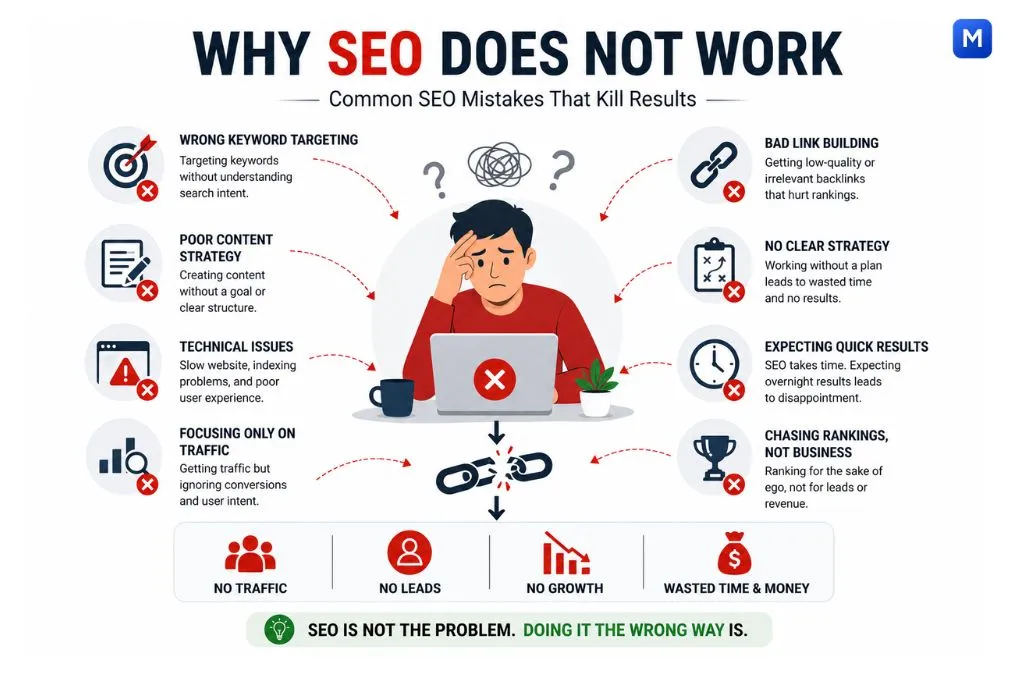
Most small businesses feel SEO does not work because their efforts are not aligned with how people actually search and make decisions. They may get traffic or rankings, but it does not turn into enquiries.
The core issues are usually simple:
- Wrong keyword intent: Traffic comes, but not the right audience
- Creating content without a clear goal or conversion focus
- Ignoring local and city-based search intent
- Missing how people actually search in India (mixed language queries)
- Not aligning SEO with Google Business Profile
- Measuring success through rankings instead of leads
- Hiring the wrong SEO agency or blindly trusting promises
- Treating SEO as a one-time task after hiring someone
- Not allocating budget for essential SEO activities (PR, guest posts, tools)
- Expecting results too quickly: SEO is a long-term system, not a 2–3 month game
- Chasing keyword rankings instead of focusing on traffic and conversions
Many businesses also fail to connect SEO with actual business outcomes, which is why focusing on SEO for business growth in India makes a real difference.
For example, there is a clear difference between:
- Generic Search: “best SEO services in Delhi”
- Intent-Based Search: “Delhi mein best SEO agency kaunsi hai”
The second query shows stronger intent and higher conversion potential.
From my experience, I have seen businesses quit SEO within a few months because they expected quick results. At the same time, others keep tracking rankings daily but ignore whether the traffic is actually converting. Another common issue is hiring the wrong agency or frequently switching providers, which is why understanding how changing an SEO agency can hurt growth is important.
👉 Simple reality:
SEO does not fail. Poor strategy and expectations do.
How SEO Actually Works (Simple + Real Explanation)
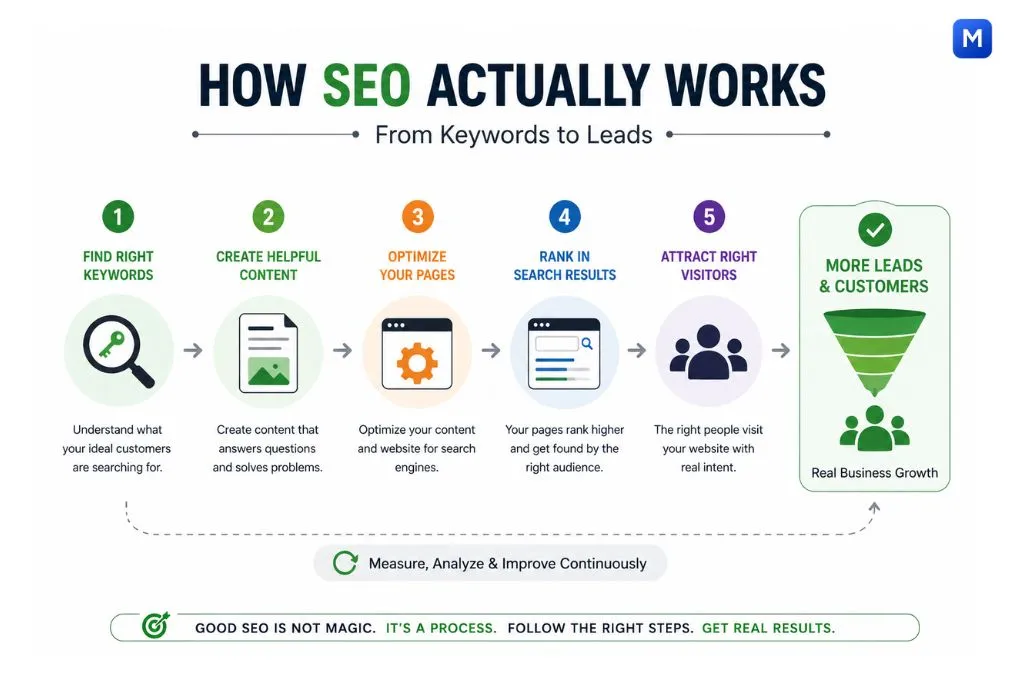
It works when your strategy, content, and execution are aligned with how people actually search and make decisions. Most businesses expect quick results, but SEO builds over time through consistency and the right approach.
👉 High Intent Keywords + Helpful Content + Logical Structure = Consistent Leads
This is the simplest way to understand how SEO actually works.
What Actually Makes SEO Work
At a practical level, SEO depends on three things:
- Relevance: Your content matches user intent
- Trust: Your website shows real expertise (E-E-A-T)
- Consistency: You keep improving over time
💡 Google prefers content created by people who actually understand the topic. Some practices can even harm your performance, especially if you ignore rules like the Google back button hijacking SEO rule.
Where Most Businesses Go Wrong
In many cases, businesses focus too much on rankings or try to sell directly on every page. Both approaches fail.
For example, many businesses target keywords like “Best SEO Services,” which are broad and competitive. But they ignore more specific queries like “SEO strategy for local manufacturing business,” which show clearer intent and higher conversion potential.
SEO works better when you:
- Focus on helpful content instead of direct selling
- Build a topical structure instead of random pages
- Align content with real search intent
👉 This is where real results come from.
Simple Takeaway
SEO is not about quick wins. It is about building a system that keeps bringing the right users over time. If you are serious about long-term growth, investing in professional SEO services for small businesses can help you build a consistent lead system.
When SEO Is Worth It for Small Businesses
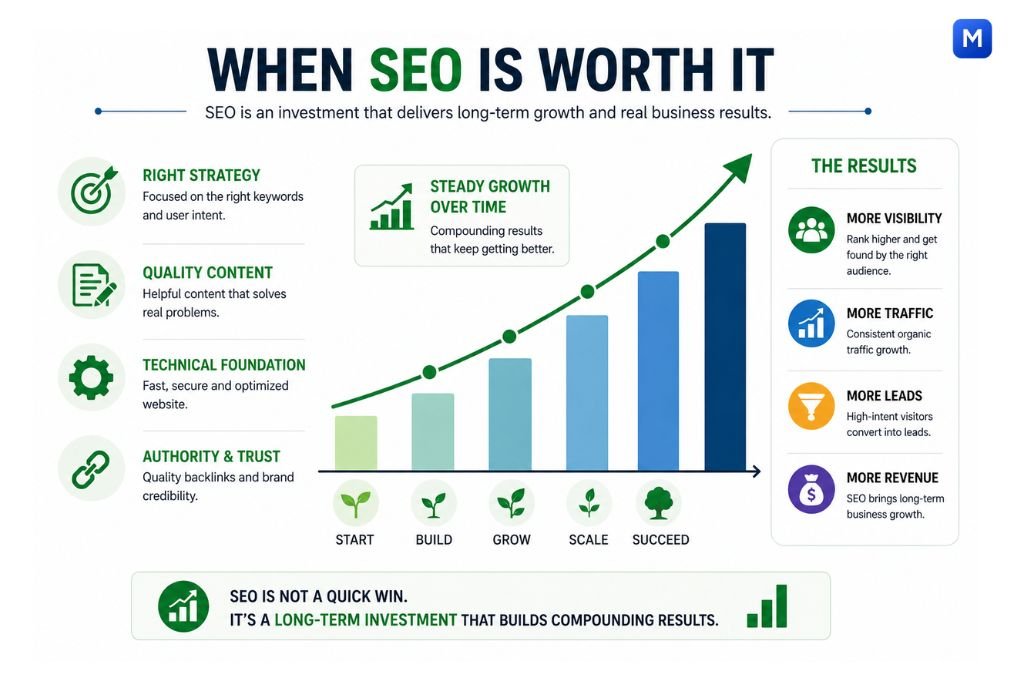
SEO works best when your business depends on people actively searching for solutions. When there is clear demand on Google, SEO becomes a strong long-term growth channel.
Businesses that benefit the most from SEO usually fall into these categories:
- Local businesses → service providers like consultants, doctors, agencies
- Niche markets → specific services or products with targeted demand
- High-value services → where customers research before making a decision
Before investing in SEO, it is important to check if your business is a good fit:
- Your service is actively searched on Google
- You want consistent, long-term leads, not just traffic
- You can invest at least 3 to 6 months for initial results
- You care about lead quality, not vanity metrics
From my experience, businesses that treat SEO as a long-term asset see the strongest results. In the beginning, progress feels slow, but over time, the cost of acquiring customers starts to decrease.
On the other hand, ignoring SEO increases dependence on paid ads. As competition grows, cost-per-click keeps rising, which makes growth more expensive and less predictable.
When SEO Becomes a Waste of Time
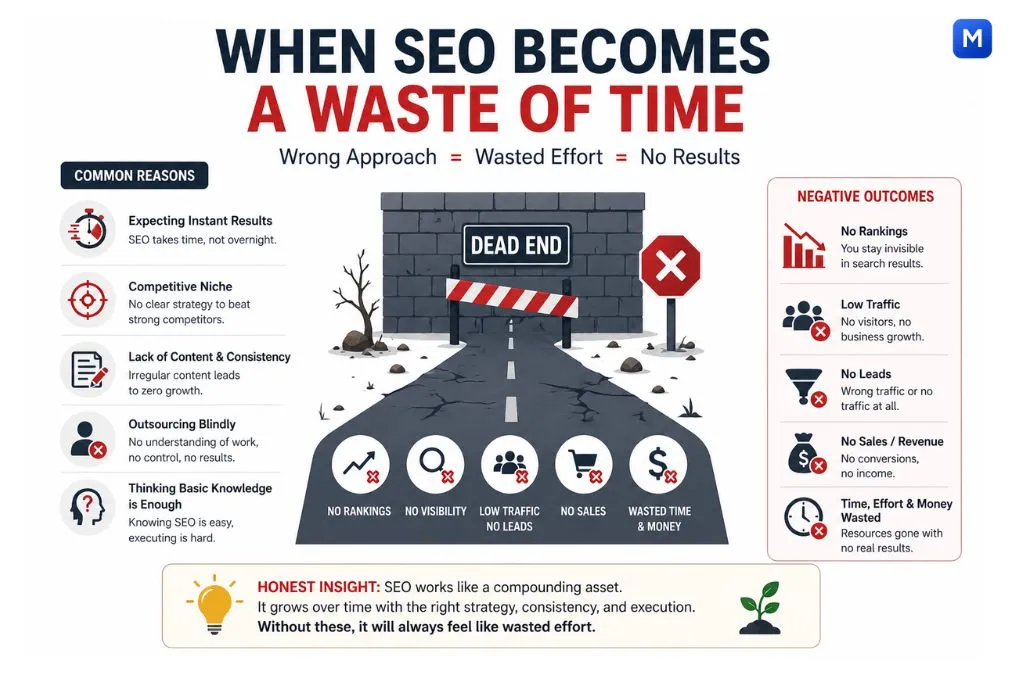
SEO becomes a waste of time when the approach is wrong from the beginning. Most businesses do not fail because SEO is ineffective. They fail because expectations, strategy, and execution are misaligned.
The most common situations where SEO does not work:
- Expecting instant results instead of long-term growth
- Working in a competitive niche without a clear strategy
- Lack of content and consistency over time
- Fully outsourcing SEO without understanding what is being done
- Assuming basic knowledge is enough to execute SEO effectively
One mistake I see very often is this. People watch a few YouTube videos, read a few articles, or use tools like ChatGPT, and feel they understand SEO completely. But understanding concepts and executing them in real scenarios are very different things.
It is similar to watching a video on how a pot is made. The process may look simple while watching. But when you actually try to make one, it does not come out the same. SEO works in the same way. It requires experience, testing, and continuous improvement.
I have seen that businesses treating SEO as a learning and execution process perform better. Those who rely only on surface-level knowledge often struggle to see results.
💡 Honest insight:
SEO works like a compounding asset. It grows over time with consistency. Without patience, proper strategy, and real execution, it will always feel like wasted effort.
Reality Check – How Long Does SEO Take in India?
SEO is not a 2–7 day process, and it is not a fixed 3–4 month game either. It depends on consistency, strategy, and execution. If you expect quick results, the expectation itself is wrong from the start.
A practical way to understand this is in phases:
- Month 1–3: Foundation stage (technical fixes, indexing, initial signals)
- Month 3–6: Movement stage (ranking shifts, early traffic)
- Month 6–12+: Growth stage (authority builds, consistent leads)
In many cases, timelines can vary. Some businesses focus only on a few specific keywords. If those keywords are highly competitive, results will take longer. Every keyword has a different level of difficulty.
And one important reality.
SEO is not something anyone can guarantee 100%. Rankings depend on many factors, such as competition, content quality, and consistency. That is why no one can promise exact results in a fixed time.
Results can be estimated based on experience. They cannot be guaranteed. If you are unsure about timelines, this guide explains how long SEO takes for a new website in a practical way.
💡 Common mistake:
Stopping too early or expecting guaranteed rankings.
Quick Self-Check – Is Your Business Ready for SEO?
SEO works much better when your foundation is strong. Before you invest time or money, it is important to check if your basics are in place.
Use this quick checklist:
- Speed Check: Does your website load within 3 seconds?
- Structure Check: Do you have dedicated service pages?
- Local Presence: Is your Google Business Profile optimized?
- Strategy Check: Do you know your lead-focused keywords?
If your answer is “no” to more than two of these, your focus should be on fixing these fundamentals first. SEO delivers better results when the base is already strong.
Every audit I do starts with these basics. If the foundation is weak, even good SEO work struggles to deliver stable results.
Final Decision – Should You Invest in SEO?
SEO is not for everyone. But for the right business, it becomes one of the most reliable growth channels.
The decision becomes clear when you look at your intent and expectations.
✔ Invest in SEO if:
- Your customers are already searching for your service on Google
- You want a steady flow of enquiries instead of depending only on ads
- You are building a business for the long term, not short-term wins
- You are ready to stay consistent for at least a few months
- You want to build a digital asset that works even when you are not running ads
❌ Avoid SEO if:
- You need sales within days or weeks
- You are testing things without real commitment
- You expect guaranteed rankings in a fixed timeline
- You are not ready to invest in content, strategy, and execution
From what I have seen, SEO rewards businesses that think long-term. It does not work well for those looking for quick wins or shortcuts.
SEO rewards businesses that stay consistent and think long-term. If your mindset matches that, it becomes one of the most powerful investments. If not, it will feel slow and frustrating.
💡 The ManojSEOPro Recommendation
If you fall under the “Invest” category, do not delay. The earlier you start building your SEO foundation, the easier it becomes to reduce your customer acquisition cost over time.
A practical next step is to begin with a basic audit or identify intent-driven keywords. This gives you clarity before investing deeper into SEO.
If You Decide to Do SEO, Start the Right Way
Once you decide to invest in SEO, the next step is doing it correctly. Most businesses do SEO in the wrong order, and that is where time and money get wasted. Businesses that want faster and more structured results often rely on expert SEO services
A better approach looks like this:
- Start with a proper audit: Understand what is broken, missing, or holding your site back
- Focus on intent-driven keywords: Target what people search for when they are ready to take action
- Build high-conversion pages first: Create pages that generate enquiries, not just traffic
- Optimize continuously: SEO improves over time through updates, testing, and consistency
From my experience, results improve when the focus shifts from “doing SEO” to “building a system.” Random blogs or isolated efforts rarely work. A structured approach, aligned with user intent, makes the difference.
This is how I approach SEO — not to increase traffic, but to generate consistent and relevant leads.
Final Thoughts
Is SEO worth it for small businesses in India? Yes — but only when it is done with the right expectations and strategy. Businesses that focus on user intent and consistency turn SEO into a reliable source of leads over time.
SEO is not a shortcut. It is a system. When approached correctly, it becomes a long-term asset that reduces dependence on ads and improves lead quality. When done without clarity or patience, it will always feel slow and ineffective.
FAQs About SEO for Small Businesses in India – Is It Really Worth It?
SEO is not cheap, but it is not an expense either. It is an investment. The cost depends on your competition, goals, and scope of work. Over time, it often becomes more cost-effective than ads.
Yes, but not by targeting the same broad keywords. Small businesses win by focusing on specific, local, and intent-driven searches where competition is lower and conversion is higher.
Both have different roles. Ads give quick results, but stop when you stop spending. SEO takes time but builds long-term visibility and consistent leads. The best approach is to use both strategically.
You can learn the basics and understand how SEO works. But execution requires experience, tools, and consistency. Many businesses start themselves but later need expert guidance to scale their results.
No. Google itself does not guarantee rankings. Any agency promising fixed rankings or timelines is a red flag. SEO depends on many factors, and results can only be improved, not guaranteed.