FAQ Rich Results Are No Longer Appearing in Google Search

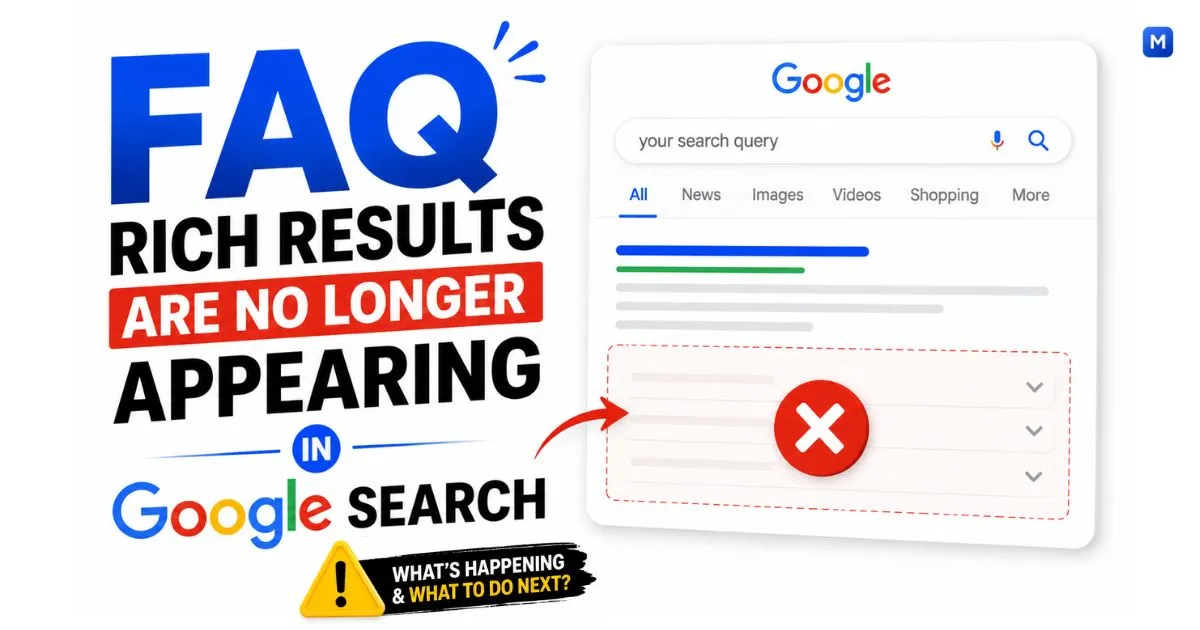
Google officially ended FAQ rich results for most websites on May 7, 2026. Still, during recent SEO audits, I noticed many business owners still feel confused because People Also Ask (PAA) boxes continue appearing in Google Search. Because of this confusion, many websites now think Google has completely removed FAQ content and schema support.
This is a common misconception.
Google removed the visual FAQ rich snippets from standard search listings, not the actual value of the FAQ content itself. In fact, Google still supports FAQ structured data for trusted government and health authority websites with strong EEAT signals.
At the same time, search is rapidly shifting toward AI-driven search experiences, voice search, and conversational answer systems. That means high-quality question-answer content now matters more than ever, especially for websites that want long-term organic visibility.
Google’s Official FAQ Removal Timeline
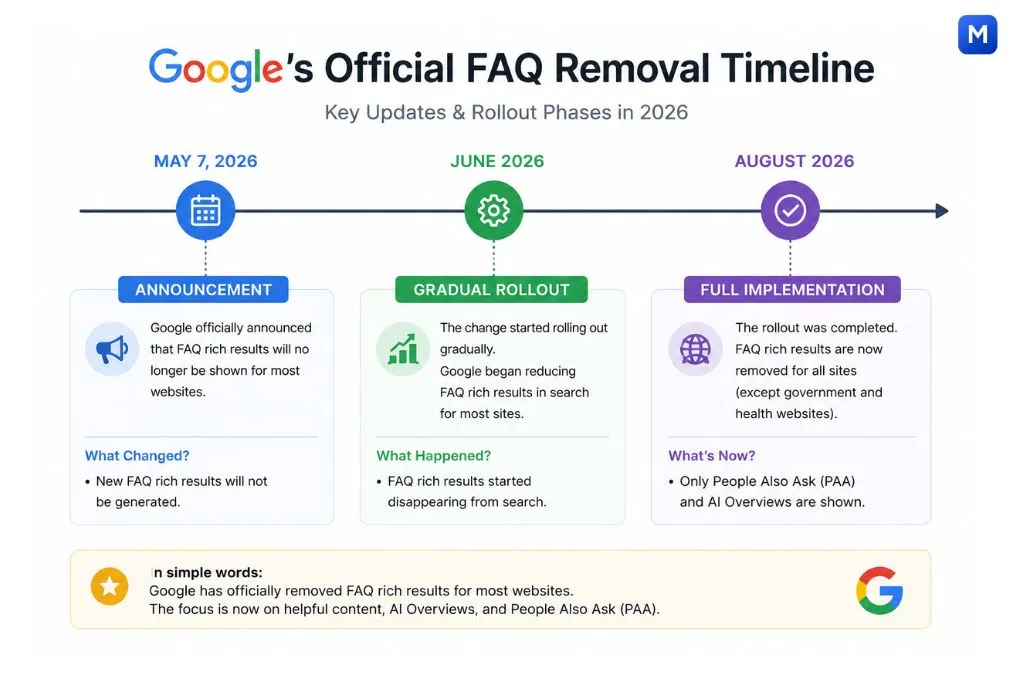
Google officially started shutting down FAQ rich results on May 7, 2026. Across multiple client websites, I noticed many businesses still think Google has removed FAQ content completely.
That is not what actually happened.
Google removed the visual FAQ search appearance from standard search listings. At the same time, Google also started retiring the reporting and tracking system connected to FAQ rich results.
May 7, 2026
Google stopped showing FAQ rich results for most standard websites in Google Search.
This removed the expandable FAQ dropdowns that previously appeared below many search listings.
June 2026
Around 30 days after the May 7 update, Google started removing:
- FAQ Search Appearance reports
- FAQ rich result reporting
- FAQ support inside the Rich Results Test tool
Google is also retiring How-To rich result reporting during the same transition period.
Because of this update, many SEO tools and Search Console reports no longer show FAQ visibility data correctly.
August 2026
Around 180 days after May 7, Google will remove FAQ rich result support from the Search Console API.
This mainly affects:
- SEO agencies
- Reporting dashboards
- Automated tracking tools
- Websites monitoring FAQ rich snippet performance
At the same time, Google continues shifting search visibility toward AI Overviews, direct answers, and cleaner search experiences instead of traditional rich snippet layouts.
FAQ Rich Results vs People Also Ask (PAA)
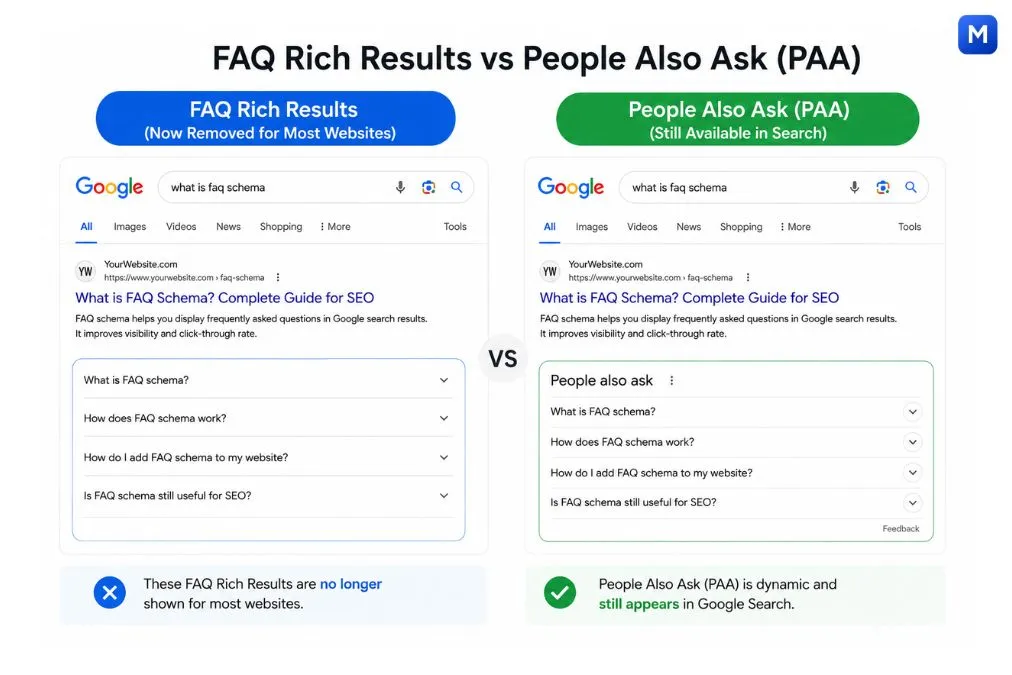
From recent SERP analysis after Google’s May 2026 update, one major confusion became obvious. Many website owners still think FAQ Rich Results and People Also Ask (PAA) are the same thing.
In reality, Google treats both features very differently.
What were FAQ Rich Results?
FAQ rich results were expandable dropdown questions connected to a specific website listing. Websites generated these snippets using FAQPage structured data.
This allowed website owners to control:
- questions
- answers
- schema markup
Earlier, many SEO, travel, and affiliate websites used the FAQ schema mainly to capture more SERP visibility and improve CTR.
Today, Google officially removed this search appearance for most standard websites in May 2026. Today, limited FAQ visibility mainly remains for trusted government and health websites with strong EEAT signals.
What Is People Also Ask (PAA)?
People Also Ask works differently.
Google automatically generates these question boxes using:
- search intent
- user behavior
- topical relevance
- AI-driven query understanding
Unlike FAQ rich results, PAA appears as a separate dynamic block between search listings instead of attaching directly below one website result.
Most importantly, websites cannot trigger PAA visibility using schema markup alone.
At the same time, structured data still helps Google better understand:
- entities
- page context
- question-answer relationships
That means the FAQ schema still supports semantic SEO and modern AI-driven search understanding, even after rich snippets disappeared.
This is where modern SEO changes completely.
In 2026, Google relies more heavily on:
- AI Overviews
- PAA answers
- topical authority
- EEAT signals
- conversational search intent
instead of traditional schema-driven SERP enhancements.
| Feature | FAQ Rich Results (Old) | People Also Ask (PAA) |
| Control | Website Owner (via Schema) | Google (via AI & Intent) |
| Source | Single Page Content | Multiple Websites & Sources |
| Visual Style | Dropdown under your URL | Dynamic block between results |
| Schema Dependency | High | Indirect |
| 2026 Status | Limited to Gov/Health | Extremely Active |
| Main SEO Benefit | CTR & SERP Visibility | AEO & Topical Authority |
Pro SEO Tip:
If you want better PAA visibility in 2026, write H2 and H3 headings as direct questions. Then answer them clearly within the first 50 to 60 words. This structure helps both AI Overviews and conversational search systems understand your content faster.
Why Google Removed FAQ Rich Results
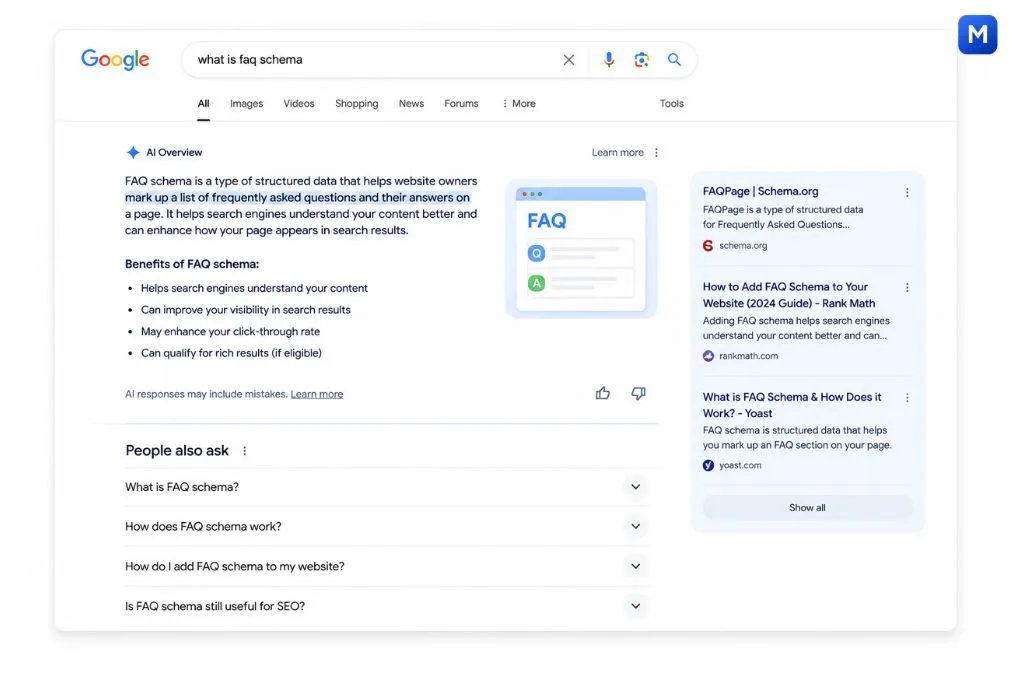
After reviewing recent SERP changes, I noticed Google is pushing Search toward a cleaner and more AI-driven experience. Earlier, many websites used the FAQ schema only to capture extra SERP space. As a result, Google often showed repetitive FAQ dropdowns from multiple websites answering the same search intent. Google likely considered this unnecessary clutter, especially on mobile search.
At the same time, Google now wants a faster and lighter search experience without too many visual SERP elements. This is where AI Overviews change everything. Instead of showing multiple FAQ dropdowns below search listings, Google now extracts answers directly from content and displays them inside AI-generated summaries.
Because of this shift, SEO is changing rapidly.
Earlier, websites focused on:
- Schema Markup
- Rich Snippets
- SERP Real Estate
Now Google focuses more on:
- Answer Quality
- Topical Authority
- EEAT Signals
- Entity Understanding
- User Satisfaction
Google is clearly moving toward:
- AI-First Search
- Zero-Click Answers
- Conversational Search
- Answer Engine Optimization (AEO)
That is why genuinely helpful content now creates more long-term SEO value than schema-heavy visibility tactics.
Which Websites Can Still Get FAQ Snippets?
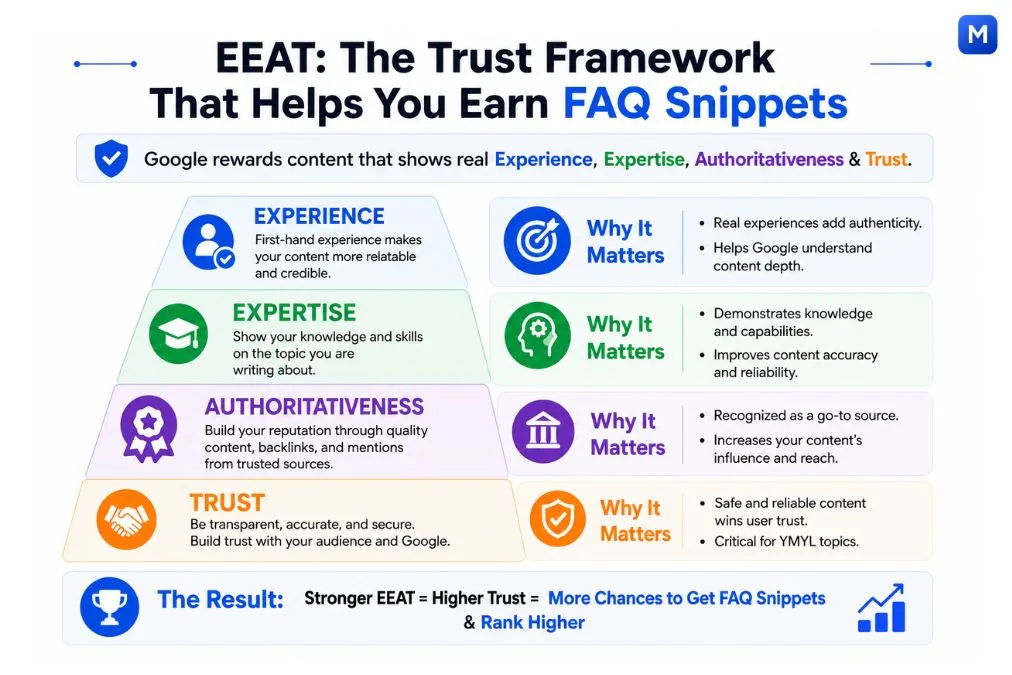
Google has not completely removed FAQ rich results for every website. Limited FAQ visibility may still remain for:
- Government Websites
- Health Authority Websites
- High-Trust EEAT Entities
This is why some health-related search queries continue showing FAQ-style results in 2026.
Across several SEO projects, I noticed Google now applies much stricter trust signals before showing structured FAQ visibility. Earlier, many websites could gain FAQ snippets simply by adding schema markup. Today, that strategy no longer works for most industries.
This shift strongly connects with AI Overviews and Google’s broader AI-first search systems.
Today, Google wants answers from sources it considers highly reliable and trustworthy because AI-generated search experiences depend heavily on content accuracy.
This is where EEAT becomes critical.
EEAT stands for:
- Experience
- Expertise
- Authoritativeness
- Trustworthiness
In simple words, Google now prefers FAQ content from websites that demonstrate:
- real expertise
- trusted authority
- accurate information
- strong brand credibility
That is why most travel blogs, affiliate websites, SEO sites, and business websites lost FAQ rich result visibility after the May 2026 update.
This update clearly shows that Google now values trust-driven content and AI-ready expertise far more than schema-heavy SEO tactics.
Should You Remove FAQ Schema?
Short answer: No.
Removing the FAQ schema gives no direct SEO advantage. According to Google’s official FAQ page structured data documentation, the FAQ schema still remains supported for eligible content types.
In recent SEO audits, I noticed many businesses started deleting the FAQ schema completely after the May 2026 update. Still, that is not the best approach.
The FAQ schema still helps Google with:
- Semantic Clarity
- AI Understanding
- Voice Search
- Google Assistant
- Better Understanding of Questions and Answers
In many cases, the schema also works like a confirmation layer for Google. It helps search systems clearly identify the actual question and its most relevant answer.
The better strategy is simple:
- Keep the existing schema
- Focus on genuinely helpful question-answer content
- Optimize for AI-driven search and conversational discovery
Warning:
The FAQ schema alone will no longer improve CTR or guarantee extra search visibility in 2026.
The New SEO Strategy After This Update
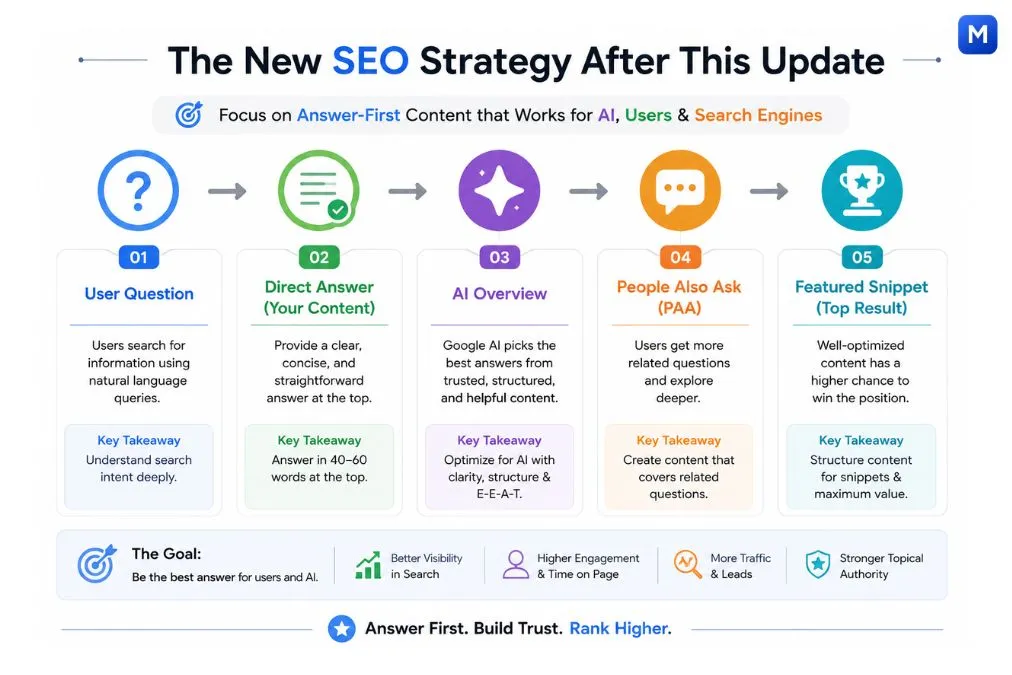
After Google removed FAQ rich results, the SEO strategy changed significantly. From recent content optimization work, I noticed Google now rewards content that answers questions naturally and clearly.
What Works Best in 2026 SEO
Today, the best-performing content focuses on:
- Question-Based Headings
- Direct Answers First
- Helpful Content
- Real Experience
- AI Overview Optimization
- Featured Snippets
- People Also Ask (PAA) Visibility
For better AI visibility, I now recommend using the Inverted Pyramid structure:
- Question (Heading)
- Direct Answer (First 2 Sentences)
- Supporting Details (Context or Bullet Points)
At the same time, websites should avoid:
- FAQ Spam
- Keyword Stuffing
- Repetitive Questions
- Writing FAQs Only for Rich Snippets
Pro Tip:
Adding first-hand experience phrases like “In my experience” or “During our testing at ManojSEOPro.com” can strengthen EEAT signals and improve trust for AI-driven search systems.
In simple words, Google now values the best answer more than the most schema markup. Businesses now need AI SEO Services focused on AI-driven search visibility and topical authority.
Final Verdict
FAQ Rich Results Are No Longer Appearing in Google Search for most standard websites after Google’s May 2026 update. However, FAQ content itself still matters because Google now focuses more on helpful answers, AI Overviews, topical authority, and real expertise instead of traditional schema tricks.
From my recent SEO analysis, websites with clear and experience-driven answers still perform better across AI-driven search experiences. In simple words, modern SEO now depends more on AI-ready content and genuinely helpful answers than simply adding FAQ schema markup.
FAQ About Google FAQ Rich Results
No. Google mainly removed FAQ rich result visibility for most standard websites. However, the FAQ schema still helps Google understand questions, answers, and page context more clearly.
Yes. People Also Ask (PAA) remains highly active in 2026. Google now uses PAA more dynamically alongside AI Overviews and conversational search experiences.
Yes. Helpful FAQ sections still support AI-driven search, featured snippets, voice search, and conversational search experiences.